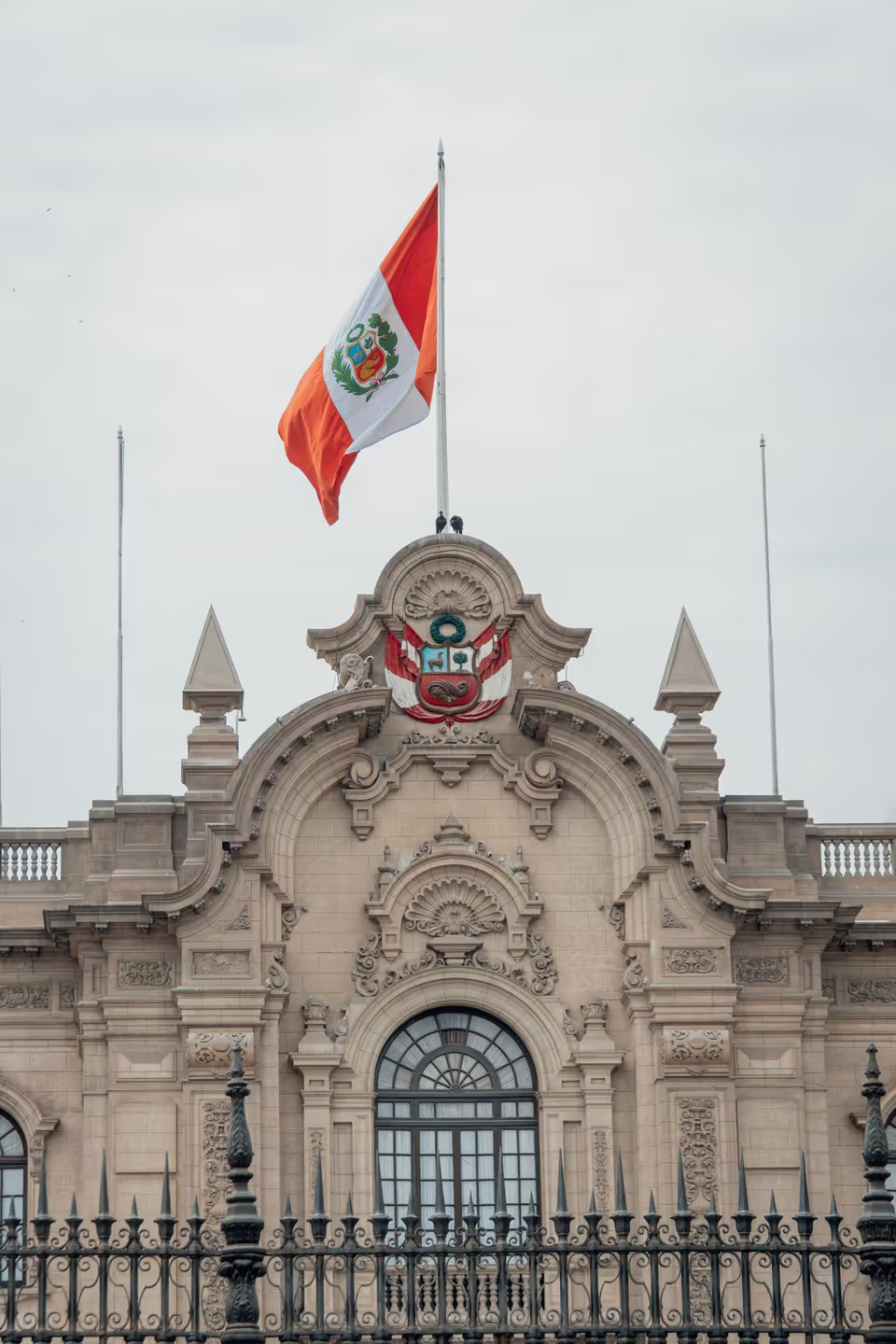
America · Boutique

Peru

Four worlds in one country

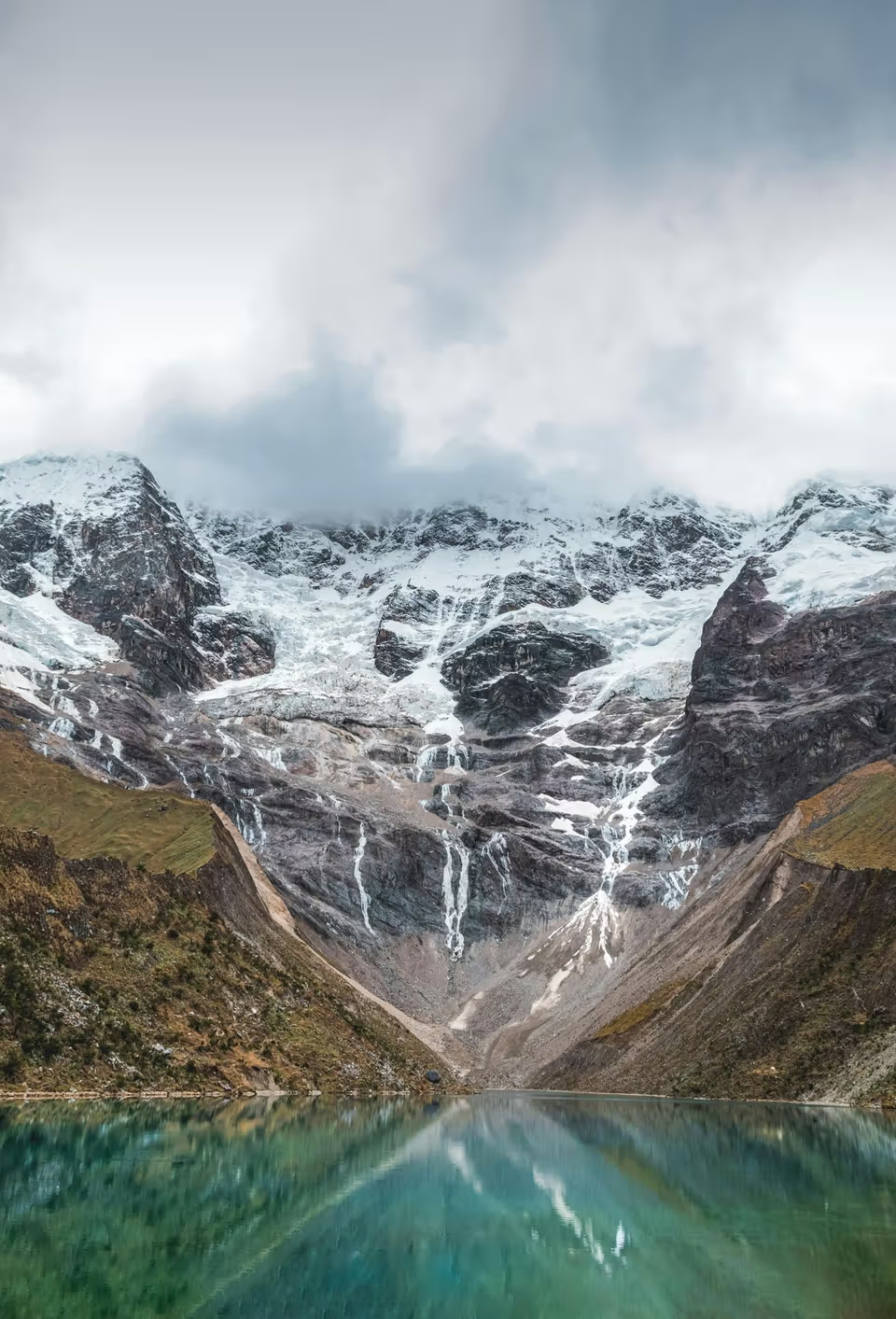
P eru is three countries in one. The coast is pragmatic and urban, it looks out to the Pacific and eats fish. The highlands are ceremonial and deeply Quechua, and to this day organise the year around the agricultural calendar.

The essence

The country that is really three

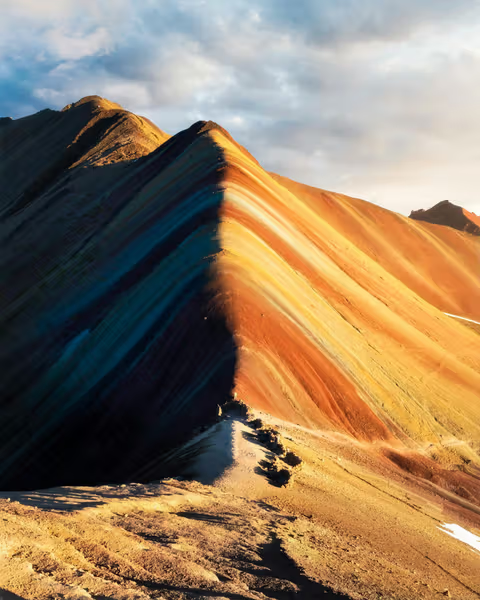
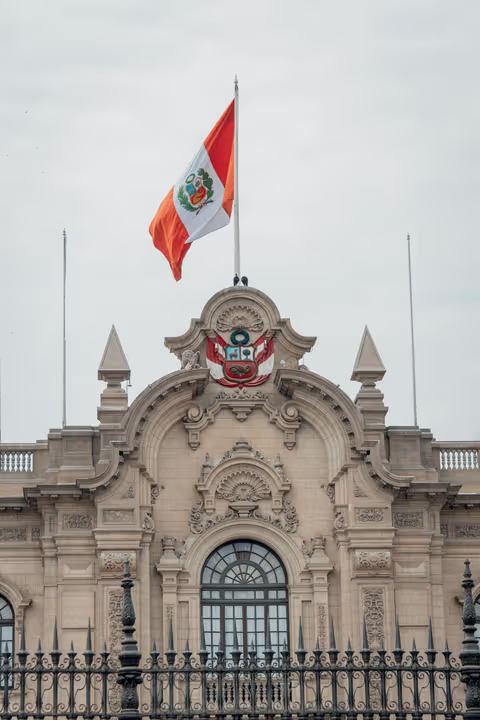
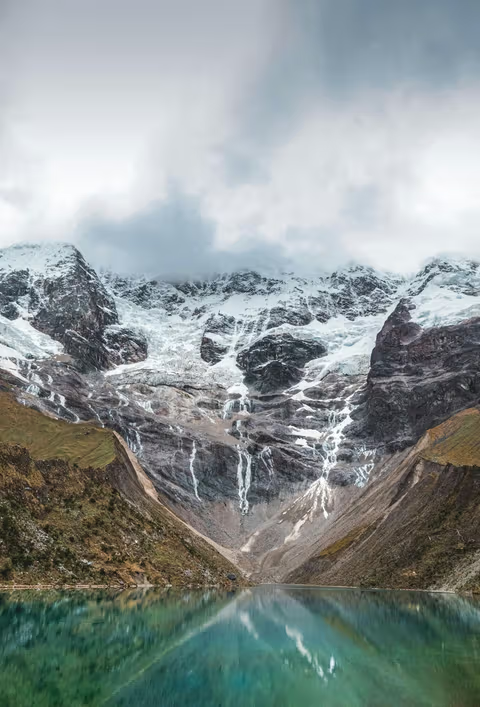
P eru is three countries in one. The coast is pragmatic and urban, it looks out to the Pacific and eats fish. The highlands are ceremonial and deeply Quechua, and to this day organise the year around the agricultural calendar. The jungle is slow, sensory and moves by river. Those three countries coexist under a single flag and feel different the moment you cross from one to another. It is an authored destination, curated with judgement rather than solved with a packaged tour. Altitude in the right order, the right season, an archaeologist guide who opens up the civilisation rather than just pointing at it. Done this way, Peru delivers the most complete journey in South America.

13 UNESCO World Heritage sites
5.000 years · Caral, the oldest city in the Americas
84 of the planet’s 117 life zones
4.000+ documented native potato varieties

Regions

The 5 faces of Peru

Lima · Peru 01 · Capital

2-3 nights

Lima

The gastronomic capital

The only major city in South America with an open Pacific coastline from its residential neighbourhoods. The colonial Historic Centre, bohemian Barranco, the Miraflores boardwalk and the best dining scene on the continent.

Hotels
Hotel B · Country Club Lima · Belmond Miraflores Park
Must-see
Historic Centre · Larco Museum · signature cuisine
Best time
December to April · sun over the Pacific
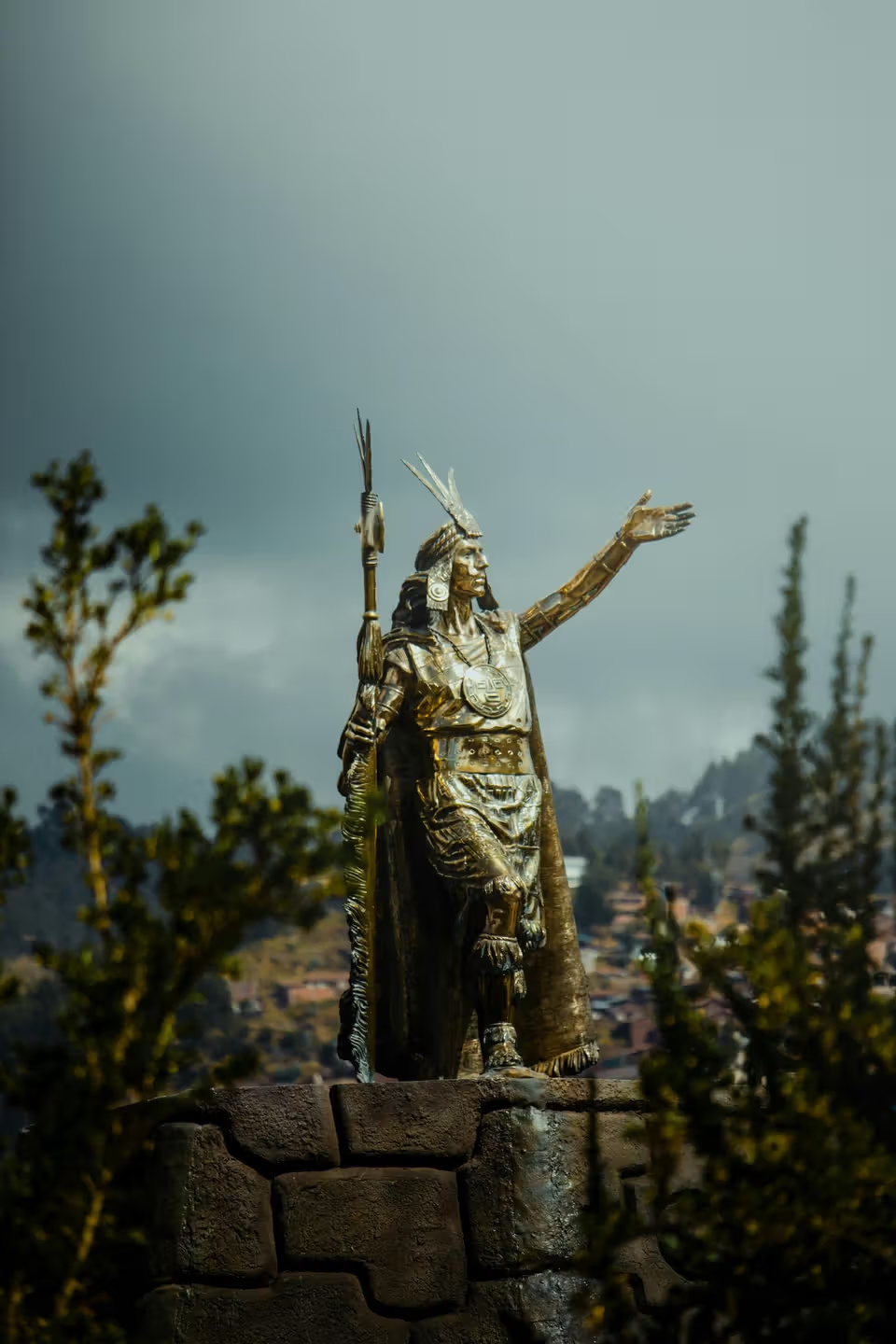
Cusco · Peru 02 · Inca

2-3 nights

Cusco

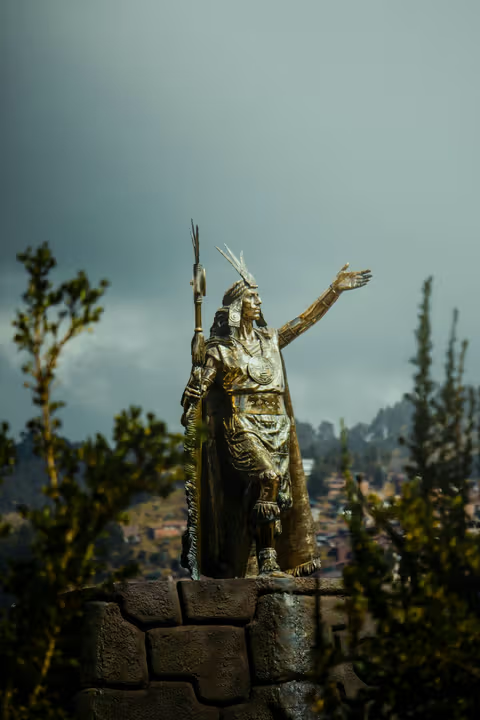
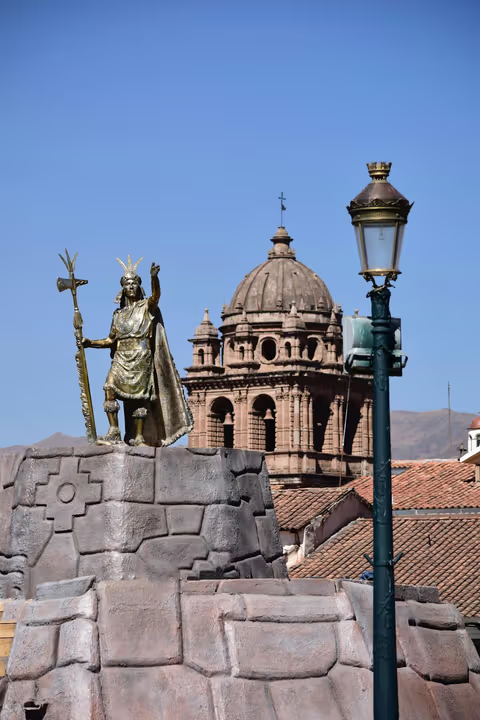
The navel of the Inca world

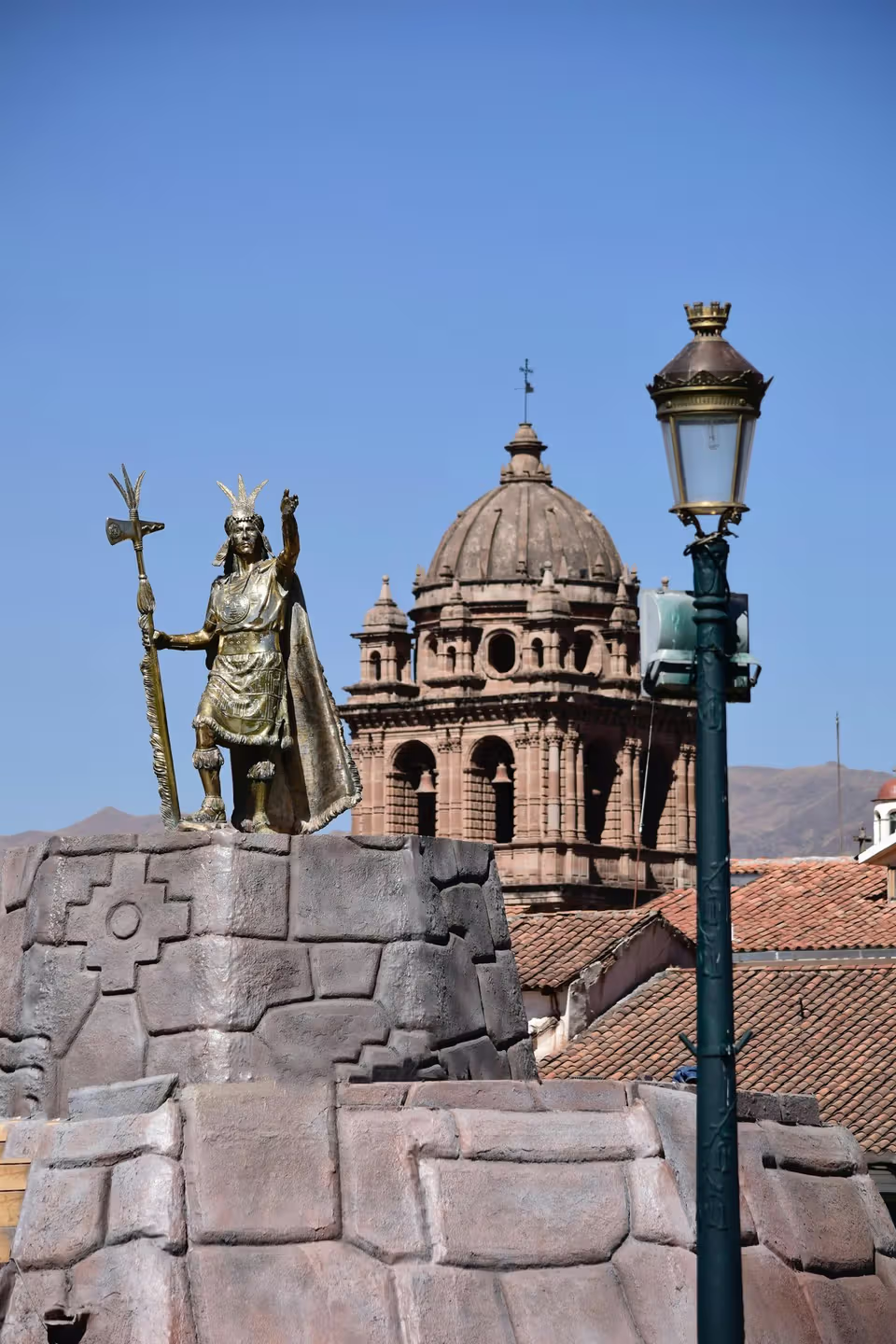
The ancient capital of Tahuantinsuyo, where the Inca wall holds up the baroque church. Qorikancha, Sacsayhuaman and its cyclopean blocks, the Cathedral and the artists’ quarter of San Blas, at 3,400 metres.

Hotels
Belmond Monasterio · Palacio Nazarenas · Inkaterra La Casona
Must-see
Qorikancha · Sacsayhuamán · San Blas
Best time
May to September · clear skies
Sacred Valley and Machu Picchu · Peru 03 · Sacred Valley

3-4 nights

Sacred Valley and Machu Picchu

The heart of Tahuantinsuyo

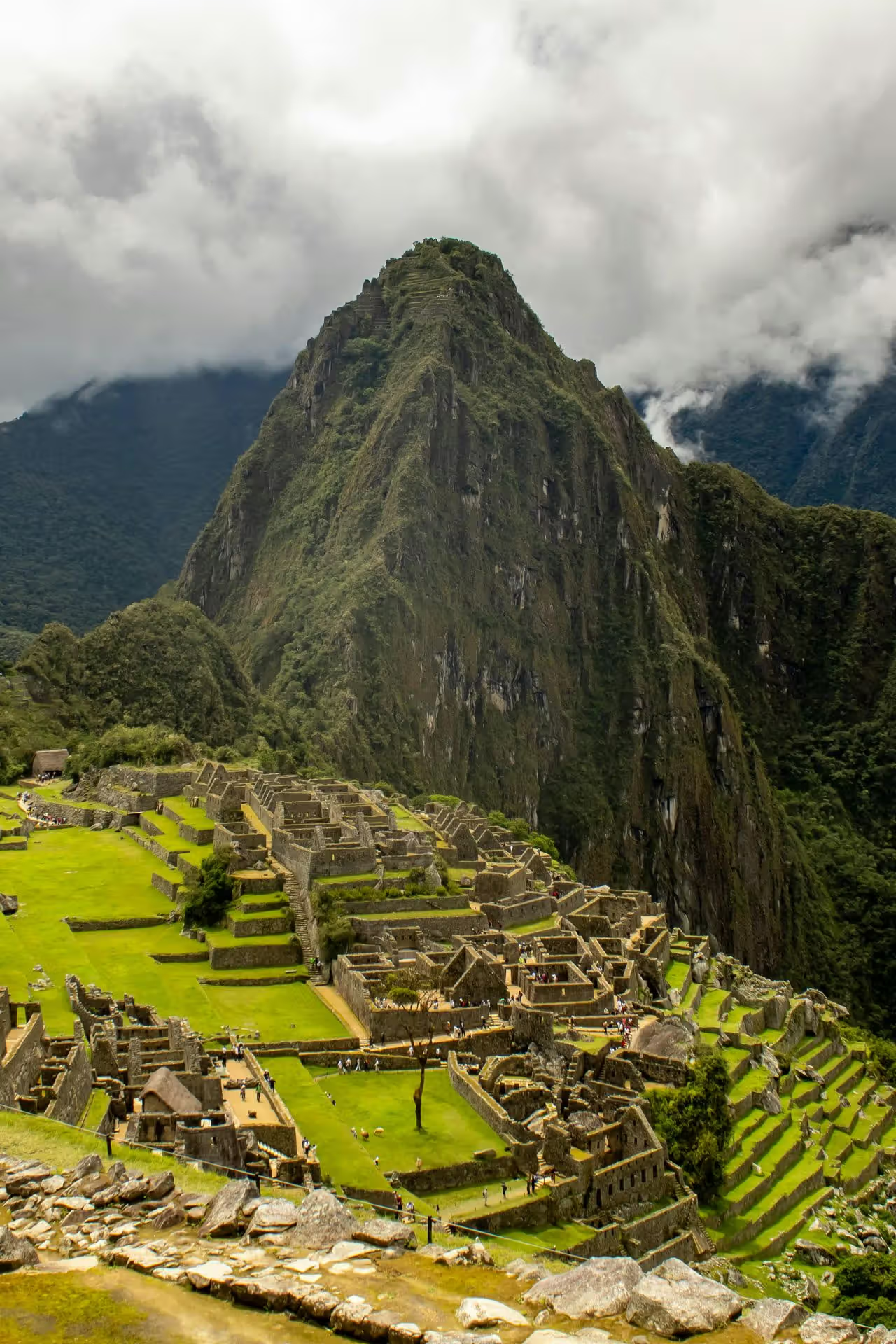
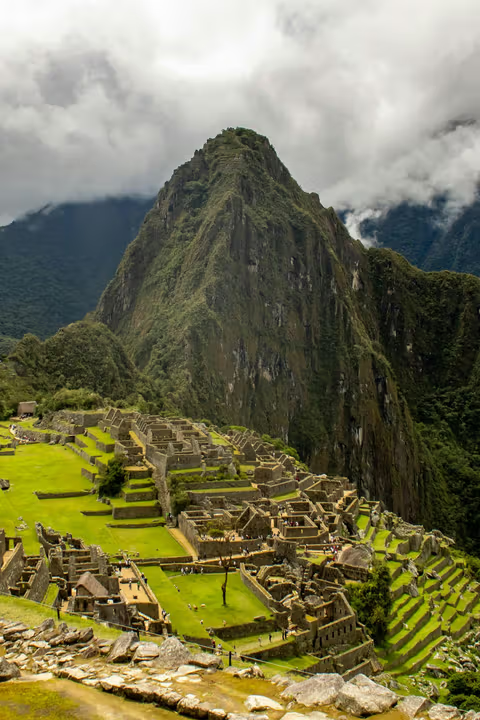
Pisac, Ollantaytambo and the Maras salt pans, the circular terraces of Moray, design lodges among the mountains and, at the end of the valley, Machu Picchu: the Inca citadel and new wonder of the world.

Hotels
explora Valle Sagrado · Tambo del Inka · Belmond Sanctuary Lodge
Must-see
Machu Picchu · Ollantaytambo · Maras and Moray
Best time
May to September · dry season
Arequipa and the Colca · Peru 04 · White City

2-3 nights

Arequipa and the Colca

The white sillar city

Arequipa, built in white volcanic sillar beneath three volcanoes, with the Monastery of Santa Catalina, a city within the city. And the Colca Canyon, twice as deep as the Grand Canyon, with its condors.

Hotels
Cirqa · Belmond Las Casitas del Colca
Must-see
Santa Catalina · Cruz del Cóndor · picanterias
Best time
May to November · condors at sunrise
The Amazon · Peru 05 · Jungle

3-4 nights

The Amazon

The other Peru, the green one

Tambopata and Madre de Dios hold the accessible Amazon: lodges among the trees, clay licks where macaws paint the riverbank at dawn, night walks with a biologist and rivers where giant otters fish.

Hotels
Inkaterra Reserva Amazónica · lodges de Tambopata
Must-see
Macaw clay lick · oxbow lakes · wildlife with a biologist
Best time
May to October · dry season

Signature experiences

Moments to remember

Private access, guides born in the place and a rhythm designed around you.

Practical

The essentials before you travel

Information verified by our travel designers, updated for 2026.

Money

Currency
Peruvian sol (PEN). Check the exchange rate before travelling.
Exchange
Change money at authorised bureaux in Miraflores or San Isidro, never on the street or at the airport.
Cards
Visa and Mastercard are accepted in city hotels, restaurants and shops.
Cash
Essential in markets, taxis, tips and rural communities. Carry notes in good condition.
ATMs
BCP, Interbank and BBVA operate reliable ATMs in the main cities.
Tipping
10% in restaurants. For guides and drivers, a tip per day according to service.

Visa

Latin America
Colombians, Mexicans, Argentines, Chileans and most South Americans do not require a tourist visa.
Spain
Spanish citizens also do not require a tourist visa to enter Peru.
Immigration
The Andean Migration Card is handled digitally; keep the entry stamp in your passport.
Passport
Valid for at least six months from the return date.
Documents
Keep the first hotel voucher, international insurance and outbound flight to hand.

Health

Altitude sickness
Cusco sits at 3,400 m. Gradual acclimatisation, coca tea, hydration and a gentle first day.
Yellow fever
Vaccine recommended if your itinerary includes the Amazon (Tambopata, Madre de Dios, Iquitos).
Recommended
Hepatitis A and B and typhoid. A tetanus booster if the last one was over ten years ago.
Water
Always drink bottled or filtered water, even for brushing your teeth.
Insurance
Essential, with cover for altitude, trekking and medical evacuation.

Transport

Domestic flights
LATAM, Sky and JetSMART connect Lima with Cusco, Arequipa and Puerto Maldonado in little over an hour.
Train to Machu Picchu
PeruRail and Inca Rail depart from Ollantaytambo. CocoVolare books the class according to the trip.
Private driver
The CocoVolare standard for city days and Sacred Valley transfers.
Apps
Uber, Cabify and Beat work in Lima, Arequipa and Cusco.
Distances
Lima, Cusco, Arequipa and Puno are connected by air: short flights, not overland transfers.

Language

Official languages
Spanish, Quechua and Aymara are official languages of Peru.
Quechua
Spoken by around 14% of the population as a mother tongue, mainly in the southern highlands.
English
Functional in boutique hotels, restaurants and certified guides; limited outside tourist areas.
Vocabulary
Allinllachu (hello in Quechua) · sumaq (beautiful) · pachamama (mother earth).
Detail
CocoVolare works with archaeologist guides who open up the civilisation, not just point at it.

Etiquette

Manner
Peruvians welcome with formal courtesy. In the highlands the greeting is more reserved; warmth opens up with time.
Photography
Ask permission before photographing people, especially in markets and Andean communities.
Coca leaf
In Peru the coca leaf is a traditional staple: the tea and chewing help with altitude. Do not take it out of the country.
Sacred sites
Do not fly a drone over Machu Picchu without permission, and do not step on Andean altars or offerings.
Altitude
Soroche is real and to be respected. CocoVolare designs the itinerary so the body adapts without suffering.

Climate

When to travel and why

The Peruvian highlands are best experienced from May to September, in the dry season. The chart shows the twelve months with estimated cost, temperature and iconic festivals. Marked in gold, the times we recommend experiencing Peru with us .

Most recommended month June · dry, sunny and Inti Raymi
Best value for the experience May and October · shoulder months
Month to avoid February · the Inca Trail closes and it rains heavily

The climate, month by month · Cusco

Reference city: Cusco Best season Temperature °C Relative rainfall
-5° 10° 15° 20° 25° Jan: 7° – 19°C · 145 mm 19° Jan: 145 mm Jan Feb: 7° – 19°C · 130 mm 19° Feb: 130 mm Feb Mar: 6° – 19°C · 110 mm 19° Mar: 110 mm Mar Apr: 5° – 20°C · 45 mm 20° Apr: 45 mm Apr May: 3° – 20°C · 10 mm 20° May: 10 mm May Jun: 1° – 19°C · 5 mm 19° Jun: 5 mm Jun Jul: 0° – 19°C · 5 mm 19° Jul: 5 mm Jul Aug: 2° – 20°C · 10 mm 20° Aug: 10 mm Aug Sep: 4° – 20°C · 25 mm 20° Sep: 25 mm Sep Oct: 6° – 21°C · 65 mm 21° Oct: 65 mm Oct Nov: 6° – 21°C · 75 mm 21° Nov: 75 mm Nov Dec: 7° – 20°C · 120 mm 20° Dec: 120 mm Dec

Highlights of the year: Jan · Andean rainsFeb · Candelaria festJun · Inti RaymiJul · Fiestas Patrias

The dry season from June to September is the ideal window for Machu Picchu and the Sacred Valley: clear daytime skies and cold high-altitude nights. From December to March it rains daily and the Inca Trail closes for all of February.

When to go · season & budget

Seasons & estimated cost CocoVolare recommends High Mid Low
Jan: Low season · ≈$425 per person/day Jan Feb: Low season · ≈$400 per person/day Feb Mar: Low season · ≈$425 per person/day Mar Apr: Mid season · ≈$500 per person/day Apr May: Mid season · ≈$525 per person/day $525May Jun: High season · ≈$625 per person/day $625Jun Jul: High season · ≈$675 per person/day $675Jul Aug: High season · ≈$650 per person/day $650Aug Sep: Mid season · ≈$550 per person/day $550Sep Oct: Mid season · ≈$500 per person/day Oct Nov: Low season · ≈$450 per person/day Nov Dec: Low season · ≈$475 per person/day Dec

In our recommended dates, the estimated cost ranges from $525 to $675 per person/day (Premium level, international flights not included).

Investment

What it costs, no fine print

Peru delivers luxury measured in cultural density rather than price: hacienda hotels in the Sacred Valley, panoramic trains to Machu Picchu and Latin America's finest table in Lima, still at a reasonable cost compared with Europe.

Experience levels · guide budget

Peruvian sol (PEN) · 1 USD ≈ 3.75 PEN USD · per person/day
Boutique essential Boutique essential: $280 USD · per person/day $280 Charming boutique hotels in Cusco and the Sacred Valley, the Vistadome train to Machu Picchu and honest criollo market cooking. Premium Premium: $500 USD · per person/day $500 Five-star manor houses such as Palacio del Inka or Sol y Luna, a private guide at the ruins and an auteur table in Lima. Signature Signature: $850 USD · per person/day $850 Belmond and Inkaterra, the Hiram Bingham train with gourmet lunch, sunrise access and tables at Central and Maido.
Vistadome train round trip to Machu Picchu USD 140–180Machu Picchu admission with circuit USD 45–60Tasting menu at Central or Maido (Lima) USD 250–350Criollo dinner with a pisco sour USD 25–45Cusco tourist ticket (10 days) USD 35Airport–hotel transfer in Cusco USD 25–40

Indicative 2026 values per person, excluding international flights. Every CocoVolare quote is tailored to season, hotels and travel pace.

Signature itineraries

Six Perus, choose yours

Zero templates: every itinerary is rewritten 100% to your measure. Prices per person in double occupancy, boutique category, international flights not included.

5 days · 4 nights · Andes

Essential Peru

Lima → Sacred Valley → Machu Picchu → Cusco

The essentials of Peru, without losing the rhythm

  • A gastronomic welcome in Lima, the culinary capital of South America
  • Smart acclimatisation in the Sacred Valley, sleeping lower than Cusco
  • Machu Picchu in the first time slot, with a private archaeologist guide

FromUSD 2,600

7 days · 6 nights · Andes

Balanced Peru

Lima → Sacred Valley → Machu Picchu → Cusco

The classic route, with time to breathe

  • Lima over two days: the Historic Centre, the Larco Museum, Barranco and signature cuisine
  • Weavers’ cooperatives of the Sacred Valley and the terraces of Maras and Moray
  • Machu Picchu in the first time slot with an archaeologist guide

FromUSD 3,900

10 days · 9 nights · Andes and Amazon

Deep Peru

Lima → Sacred Valley → Machu Picchu → Cusco → Amazon

Inca civilisation and the other Peru, the green one

  • Lima in depth: the Historic Centre, the Larco Museum, Barranco and signature cuisine
  • The Sacred Valley with an Andean offering-to-the-earth ceremony
  • Machu Picchu in the first time slot and Inca and baroque Cusco

FromUSD 6,800

14 days · 13 nights · Coast, highlands and jungle

Extended Peru

Lima → Arequipa → Colca → Titicaca → Cusco → Machu Picchu → Amazon

The whole of Peru: coast, highlands, altiplano and jungle

  • Gastronomic Lima and Arequipa, the white sillar city
  • The Colca Canyon and its condors at sunrise
  • Lake Titicaca and Taquile Island, with its World Heritage textiles

FromUSD 9,800

9 days · 8 nights · Romance

Andean Honeymoon

Lima → Sacred Valley → Machu Picchu → Cusco

Begin the rest of your life among the Andes

  • An upgrade to a suite with a view at every destination
  • A private dinner among the terraces of the Sacred Valley, with an archaeologist as narrator
  • A sunrise photo session at Machu Picchu or Sacsayhuaman

FromUSD 7,500

7 days · 6 nights · Gastronomy

Peruvian Flavour Route

Lima → Sacred Valley → Cusco

One of the best cuisines in the world, table by table

  • A tasting table at Central, Maido or Kjolle, in Lima
  • A tour of the Surquillo Market with a cook
  • Lunch at Mil, in Moray, at 3,500 metres above the Inca terraces

FromUSD 5,400

None of them fits? We design your own. WhatsApp →

Gastronomy

The flavors of Peru

From the ceviche of a neighbourhood cevicheria to a tasting menu among the best in the world. Peruvian cuisine crosses coast, highlands and jungle, and five heritages on a single plate. Where Peru becomes memory.

Central

Barranco · Lima

By Virgilio Martínez and Pía León. A menu that travels Peru by altitude tiers, from the sea to 4,000 metres. A regular at the very top of the world rankings.

Maido

Miraflores · Lima

By Mitsuharu Tsumura. Nikkei cuisine, a Japanese-Peruvian fusion, at its highest form. Book months in advance.

Kjolle

Barranco · Lima

By Pía León. Plant-led cuisine of the Andean tiers, with produce from small growers across the country.

Mil

Moray · Sacred Valley

Virgilio Martínez’s high-altitude project, at 3,500 metres beside the Moray terraces, with ingredients grown at that altitude.

Arequipa picanterias

Arequipa

La Nueva Palomino, Sol de Mayo and La Capitana: traditional Arequipa cooking, lunchtime only, with stuffed rocoto and shrimp chowder.

Cevicherias and markets

Lima and the coast

The midday ceviche in a cevicheria with a high turnover of fish, and the chicharrón sandwich from the market: Peruvian cuisine is also eaten standing up.

Calendar

Dates worth traveling for

A well-chosen date turns a trip into a memory. We design your itinerary around the moment that matters most to you.

Inti Raymi · 24 June

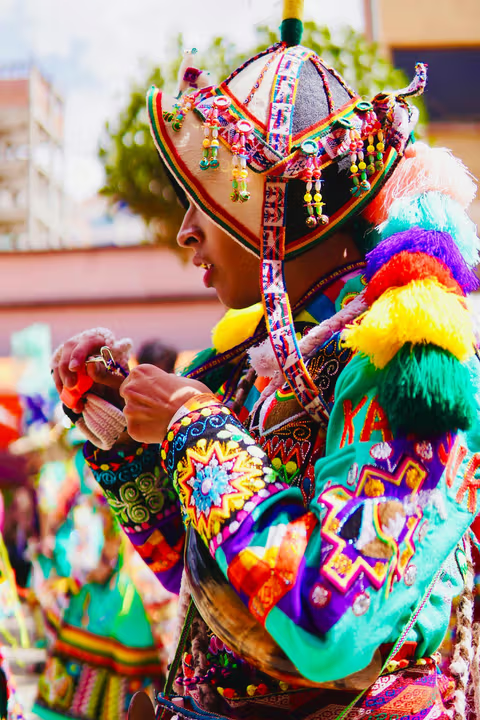
The Inca festival of the sun, re-enacted each year at the Sacsayhuaman fortress, above Cusco. The great celebration of the Andean calendar.

Virgen de la Candelaria · February

In Puno, Intangible Cultural Heritage: up to two hundred Aymara dance groups fill the Titicaca city.

Corpus Christi in Cusco · May · June

Fifteen saints and virgins carried in procession to the Cathedral, and the ritual chiriuchu lunch.

Andean New Year · 21-24 June

The winter solstice, celebrated with ceremonies of thanks to the Pachamama at sacred sites in the highlands.

Fiestas Patrias · 28-29 July

The anniversary of Peru’s independence, with parades, food fairs and the whole country in celebration.

Señor de los Milagros · October

In Lima, the most crowded Catholic procession in the Americas. The city dresses in purple all month.

Holy Week in Ayacucho · March · April

One of the most intense Holy Week celebrations on the continent, with processions, flower carpets and art.

Mistura and the foodie season · October

The Peruvian autumn concentrates food fairs and the best season to explore the country’s cuisine. Check the year’s dates.

CocoVolare recommends

What we would tell a friend

Advice from our travel designers: what we book first, what we avoid, and the details that turn a good trip into an unforgettable one.

01

Machu Picchu and Huayna Picchu book out months ahead

Huayna Picchu permits sell out three to four months in advance and the train two. Without that booking locked in, the entire trip falls out of order. We confirm it the same day you set your dates.

02

Acclimatise in the Sacred Valley, not in Cusco

The classic mistake is sleeping your first night in Cusco, at 3,400 metres. The Sacred Valley sits 600 metres lower: land there first, walk slowly, drink coca tea and climb to Cusco at the end of the circuit, already acclimatised.

03

Central and Maido are booked before the flight

The two tables that put Lima at the top of the world open online reservations two to three months ahead and sell out within hours. If your itinerary passes through Lima, that click comes first; the rest of the trip arranges itself afterwards.

04

The dry season has a price: the crowds

June to August delivers the clearest skies and also the fullest terraces. May and September are the secret: the same stable weather, half the people and better hotel rates in the Sacred Valley.

05

In Lima, Barranco and Miraflores; the centre by day only

Stay in Barranco, the bohemian district by the sea, or in Miraflores along the malecón. The historic centre is for a guided morning visit, left behind before sunset: it is heritage, not a neighbourhood for night walks.

06

No visa, but cash in soles

Colombians do not need a visa for Peru, only a valid passport. What you do need is cash in soles in small notes: outside Lima and the hotels, the markets, taxis and Sacred Valley villages run on cash.

In motion

Peru, live

Testimonials

What our travelers say

★ ★ ★ ★ ★

“We climbed to Machu Picchu in the first time slot, with the archaeologist guide and almost no one around. The mist rose from the river and the citadel appeared little by little. Five years later I still have no words for that morning.”

Mariana Restrepo

Bogotá · Honeymoon · 9 nights

★ ★ ★ ★ ★

“I was afraid of the altitude. CocoVolare had us sleep first in the Sacred Valley, lower than Cusco, with coca tea and an undemanding first day. By the third day we were walking Ollantaytambo with no trouble. That planning changed everything.”

Javier Mendoza

Mexico City · Couple’s trip · 10 nights

★ ★ ★ ★ ★

“We ate at Central and, the next day, at Mil, at 3,500 metres, looking out over the Moray terraces. And between the two, a Lima market with a cook. I thought I knew Peruvian cuisine. I had tasted nothing.”

Andrés Lozano

Medellín · Flavour route · 7 nights

FAQ

Frequently asked questions

Do I need a visa to enter Peru?

Travellers from Colombia, Mexico, Argentina, Chile, most of South America and Spain do not need a tourist visa for Peru. Immigration is managed digitally; keep the entry stamp in your passport, which must be valid for at least six months from the return date.

How does altitude sickness affect a trip to Cusco and Machu Picchu?

Cusco sits at 3,400 metres and altitude is not negotiable. CocoVolare designs the itinerary to acclimatise first in the Sacred Valley (2,800 m), which is lower, with coca tea, hydration and a gentle first day. Machu Picchu, at 2,400 m, is more comfortable. Cusco’s boutique hotels offer oxygen as a courtesy.

What is the best time to travel to Peru?

May to September is the dry season in the Andes: sunny days, cold nights and trekking routes in good condition. April and October are shoulder months with good weather and fewer travellers. February is avoided: the Inca Trail closes all month and the rains in the highlands are heavy.

Do I need to book Machu Picchu in advance?

Yes. Machu Picchu tickets have a daily quota and sell out in high season; it is wise to book two to three months ahead. The classic Inca Trail is booked six months ahead through a quota system. CocoVolare arranges tickets, trains and permits with the necessary lead time.

How many days do I need to discover Peru?

Five days cover Lima, the Sacred Valley and Machu Picchu. Seven to ten days allow Cusco in depth and the Amazon to be added. Fourteen days allow Arequipa, the Colca Canyon and Lake Titicaca to be included. CocoVolare designs itineraries from five up to twenty-one days according to pace and profile.

What currency is used in Peru?

The Peruvian sol (PEN). Visa and Mastercard are accepted in city hotels, restaurants and shops. It is wise to carry cash for markets, taxis and rural communities. Exchange currency at authorised bureaux in Miraflores or San Isidro, never on the street or at the airport.

Is it safe to travel to Peru?

Yes, on the usual tourist circuits: Miraflores, San Isidro and Barranco in Lima, Cusco, the Sacred Valley, Arequipa, Puno and the Amazon with a lodge. The standard urban precautions of any capital apply. CocoVolare operates only within areas with established tourist coverage, with private transfers and local guides.

Do I need a yellow fever vaccine?

The yellow fever vaccine is recommended if your itinerary includes the Amazon (Tambopata, Madre de Dios, Iquitos). It is best applied at least ten days before the trip. For a trip limited to Lima and the highlands it is not necessary. Travel insurance with altitude cover is essential.

What is the train to Machu Picchu like?

Two operators, PeruRail and Inca Rail, depart mainly from Ollantaytambo. There is a panoramic class with wide windows, a premium class with onboard service, and Belmond’s luxurious Hiram Bingham, with a 1920s dining car. CocoVolare chooses the class according to the trip.

Is Peru a good gastronomic destination?

It is one of the best in the world. Lima concentrates restaurants that recur in global rankings, such as Central, Maido and Kjolle. Peruvian cuisine combines coast, highlands and jungle, and five heritages: Creole, Nikkei, Chifa, Andean and Amazonian. Eating well, every day, is part of the trip.

Can I travel to Peru with children?

Yes, it is an excellent family destination from the age of eight, because of the altitude. CocoVolare adapts the pace, with guides who tell the Inca world as a story, ceramic and textile workshops, days with weaving families and hotels with a garden and pool such as Sol y Luna.

How much does a trip to Peru cost?

A seven-day boutique trip, excluding international flights, sits in the comfort band between 2,975 and 5,320 USD per person in double occupancy. CocoVolare signature itineraries start from 2,600 USD per person for five days. Each quote is adjusted to your travel window.

What does a CocoVolare trip to Peru include?

Itinerary design, domestic flights, boutique hotels with breakfast, the train to Machu Picchu, private transfers with a driver, archaeologist and biologist guides, signature experiences, site entrance tickets and 24/7 concierge. Each trip is designed from scratch according to your profile.

Peru

No molds, made to measure

Tell us what excites you and we will design a tailor-made proposal in under 24 hours, with a dedicated travel designer.