Costa Rica · CocoVolare

America · Boutique

Costa Rica

Pura vida, curated

C osta Rica entered the traveller's imagination through the postcard of volcano and beach, and stayed for everything else.

The essence

A country best read slowly

C osta Rica entered the traveller's imagination through the postcard of volcano and beach, and stayed for everything else. What sets it apart from its neighbours goes far beyond the sand: it is the combination of three factors that very few destinations in the world achieve simultaneously. A mature tourism infrastructure with certified operators, a biodiversity concentrated within short distances, and a peaceful national identity perceptible from the very first passport stamp. The country abolished its army in 1948 and reinvested that budget in education and health. That decision shaped the kind of travel it draws today: the kind that comes to observe, not to conquer. Costa Rica works when someone curates it with discernment · the right climatic window, the regions in the right order, the right lodges and a biologist guide who truly understands the ecosystem. Designed that way, it delivers one of the most memorable nature journeys on the continent.

6% of the planet's biodiversity on 0.03% of its land area
25% of the country under protected environmental status
1948 first country in the world to abolish its army
98% of electricity generated from renewable sources

Regions

The 5 faces of Costa Rica

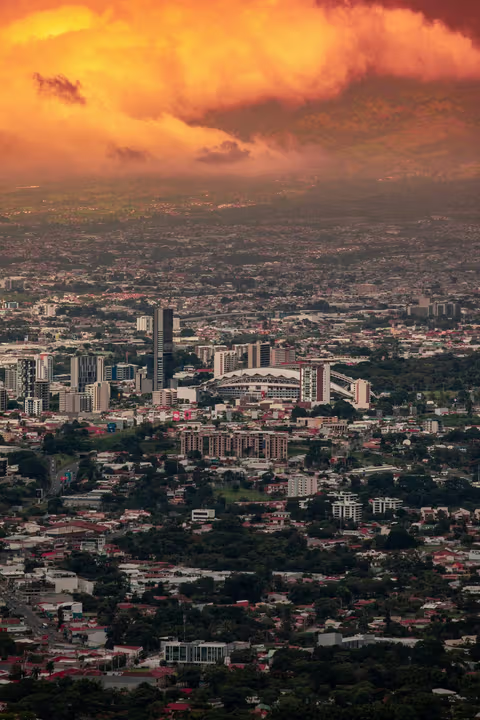
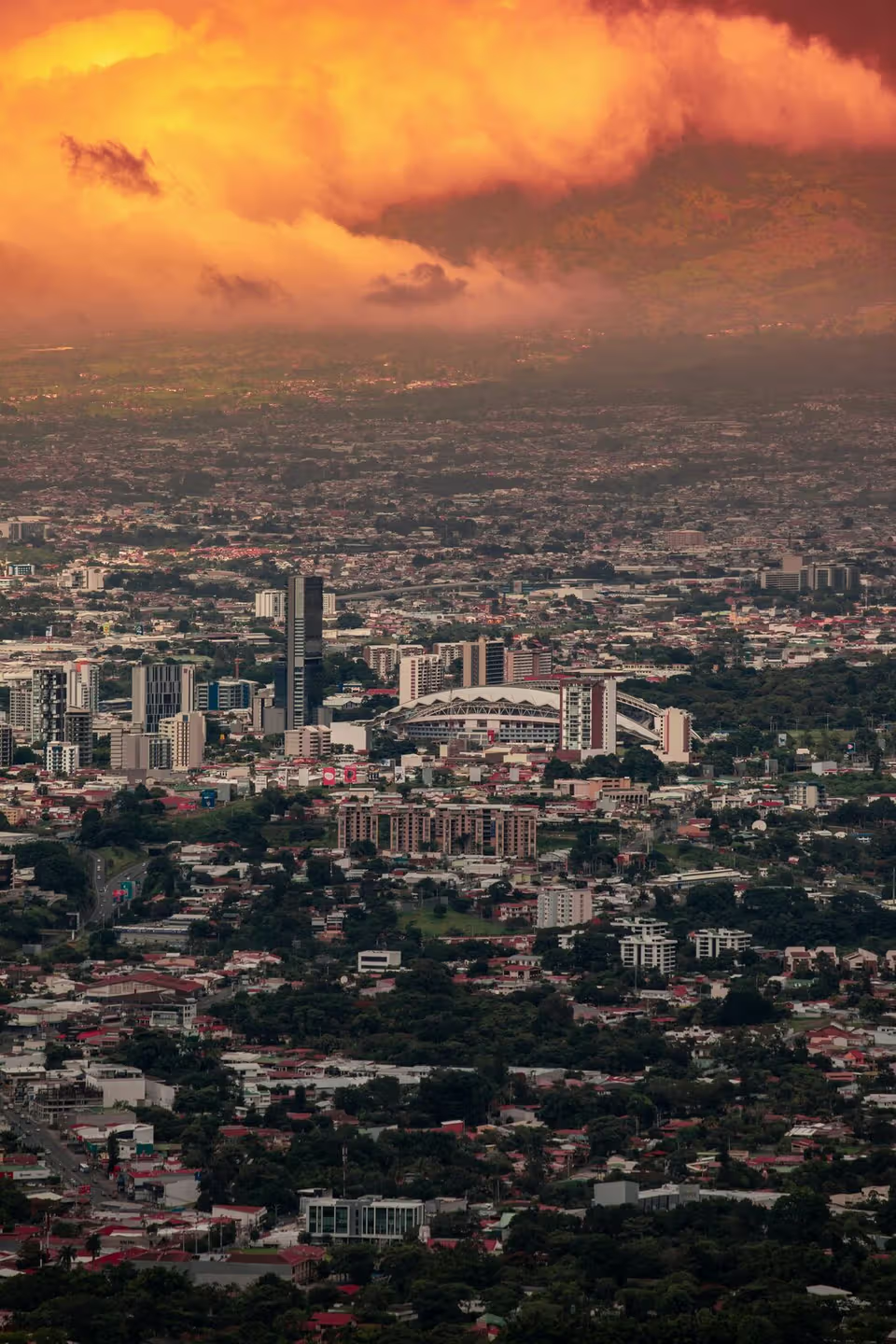
San José and the Central Valley · Costa Rica 01 · Capital

1–2 nights

San José and the Central Valley

A capital walked neighbourhood by neighbourhood

San José does not reveal itself immediately: you have to stroll Barrio Escalante on a Thursday evening, step into the Central Market and climb to a rooftop terrace at dusk. At 1,170 metres, the Tico capital conceals third-wave coffee shops, nineteenth-century coffee-estate houses and a compelling chef-driven dining scene.

Hotels
Grano de Oro · Costa Rica Marriott Hacienda Belén
Must-see
National Theatre · Jade Museum · Barrio Escalante
Best time
December to April · dry season
La Fortuna and Arenal · Costa Rica 02 · Volcano

3–4 nights

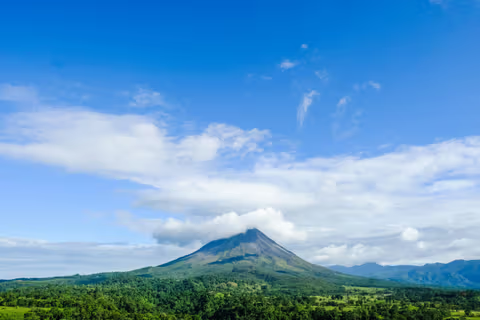
La Fortuna and Arenal

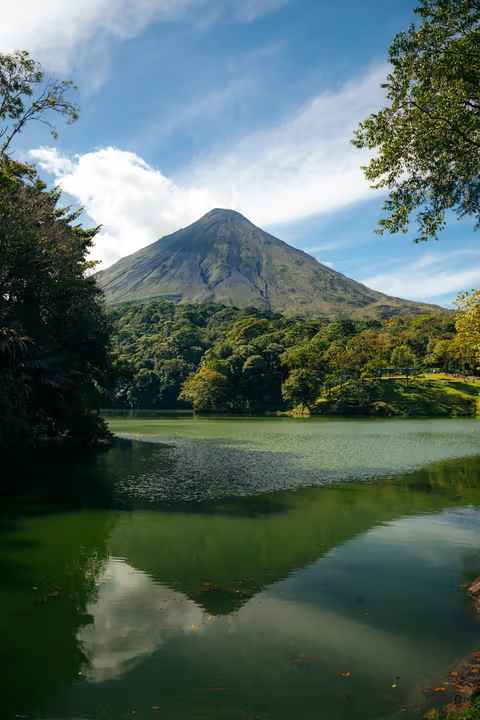
The volcano best viewed by night

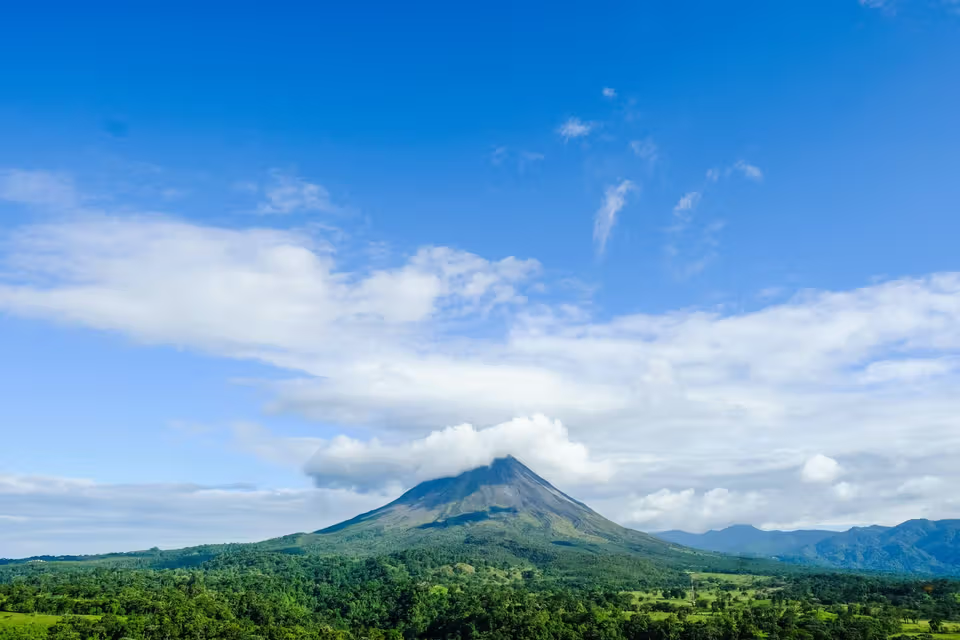
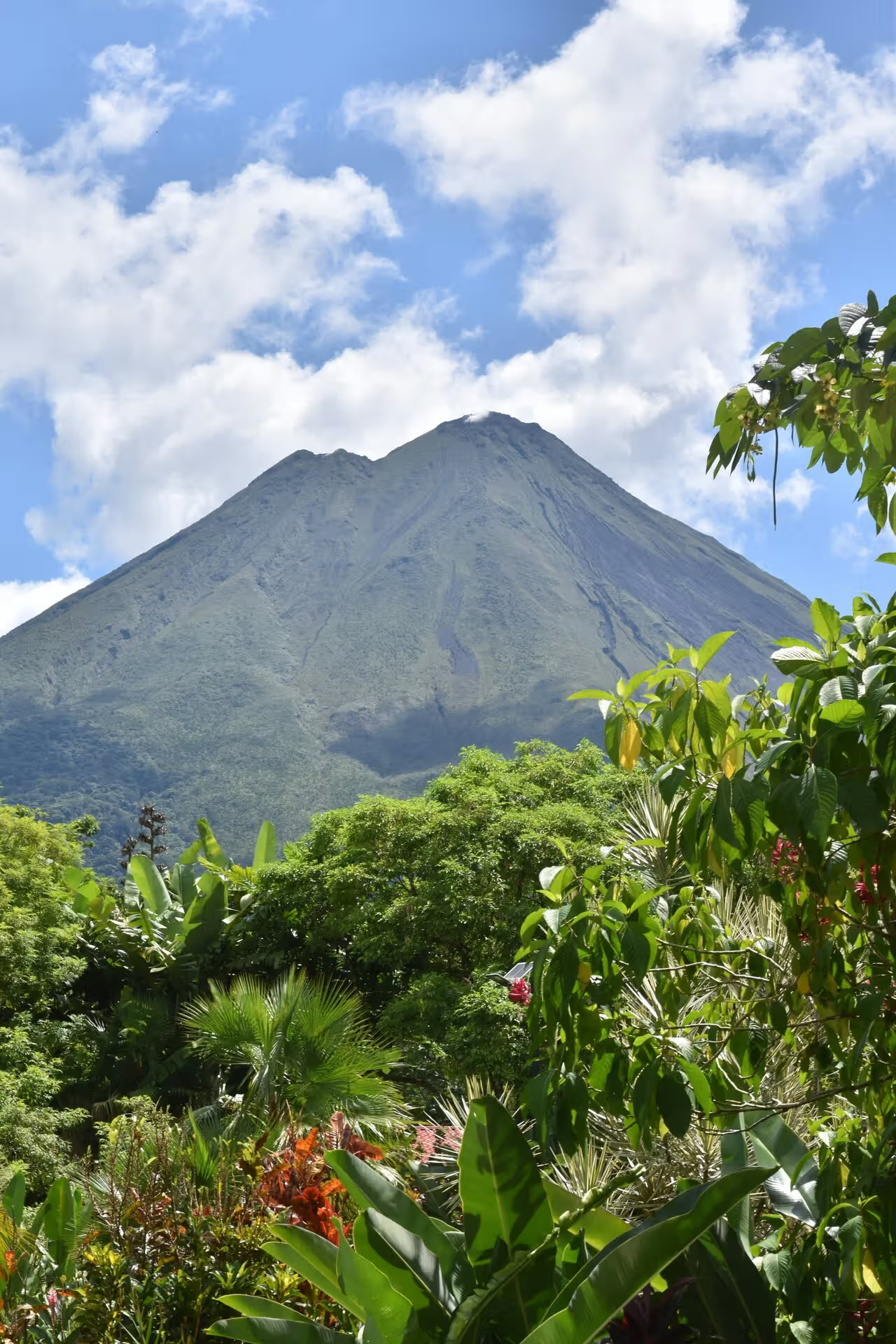
The country's most photogenic cone · a perfect 1,670-metre profile that appears and vanishes between clouds. Around it, a network of natural hot springs has turned this zone into the heart of Costa Rican wellness.

Hotels
Nayara Springs · Tabacón · The Springs Resort
Must-see
Tabacón Hot Springs · La Fortuna Waterfall · Mistico
Best time
December to April · clearest cone views
Monteverde · Costa Rica 03 · Cloud forest

2 nights

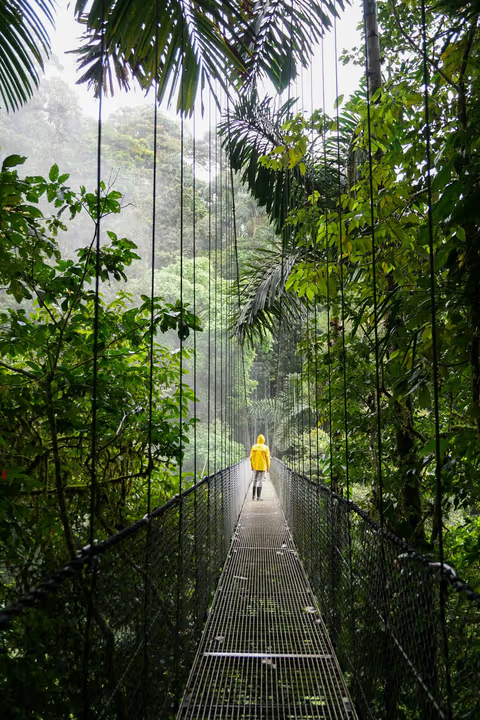
Monteverde

Walking among the clouds

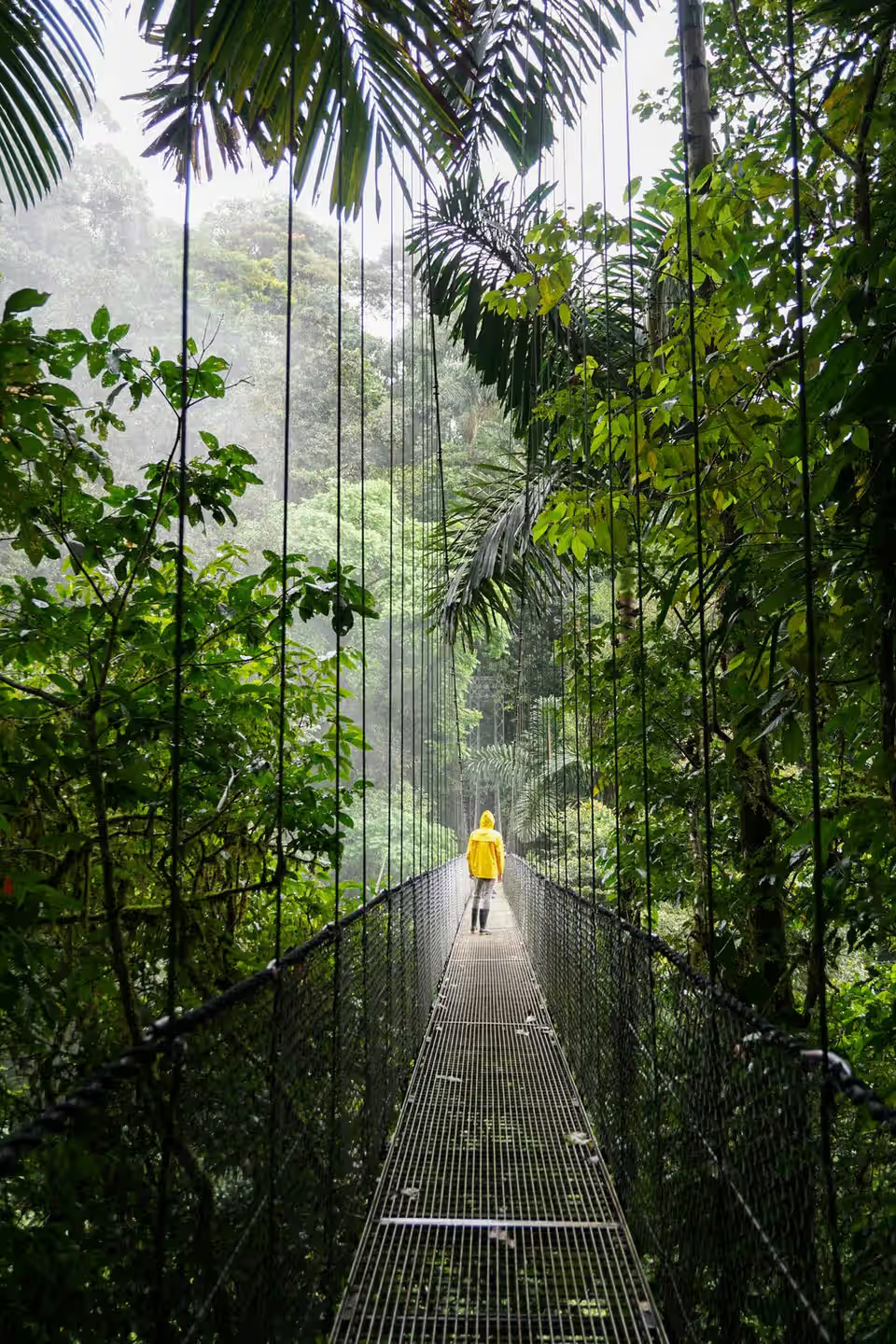
Costa Rica's most celebrated cloud forest, established as a reserve in 1972 by a Quaker community. Resplendent quetzals, mot-mots and three-wattled bellbirds, canopy rides through the canopy, and resident biologists who transform entirely what a traveller is able to perceive.

Hotels
Senda Monteverde · Hotel Belmar · Monteverde Lodge
Must-see
Cloud Forest Reserve · Curi-Cancha · canopy
Best time
January to March · clearest visibility
Manuel Antonio · Costa Rica 04 · Pacific

3–4 nights

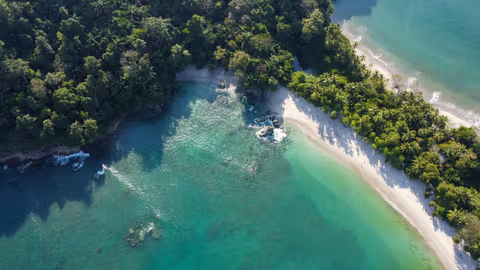
Manuel Antonio

Jungle and Pacific on the same shore

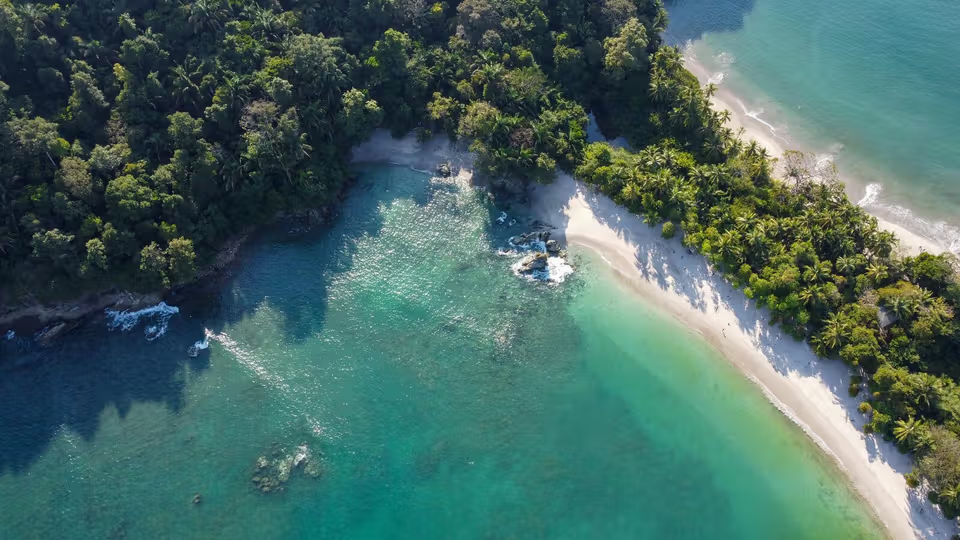
Within six kilometres of road, Costa Rica compresses nearly everything that makes it famous: humid rainforest descending to white-sand beach, white-faced capuchins and sloths at arm's reach, and boutique hotels perched on clifftops overlooking the ocean.

Hotels
Arenas del Mar · Tulemar · Si Como No · Makanda
Must-see
National Park · Playa Biesanz · Marina Pez Vela
Best time
December to April · reliable sunshine
Osa Peninsula and Corcovado · Costa Rica 05 · Primary jungle

3 nights

Osa Peninsula and Corcovado

One of the most biodiverse places on Earth

National Geographic named it one of the most biodiverse places on the planet. Tapirs, spider monkeys, poison-dart frogs and rare jaguar sightings. Mesoamerica's last untouched primary jungle, in intimate eco-luxury lodges with a handful of rooms.

Hotels
Lapa Ríos · Bosque del Cabo · El Remanso
Must-see
Sirena Station · Drake Bay · Caño Island
Best time
January to April · firm trails

Signature experiences

Moments to remember

Private access, guides born in the place and a rhythm designed around you.

Practical

The essentials before you travel

Information verified by our travel designers, updated for 2026.

Money

Currency
Costa Rican colón (CRC, symbol ₡). Reference exchange rate close to 510 CRC per USD (verify before travel).
Pricing
Hotels, agencies and domestic flights quote in USD. Colones are convenient for local diners, markets, taxis and small tips.
USD cash
Accepted at tourist hotels and restaurants. Bring small-denomination, unmarked bills · worn or marked notes are frequently refused.
Cards
Visa and Mastercard work at 95% of tourist establishments. American Express has limited coverage. Notify your bank before travelling.
ATMs
Plentiful in cities and medium-sized tourist areas. Scarce in Drake Bay and Tortuguero. Withdraw at a bank or ATM · never at the airport.
Tips
A 10% service charge is legally included in restaurant bills. Additional tips for biologist guides, drivers and lodge staff are customary.

Visa

Latin America
Colombians, Mexicans, Argentinians and most South Americans do not require a tourist visa.
Length of stay
Up to 90 days for visa-exempt countries. EU citizens also enter without a visa for stays under 90 days.
Onward ticket
Immigration at SJO and LIR frequently asks for proof of an onward ticket. Carry it printed or on your device.
Passport
Must be valid for at least six months at entry. Entry rules change: always verify before travel.
Departure tax
A departure tax of approximately USD 29 is included in most airfares.

Health

Yellow fever
Mandatory only if arriving from an endemic country (Brazil, Colombia, Venezuela, Peru, African countries). Administer at least 10 days before entry.
Recommended vaccines
Hepatitis A, typhoid, and up-to-date tetanus and MMR boosters.
Dengue
Endemic in low-lying areas during the rainy season. DEET 30% or picaridin 20% repellent is essential in Tortuguero, Osa and the Caribbean.
Travel insurance
Practically indispensable, with evacuation and repatriation cover. Reliable providers: Allianz, IATI, Assist Card.
Water
Tap water is safe in most of the country. In coastal and rural areas, sensitive travellers may prefer bottled water for the first few days.

Transport

Domestic flights
Sansa and Skyway connect San José with Quepos, Drake Bay, Tortuguero, Tamarindo and Liberia on short hops.
Private 4x4
Recommended for Monteverde, Osa and secondary roads. Many routes remain unpaved gravel tracks.
Private driver
The CocoVolare standard for longer transfers: saves the wear of Costa Rica's mountain roads, and the driver adds rich local context.
Apps
Uber operates in the Central Valley and some coastal areas. WhatsApp is the universal communication channel with guides and lodges.
Distances
Deceptive: 80 km on the map can mean three hours on the road. Always add 30% to Google Maps estimated travel times.

Language

Official language
Spanish, with a distinctive accent and local expressions. Usted and vos coexist; tú is rarely used among Ticos.
English
The highest English proficiency in Central America's tourism sector. Lodges, restaurants and guides handle it fluently.
Indigenous languages
Bribri, Cabécar, Maléku, Boruca and others survive in indigenous territories of the Caribbean and south.
Key vocabulary
Pura vida (all good / thanks / you're welcome) · mae (mate) · tuanis (great) · con gusto (you're welcome) · soda (local diner).
A note
CocoVolare works with local biologist guides · that changes entirely the quality of access a traveller has to the ecosystem.

Etiquette

Wildlife
Never touch or feed wild animals. Stroking a sloth or monkey is an environmental offence with real fines and strong social stigma.
Pace
The Tico plans ahead and moves without rushing. Pressuring someone to hurry reads as rudeness. Pura vida is the operating instruction.
Bargaining
Not part of the culture. Prices in menus and market stalls are fixed · do not haggle.
Cleanliness
Costa Rica is obsessively clean. Dropping litter on a trail or beach causes immediate social scandal.
Greetings
A firm handshake and eye contact. Between acquaintances, one kiss on the cheek. Say buen provecho when passing a table where people are eating.

Climate

When to travel and why

Costa Rica is best lived from December to April, in the dry season, and also in the early green season of May to July. The chart shows all twelve months with estimated cost, temperature and iconic festivals. Marked in gold, the periods we recommend experiencing Costa Rica with us .

Most recommended month February · dry season, clear fauna and volcano views
Best value for experience May · early green season begins
Unmissable window July to October · humpback whales and sea turtles

The climate, month by month · San José

Reference city: San José Best season Temperature °C Relative rainfall
10° 15° 20° 25° 30° Jan: 14° – 24°C · 6 mm 24° Jan: 6 mm Jan Feb: 14° – 25°C · 10 mm 25° Feb: 10 mm Feb Mar: 15° – 26°C · 14 mm 26° Mar: 14 mm Mar Apr: 16° – 27°C · 80 mm 27° Apr: 80 mm Apr May: 17° – 27°C · 230 mm 27° May: 230 mm May Jun: 17° – 26°C · 275 mm 26° Jun: 275 mm Jun Jul: 17° – 26°C · 210 mm 26° Jul: 210 mm Jul Aug: 16° – 26°C · 240 mm 26° Aug: 240 mm Aug Sep: 16° – 26°C · 305 mm 26° Sep: 305 mm Sep Oct: 16° – 25°C · 300 mm 25° Oct: 300 mm Oct Nov: 15° – 24°C · 145 mm 24° Nov: 145 mm Nov Dec: 14° – 24°C · 34 mm 24° Dec: 34 mm Dec

Highlights of the year: Feb · QuetzalsAug · Green turtlesSep · Uvita whales

The dry season (December–April) is the classic window for the Pacific and the Central Valley. The 'green season' (May–November) brings lush jungle and better rates, with afternoon rains. The Caribbean runs on its own rhythm: September and October are its driest months.

When to go · season & budget

Seasons & estimated cost CocoVolare recommends High Mid Low
Jan: High season · ≈$745 per person/day $745Jan Feb: High season · ≈$745 per person/day $745Feb Mar: High season · ≈$715 per person/day $715Mar Apr: High season · ≈$635 per person/day $635Apr May: Mid season · ≈$525 per person/day May Jun: Mid season · ≈$495 per person/day Jun Jul: Mid season · ≈$550 per person/day Jul Aug: Mid season · ≈$525 per person/day Aug Sep: Low season · ≈$440 per person/day Sep Oct: Low season · ≈$440 per person/day Oct Nov: Mid season · ≈$525 per person/day Nov Dec: High season · ≈$770 per person/day $770Dec

In our recommended dates, the estimated cost ranges from $635 to $770 per person/day (Premium level, international flights not included).

Investment

What it costs, no fine print

Costa Rica charges in experiences what other destinations charge in marble: its luxury ecolodges (world pioneers of the genre) are not cheap, but they include naturalist guides, origin-driven cuisine and a biodiversity that has no substitute.

Experience levels · guide budget

Costa Rican colón (CRC) · 1 USD ≈ 510 CRC USD · per person/day
Boutique essential Boutique essential: $300 USD · per person/day $300 Boutique lodges with character, private ground transfers on short routes and small-group nature tours. Premium Premium: $550 USD · per person/day $550 Nayara or Lapa Ríos, domestic flights to skip slow roads and a private naturalist guide in every park. Signature Signature: $1,000 USD · per person/day $1,000 Villas with private pools facing the cloud forest or the Pacific, a private chef, helicopter hops between coasts and behind-closed-doors conservation experiences.
Chef's dinner with local produce USD 50–90Canopy or hanging bridges (Monteverde) USD 60–90Night at a luxury ecolodge USD 400–900Domestic flight (Sansa) USD 90–140Private naturalist guide, half day USD 80–150

Indicative 2026 values per person, excluding international flights. Every CocoVolare quote is tailored to season, hotels and travel pace.

Signature itineraries

Six Costa Ricas · choose yours

Zero templates: every itinerary is rewritten 100% to your measure. Prices per person in double occupancy, boutique category, international flights not included.

5 days · 4 nights · Volcano & Pacific

Costa Rica Essence

Arenal → Manuel Antonio → San José

Costa Rica distilled but coherent, without losing its rhythm

  • Tabacón natural hot springs at the foot of Arenal volcano
  • Dawn hike with a biologist guide and La Fortuna waterfall
  • Manuel Antonio National Park with a private guide before the crowds arrive

FromUSD 2,800

7 days · 6 nights · Jungle & cloud forest

Balanced Costa Rica

San José → Tortuguero → Arenal → Monteverde

Four regions, four ecosystems, one well-measured week

  • San José and the chef-driven dining scene of Barrio Escalante
  • Tortuguero canals by silent boat with a biologist guide
  • Arenal volcano with hot springs and whitewater rafting on the Balsa River

FromUSD 4,200

10 days · 9 nights · Five regions

Deep Costa Rica

San José → Bajos del Toro → Tortuguero → Osa → Santa Teresa

Five Costa Ricas in a single journey, with room to breathe

  • Bajos del Toro: turquoise waterfalls and cloud forest without the crowds
  • Tortuguero canals and, in season, green turtle nesting
  • Corcovado in premium format, staying at a lodge within a private reserve

FromUSD 7,200

14 days · 13 nights · Ocean to ocean

Extended Costa Rica

San José → Southern Caribbean → Osa → Pacuare → Santa Teresa

Caribbean, cloud forest, primary jungle and river · no shortcuts

  • The deep route: Bajos del Toro, Tortuguero and the Osa Peninsula
  • Southern Caribbean: snorkelling at Cahuita and Afro-Caribbean flavours of Puerto Viejo
  • Pacuare Lodge, reachable only by Class III rafting or zip line

FromUSD 11,000

10 days · 9 nights · Romance

Pura Vida Honeymoon

Arenal → Osa → Manuel Antonio → Santa Teresa

Beginning the rest of your life between volcanoes and two oceans

  • Upgrade to a private-pool villa at every boutique lodge
  • Private chef's dinner on the sand, table laid at sunset
  • Helicopter to Drake Bay to reach Osa without the road journey

FromUSD 9,500

7 days · 6 nights · Gastronomy

Tico Flavours Route

San José → Arenal → Southern Caribbean

From the local diner casado to the chef's tasting menu, table by table

  • Tasting dinner at Sikwa, Bribri and Boruca indigenous cuisine
  • Foodie walk through Barrio Escalante and a third-wave coffee tour
  • Bean-to-bar chocolate workshop at an Arenal cacao farm

FromUSD 4,800

None of them fits? We design your own. WhatsApp →

Gastronomy

The flavors of Costa Rica

From the breakfast gallo pinto to an indigenous tasting menu. Tico cuisine is rooted in campesino tradition · modest, fresh and seasonal · and over the past decade a new generation of chefs has been rewriting it with native ingredients and contemporary technique.

Sikwa

Barrio Aranjuez · San José

Chef Pablo Bonilla rescues Chorotega, Bribri and Boruca indigenous recipes using forgotten native ingredients. Seven-to-ten course tasting menu. The most genuinely authored cuisine in the country.

Silvestre

Barrio Amón · San José

Chef Santiago Fernández delivers contemporary Costa Rican cuisine in a restored colonial house, focused entirely on small-producer ingredients.

Al Mercat

Barrio Escalante · San José

Farm-to-table cuisine by chef José González, with direct farm suppliers and strictly seasonal produce.

Don Rufino

Town centre · La Fortuna

The Arenal zone's culinary reference point: contemporary Costa Rican cooking with local ingredients, pan-seared corvina and plantain purée.

Kapi Kapi

Highway · Manuel Antonio

Contemporary Costa Rican cuisine with Pan-Asian influence, a terrace with partial Pacific views and the freshest local seafood.

Café Sikwa

Barrio Aranjuez · San José

Third-wave Tico coffee from beans grown by women producers in Acosta. Filter methods and Tarrazú micro-lots.

Calendar

Dates worth traveling for

A well-chosen date turns a trip into a memory. We design your itinerary around the moment that matters most to you.

Palmares Festival · Jan

The country's biggest popular fair: two weeks of live music, horse parades, regional gastronomy and tradition in the Central Valley.

Yellow cortés in bloom · Mar · Apr

The yellow cortés trees burst into brilliant flower across the Central Valley and Guanacaste · a fleeting spectacle of just a few days after the first rains.

Juan Santamaría Day · 11 April

Costa Rica honours the national hero of the 1856 campaign with civic parades, especially in his home city of Alajuela.

Guanacaste Annexation Day · 25 July

The province celebrates its voluntary 1824 annexation with cowboys, marimba, traditional food and horse parades.

Whales and turtles · Jul–Oct

Humpback whales gather at Marino Ballena while green turtles nest at Tortuguero. The country's great wildlife window.

Romería de los Ángeles · 2 August

Hundreds of thousands of pilgrims walk to the Basílica de Cartago to honour La Negrita, Costa Rica's patron saint.

Independence Day · 15 Sept

The country celebrates its 1821 independence with lantern and torch parades, school bands marching through every town.

Festival de la Luz · Dec

In mid-December, San José fills with illuminated floats, brass bands and lights in a vast nocturnal parade.

CocoVolare recommends

What we would tell a friend

Advice from our travel designers: what we book first, what we avoid, and the details that turn a good trip into an unforgettable one.

01

Colombians: your US visa is the key

Costa Rica requires a consular visa for Colombian passports, but waives it if you hold a valid US, Canadian or Schengen visa or residency, under specific validity conditions. The rules get updated: we validate your particular case before issuing a single flight.

02

December's lodges are signed in June

The flagship ecolodges have 10, 20, 30 rooms, not 300. For dry season and year-end, the best villas sell out six to eight months ahead. Green season, by contrast, offers availability and rates up to 30% lower.

03

On the map it's 100 km; on the clock, three hours

Costa Rican roads are mountainous, slow and sometimes gravel. Don't plan Arenal and Manuel Antonio on the same day: use domestic flights or private transfers and accept that here you travel at jungle pace, not highway pace.

04

A guide with a scope is the difference between seeing and looking

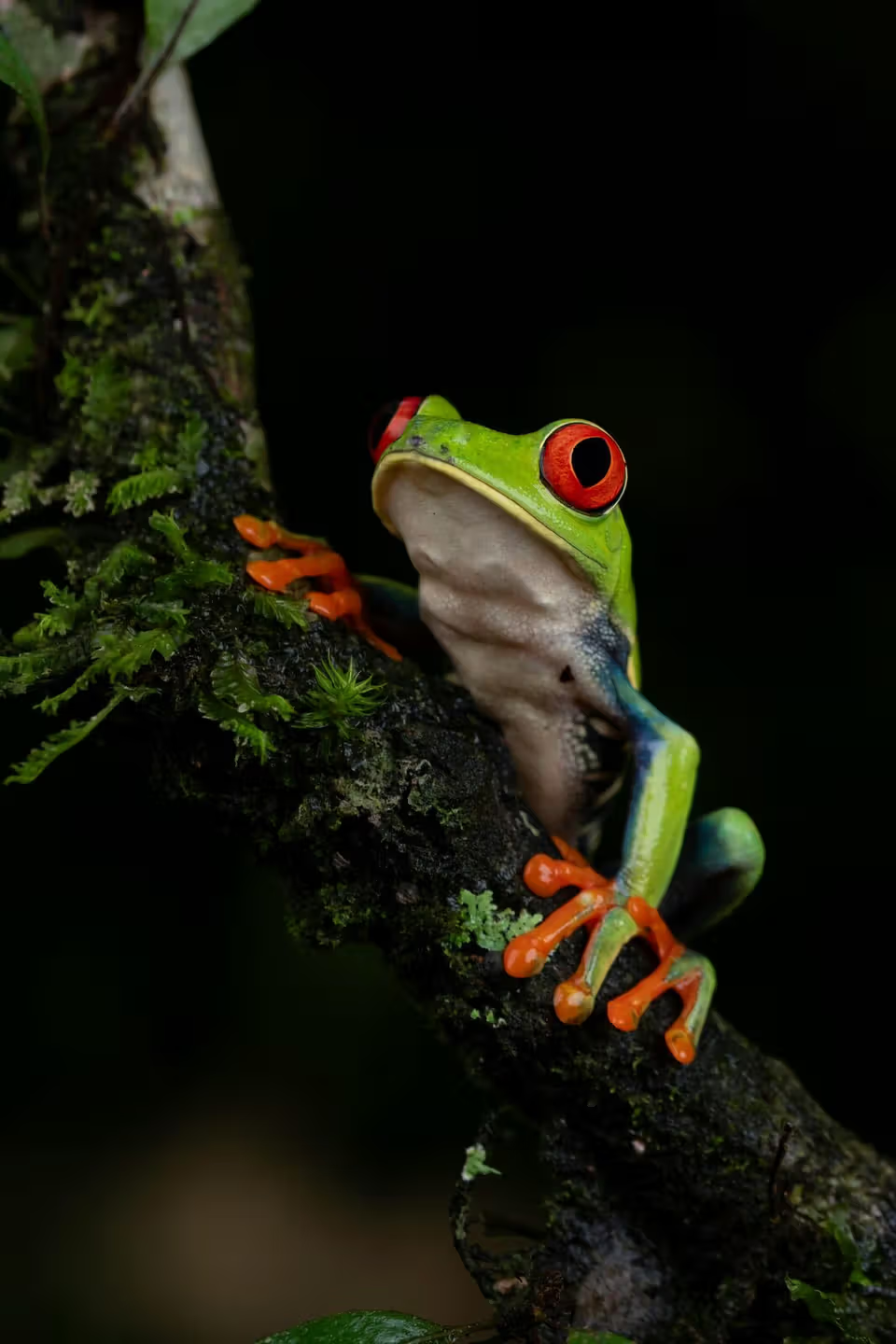
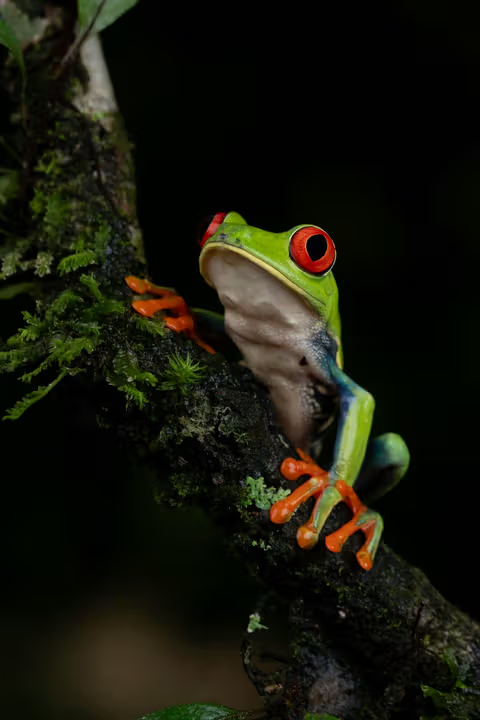
Ninety percent of the wildlife is camouflaged twenty meters up. A certified naturalist guide with a spotting scope shows you the sloth, the red-eyed tree frog and the quetzal you would never find alone. It's the trip's best-spent money.

05

Pack for three climates in a single day

Sunny morning on the beach, cool afternoon in the cloud forest and a tropical downpour in between. Light layers, a good rain shell, repellent and shoes that can get muddy. Reef-safe sunscreen is the gesture the country appreciates.

06

Pura vida is also etiquette

The greeting, the thank-you and the relaxed pace all get the same reply: 'pura vida'. The 10% tip is already included on the bill by law; an extra in cash for guides and drivers, while not required, is warmly appreciated.

In motion

Costa Rica, live

Testimonials

What our travelers say

★ ★ ★ ★ ★

“We entered Manuel Antonio at seven, before anyone else. The biologist stopped the group, set up his telescope and showed us a three-toed sloth with her cub. Without him, we would have walked straight past. CocoVolare understood that the guide is the difference.”

Mariana Restrepo

Bogotá · Couple's trip · 10 nights

★ ★ ★ ★ ★

“We arrived at Corcovado afraid we'd see nothing. On the first day a tapir appeared drinking at the river. The team had been tracking it since the night before. That is the work of people who truly know their jungle.”

Javier Mendoza

Mexico City · Nature trip · 12 nights

★ ★ ★ ★ ★

“The driver was more than a driver · he talked about the country, pulled over at viewpoints, knew exactly where to find the scarlet macaws. Costa Rican roads are slow, but with CocoVolare every transfer became part of the journey.”

Andrés Lozano

Medellín · Family trip · 11 nights

FAQ

Frequently asked questions

Do I need a visa to enter Costa Rica?

Travellers from the US, Canada, the EU, the UK and most of Latin America do not need a visa · a valid passport with at least six months' remaining validity is enough, for stays of up to 90 days. Immigration at SJO and LIR frequently asks for a departure ticket, so carry it printed or on your phone. Entry rules can change: always verify before you travel.

When is the best time to visit Costa Rica?

December to April is the dry season: clear skies, excellent visibility for wildlife and volcanoes. It is peak season and prices rise 30–60%. The green season from May to July brings explosive nature, brief afternoon showers and moderate prices. September and October are the worst window on the Pacific but the best for the southern Caribbean, which has its own microclimate.

How many days do I need to explore Costa Rica?

Five days cover Arenal and Manuel Antonio in a compact but coherent way. Seven to ten days adds Monteverde, Tortuguero or Osa. Fourteen days allows a full ocean-to-ocean circuit including the southern Caribbean. Fewer than five days leaves the experience shallow given travel times. CocoVolare designs itineraries from five to twenty-one days.

What currency is used in Costa Rica?

The Costa Rican colón (CRC, symbol ₡), with a reference exchange rate of around 510 CRC per USD. Hotels, agencies and domestic flights quote in US dollars; it's worth carrying colones in cash for local sodas, markets, toll booths and small tips. Visa and Mastercard work in 95% of tourist areas. Bring new-condition USD notes · worn bills are frequently refused.

Is Costa Rica safe to travel to?

Yes. Costa Rica is one of the safest destinations in Latin America for visitors. Violent crime against tourists is low in tourist zones. The real risks are opportunistic theft at beaches and from unattended rental cars, pickpockets in central San José and riptides on the Pacific coast. CocoVolare designs itineraries only within areas with confirmed security coverage.

How much does a trip to Costa Rica cost?

Costa Rica is not a cheap destination and it's worth saying so upfront. A ten-day boutique trip, excluding international flights, sits in the comfort band of USD 5,050–8,500 per person in double occupancy. CocoVolare signature itineraries start from USD 2,800 per person for five days. Budget an additional 8–12% of your total for tips to guides, drivers and lodge staff.

Do I need a yellow fever vaccination?

The yellow fever vaccine is only mandatory if you are arriving from an endemic country (Brazil, Colombia, Venezuela, Peru or certain African nations). The certificate must be at least ten days old. Hepatitis A, typhoid and a tetanus booster are also recommended. For Tortuguero, Osa and the Caribbean, DEET 30% or picaridin 20% insect repellent is essential against dengue.

Should I hire a car or arrange private transfers?

It depends on your travel style. For Arenal, Monteverde and the Central Pacific, a 4x4 gives you freedom, though many routes are unpaved and a high-clearance vehicle is advisable. For Corcovado or Tortuguero, boat or shuttle is the only option. CocoVolare typically combines private chauffeured transfers with short domestic flights · they save hours on mountain roads and the driver adds genuine context along the way.

Is a biologist guide in the parks worth the cost?

Yes · it is the difference between walking through forest and understanding an ecosystem. A naturalist with a telescope who has spent years in Osa or Manuel Antonio will spot species the unguided traveller walks straight past. The difference between seeing three species and twelve is exactly this. Be wary of guides who solicit at park entrances: many are not ICT-certified.

Is Corcovado worth going out of your way for?

Yes, for travellers with a genuine interest in biodiversity. Corcovado holds a remarkable share of the planet's biodiversity and is only accessible with a certified guide and a SINAC permit. San Pedrillo and Sirena ranger stations have limited capacity. For the full experience, plan a minimum of two days · ideally with a night inside the park at Sirena station.

Is Costa Rica a good destination for food lovers?

Increasingly so. Tico cuisine is rooted in simple campesino tradition, but over the past decade chefs such as Pablo Bonilla, Santiago Fernández and José González have been rewriting it with native ingredients and contemporary technique. Add to that world-class third-wave coffee, Bribri cacao from the Caribbean and the Afro-Caribbean cooking of the south, and a well-designed Costa Rica trip is also a journey to the table.

Can I travel to Costa Rica with children?

Yes · it is one of the best destinations in Latin America for families. The key is thoughtful design: fewer strenuous hikes and more storytelling, family-specialist biologists who teach children to identify frogs and butterflies as a game, lodges with pools, and activities such as tubing, hanging bridges and chocolate workshops. The adjustment window is minimal and tap water is safe to drink in most of the country.

What does a CocoVolare trip to Costa Rica include?

Bespoke itinerary design from scratch, domestic flights where relevant, sustainable boutique lodges with breakfast, private chauffeured transfers, local biologist guides, signature experiences, limited-quota national park permits and 24/7 concierge. Every trip is tailored to your profile · honeymoon, family, foodie, slow travel, adventure or sustainability. Quote within 24 hours.

Costa Rica

No molds, made to measure

Tell us what excites you and we will design a tailor-made proposal in under 24 hours, with a dedicated travel designer.