Belgium · CocoVolare

Europe · Boutique

Belgium

Europe's most culturally dense country

W hat sets Belgium apart from its neighbours is the mixture, more than the monumental. The Netherlands is orderly but homogeneous, Germany efficient but distant, France seductive but sometimes too fond of its own reflection.

The essence

A country that reads in three languages

W hat sets Belgium apart from its neighbours is the mixture, more than the monumental. The Netherlands is orderly but homogeneous, Germany efficient but distant, France seductive but sometimes too fond of its own reflection. Belgium lives in three languages, eats across four culinary traditions, drinks more than a thousand distinct beers and holds an ironic conversation with itself · from Magritte to Tintin. This is a curated destination, far from autopilot and the sealed package. It works when someone applies discernment · the cities in the right order, the right boutique hotels, a historian guide who opens doors, and the difference between Bruges at noon and Bruges at dawn. Approached that way, Belgium delivers an unhurried and genuinely memorable European journey.

1,500+ distinct beers · six Trappist breweries of its own
3 official languages · Dutch, French and German
15 UNESCO World Heritage Sites in a small country
55 min by train from Brussels to Bruges · everything is close

Regions

The 5 faces of Belgium

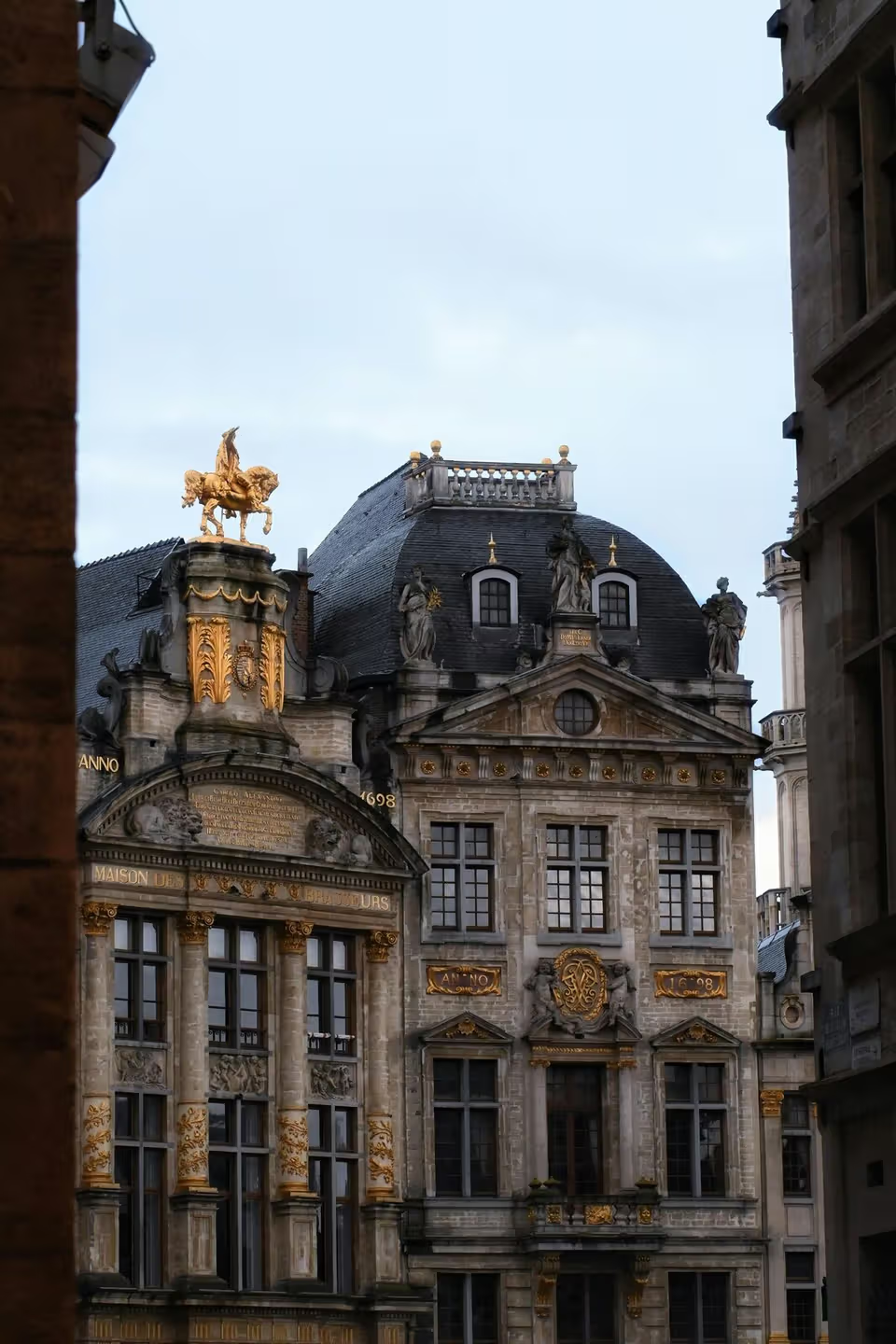
Brussels · Belgium 01 · Capital

3–4 nights

Brussels

The capital that reveals itself in layers

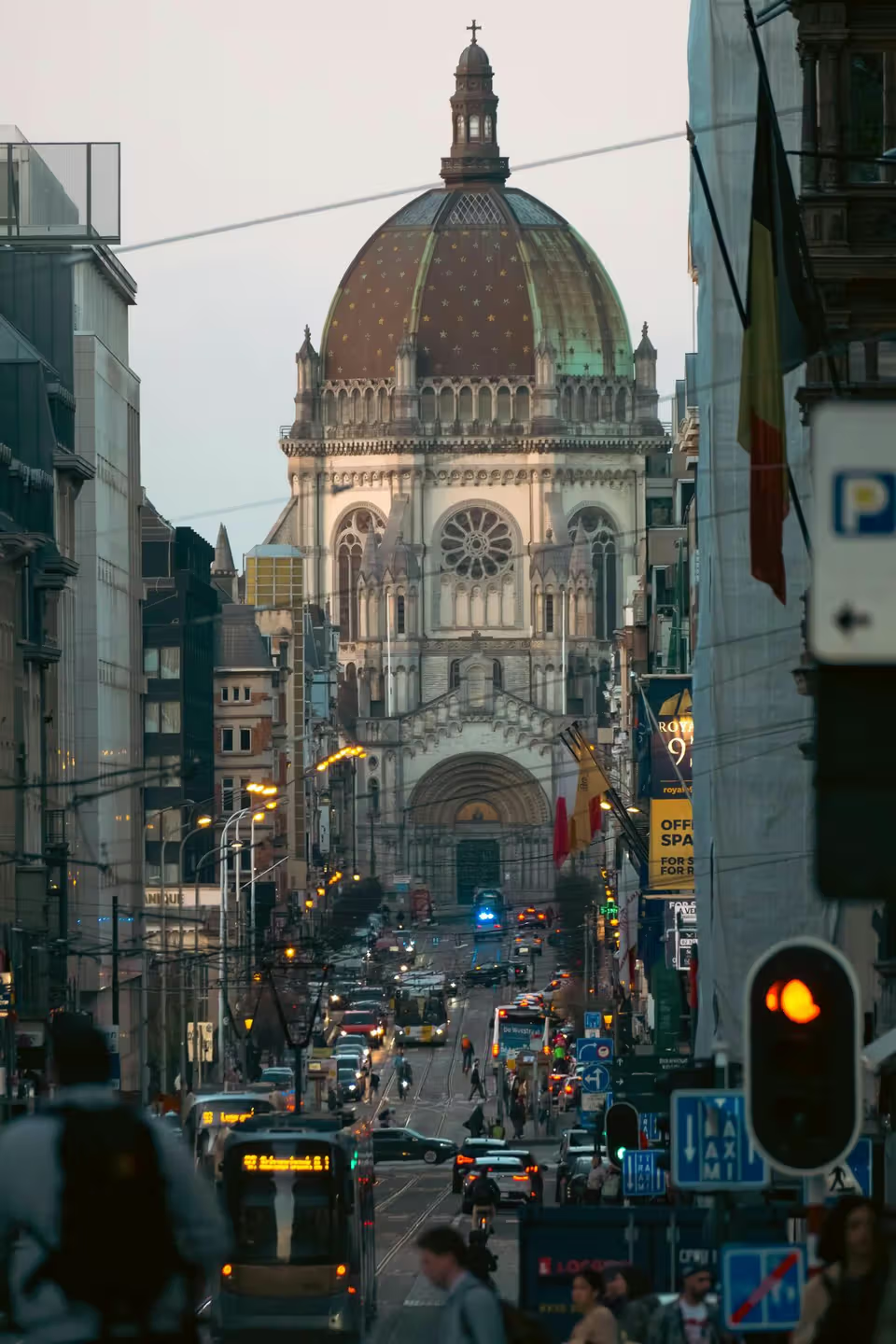
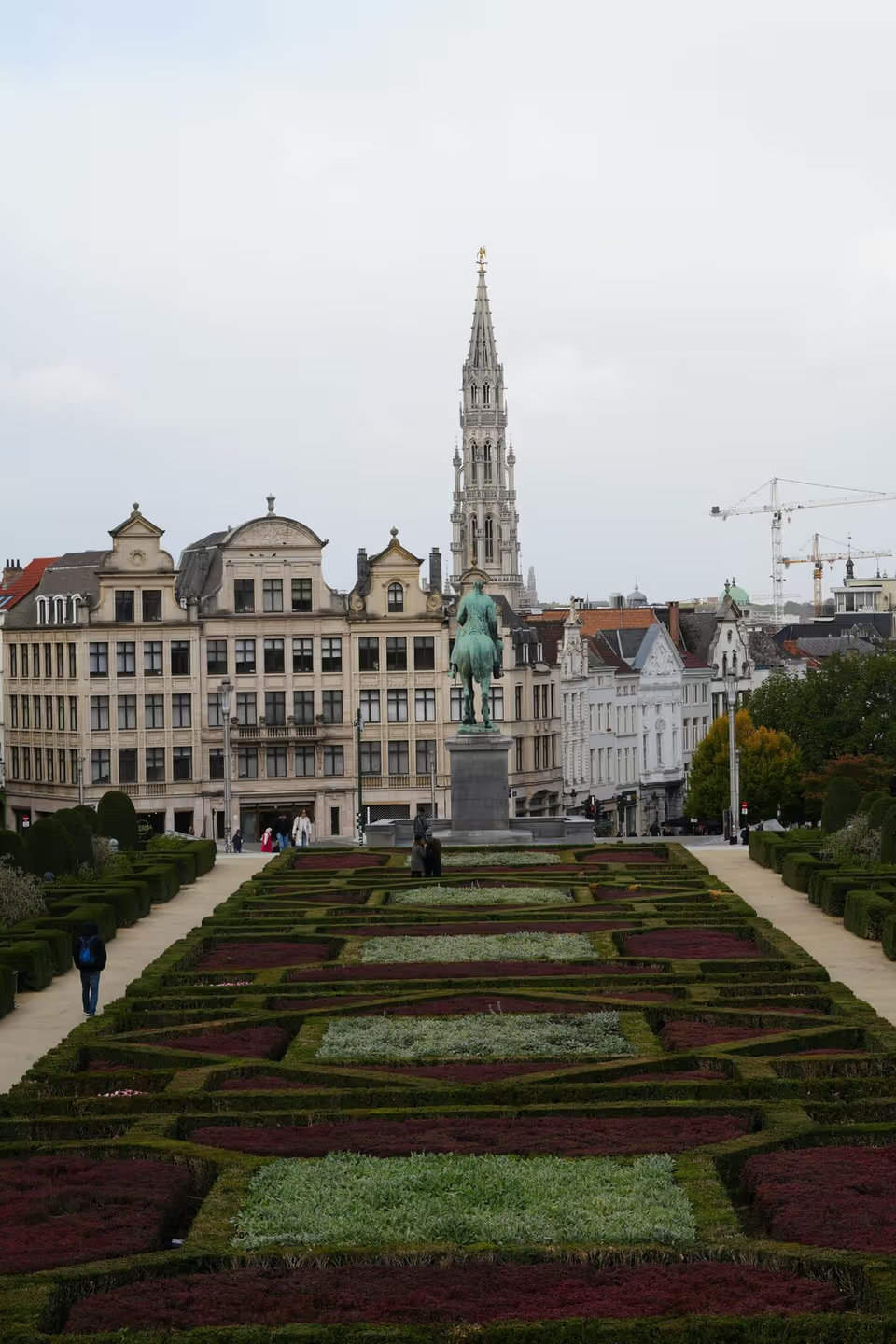
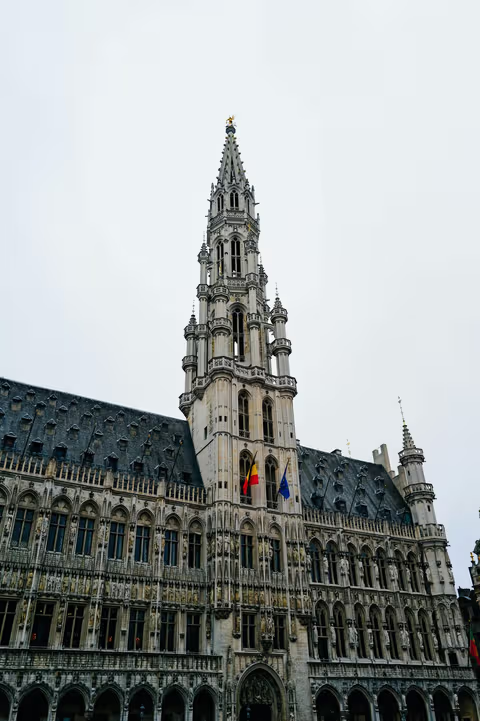
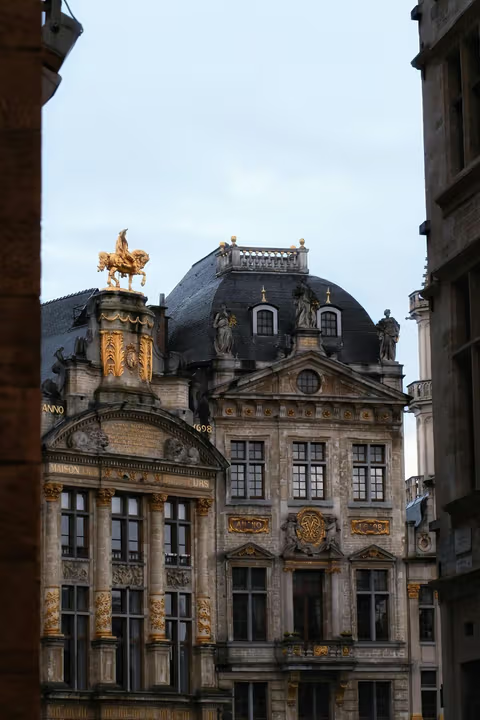
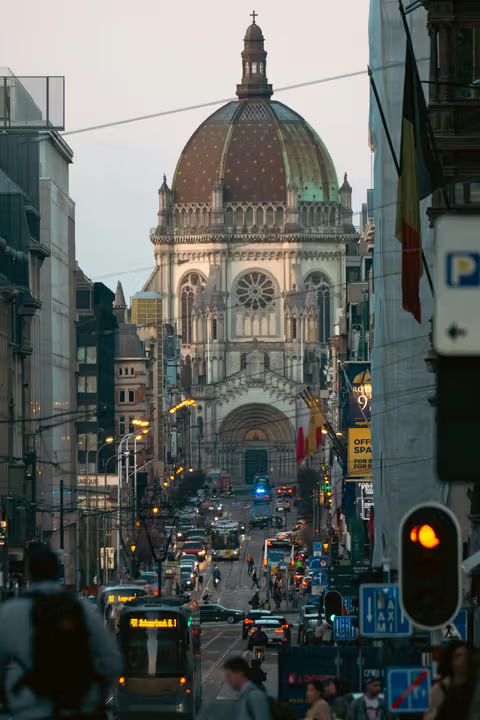
Brussels does not give itself away quickly. The capital of Belgium and the European Union, it inhabits a permanent dual identity: Francophone and Flemish, bureaucratic and bohemian, Art Nouveau and three-Michelin-star cuisine. Walk twenty minutes and you will find a Horta on one corner and a Tintin mural on the next.

Hotels
Hotel Amigo · Steigenberger Wiltcher's · The Dominican
Must-see
Grand-Place · Magritte Museum · Horta Art Nouveau
Best time
May to September · December for the markets
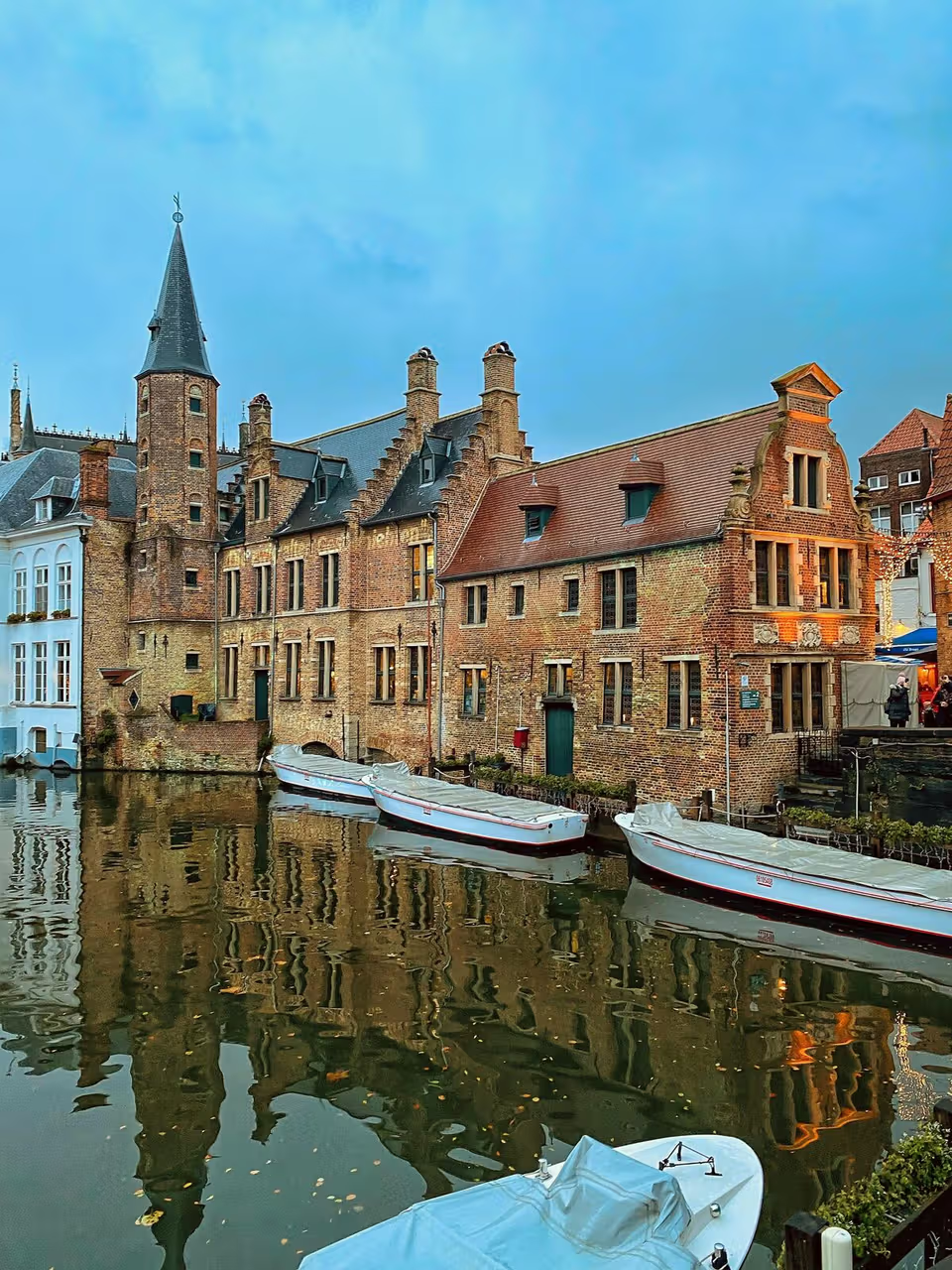
Bruges · Belgium 02 · Medieval

2–3 nights

Bruges

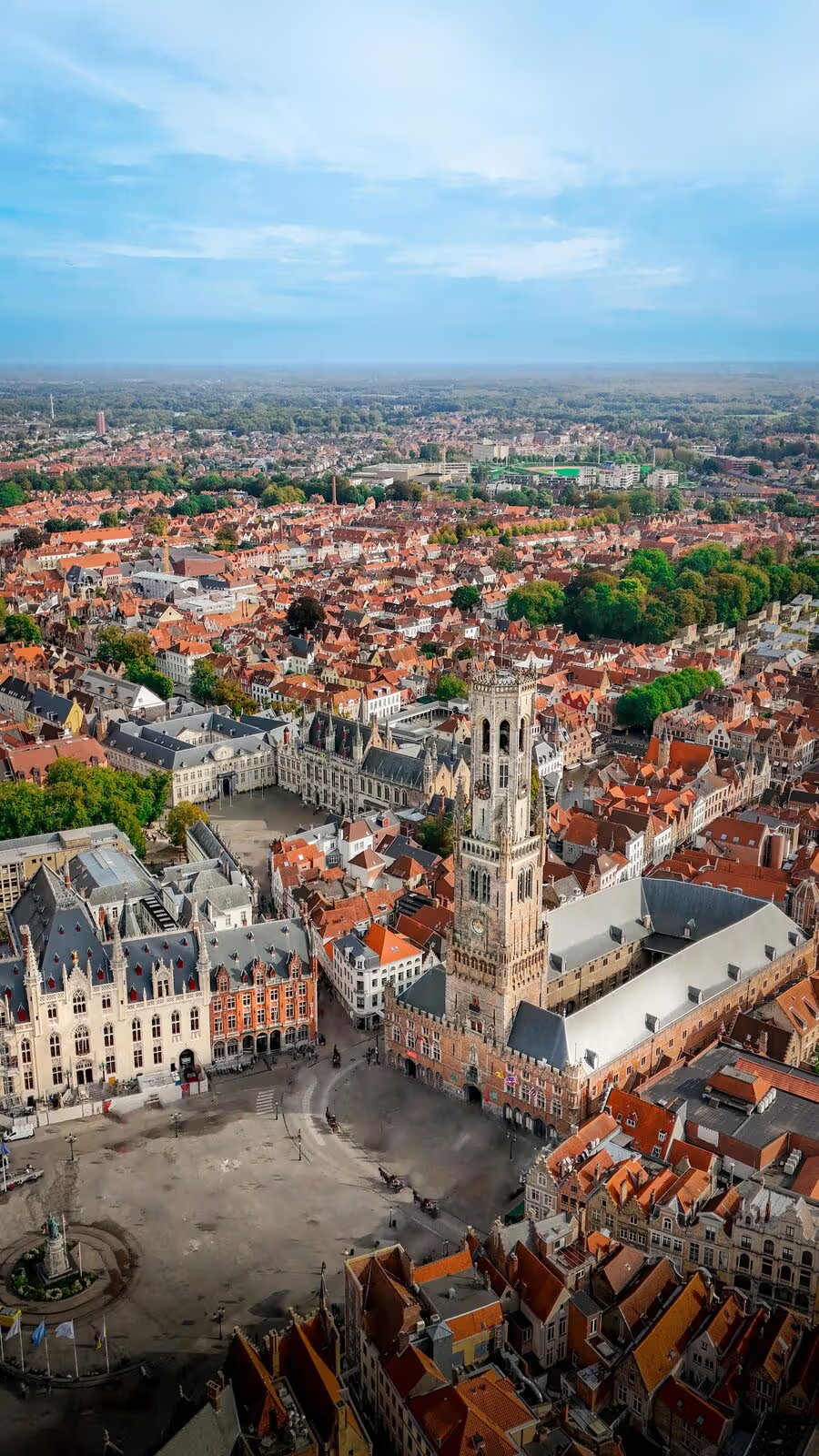
The intact medieval postcard

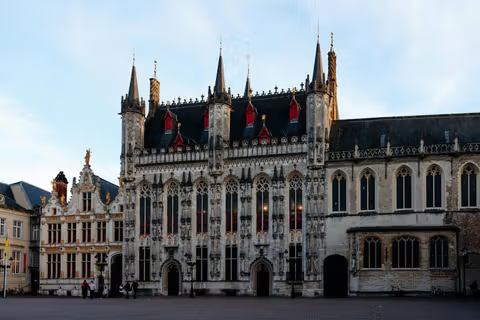
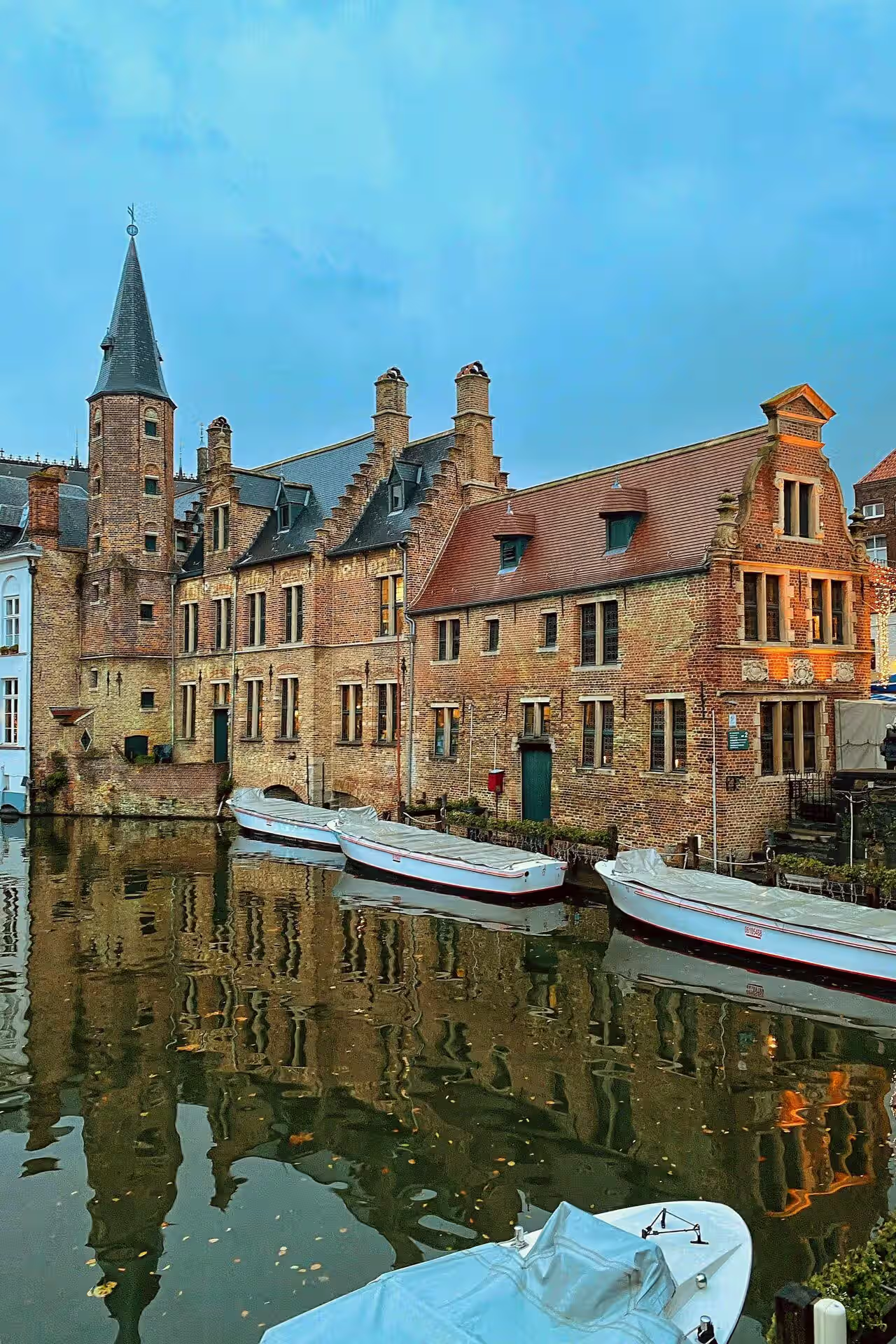
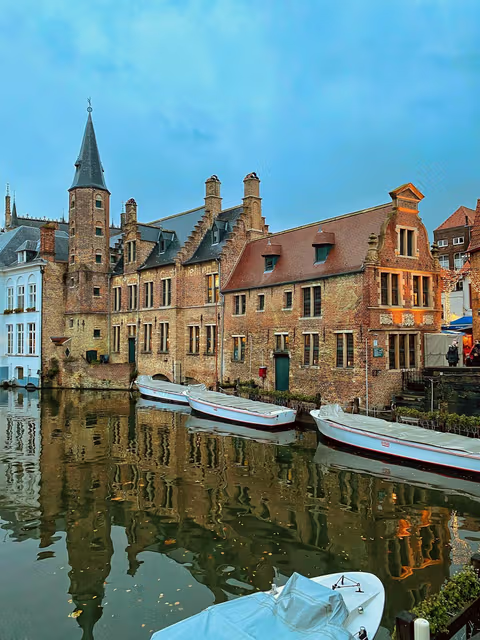
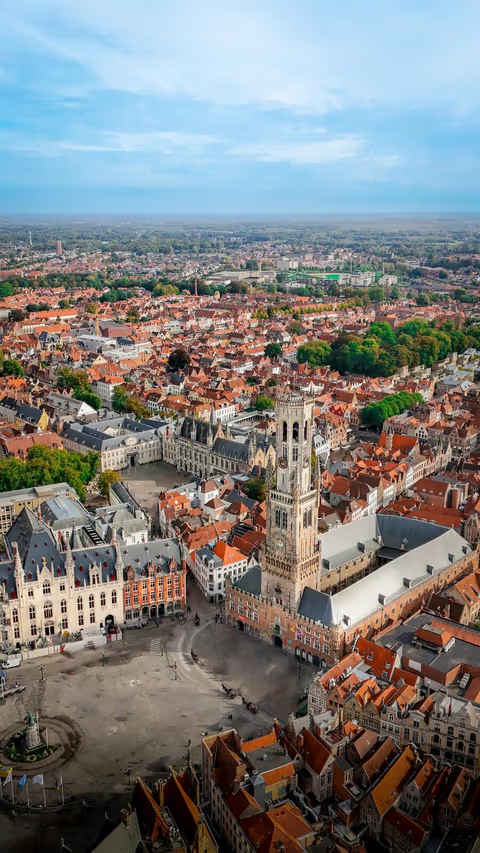
Bruges preserves its 13th-century medieval fabric in its entirety · a UNESCO World Heritage Site. Canals, béguinages, red brick, lace and four-hundred-year-old breweries. The real question is when: Bruges at dawn in the mist and Bruges at midday with cruise-ship crowds are two entirely different cities.

Hotels
Hotel Heritage · Dukes' Palace · Relais Bourgondisch Cruyce
Must-see
Belfry · canal boat ride · Groeningemuseum
Best time
April to October · peak experience in May and September
Ghent · Belgium 03 · Living Gothic

2–3 nights

Ghent

Medieval but breathing

Ghent is the answer for those who have already been to Bruges and left with lingering questions. It is medieval but not frozen, beautiful but not an open-air museum. An intact Gothic quarter that shares café tables with students, a vibrant dining scene and the Van Eyck brothers' Mystic Lamb in its cathedral.

Hotels
1898 The Post · Sandton Grand Hotel Reylof
Must-see
Mystic Lamb · Gravensteen Castle · Lys waterfront
Best time
May to September · avoid the Ghent Festival if you prefer calm
Antwerp · Belgium 04 · Baroque

1–2 nights

Antwerp

Diamonds, Rubens and fashion

The diamond capital, the city of Rubens' Baroque and of fashion, Antwerp is one of the most liveable cities in Europe. The Rubens House, the Gothic Cathedral of Our Lady with four masterworks by the painter still in their original positions, the MAS Museum and the Antwerp Six who reinvented design.

Hotels
Pillows Grand Boutique · Hilton Antwerp Old Town
Must-see
Rubens House · MAS Museum · diamond quarter
Best time
May to September · at least one night, not a day trip
The Ardennes · Belgium 05 · Wallonia

1–2 nights

The Ardennes

Forest, castles and game

The Walloon south shifts the pace entirely: dense forests, castles such as Bouillon perched above the River Semois, game and trout cuisine, rural Trappist abbeys and Durbuy · self-proclaimed the smallest city in the world. The slow counterpoint to Flemish urbanity.

Hotels
Boutique châteaux · hotels above the Semois
Must-see
Bouillon Castle · Orval Abbey · Han caves
Best time
May to October · winter snow for cross-country skiing

Signature experiences

Moments to remember

Private access, guides born in the place and a rhythm designed around you.

Practical

The essentials before you travel

Information verified by our travel designers, updated for 2026.

Money

Currency
Euro (EUR). The €500 note was withdrawn from circulation · avoid accepting it.
Cards
Visa and Mastercard are accepted virtually everywhere. American Express has partial coverage: fine in boutique hotels, inconsistent in cafés.
Contactless
Apple Pay and Google Pay work at all terminals, including Brussels public transport.
Cash
Bring 100 to 150 EUR for friteries, craft markets and small tips. VAT is always included in the displayed price.
ATMs
Plentiful in all cities. Use cards such as Wise, Revolut or N26 to avoid fees. Avoid airport and station currency exchanges.
Tips
Service is included by default. Rounding up or leaving 5 to 10% for exceptional service is appreciated. Never obligatory except for large groups.

Visa

Schengen
Belgium is part of the Schengen Area. Rules depend on your nationality · always verify with the consulate.
Visa-exempt nationalities
Mexican, Argentine, Chilean and most South American travellers may stay up to 90 days in any 180-day period.
Colombia
Colombian nationals require a Schengen type-C visa, with a processing time of 15 to 30 working days at the Belgian consulate.
ETIAS
The ETIAS travel authorisation also applies for visa-exempt travellers once it comes into force. Apply before travel.
Insurance
International travel insurance with a minimum coverage of €30,000 is mandatory for entry into the Schengen Area.

Health

Vaccinations
Belgium requires no vaccinations for entry from Latin America or Spain. Keep your basic diphtheria, tetanus and hepatitis schedule up to date.
Healthcare system
First class. International hospitals in Brussels, Antwerp, Bruges and Ghent with emergency services in English.
Pharmacies
Identified by a green cross. Standard hours 9:00 to 18:30, with a night and Sunday on-call pharmacy posted at the door.
Water
Tap water is potable and of excellent quality throughout the country. No filtering or boiling required.
Emergencies
The European number 112 works from any mobile, with or without credit, in any language.

Transport

Train
The SNCB/NMBS network connects all cities every 30 minutes. Brussels to Bruges in one hour, to Ghent in half an hour, to Antwerp in 45 minutes.
Domestic flights
Irrelevant: the country is so small that the train always wins. International gateways are Brussels-Zaventem and Charleroi.
Urban transport
STIB-MIVB operates metro, tram and bus in Brussels. A single ticket is around €2.60, valid for one hour with transfers.
Car
Useful only for the Ardennes and the coast. Counterproductive in cities: expensive parking and extensive pedestrian zones.
Apps and taxis
Uber operates in Brussels, Bolt in Antwerp, Ghent and Brussels. In Bruges, taxis are taken at designated ranks · do not hail them in the street.

Language

Official languages
Three languages: Dutch in Flanders, French in Wallonia, German in the far east. Brussels is officially bilingual.
English
In Flanders (Bruges, Ghent, Antwerp) English is spoken with universal fluency. In rural Wallonia the balance shifts towards French.
Spanish
Understood by Spanish-speaking staff in chain hotels, but cannot be relied upon elsewhere.
Useful phrases
Bonjour / hallo (hello) · merci / dank u (thank you) · s'il vous plaît / alstublieft (please).
Key tip
Do not speak French in Flanders assuming everyone will understand: English is always the neutral, efficient option.

Etiquette

Punctuality
Strictly observed. Arriving ten minutes late to a restaurant reservation can mean losing your table.
Greetings
A firm handshake on a first meeting. The cheek kiss is reserved for acquaintances.
Personal space
Generous. Touching a stranger on public transport reads as intrusive. Do not call out to waitstaff.
Beer
Every beer has its own glass · this is pure tradition. Order by style (Trappist, lambic, tripel), not by brand.
Common mistake
Do not confuse Flanders with Holland, nor a Fleming with a Dutch person. They share a language but not an identity or sense of pride.

Climate

When to travel and why

Belgium is best experienced from May to September, with long days and open terraces. The chart shows all twelve months with estimated cost, temperature and iconic festivals. Marked in gold, the windows we recommend experiencing Belgium with us .

Most recommended month May · fewer tourists, stable weather, open terraces
Best value vs. experience September · mussel season, beautiful light
Once-in-a-lifetime window December · the Flemish Christmas markets

The climate, month by month · Brussels

Reference city: Brussels Best season Temperature °C Relative rainfall
-5° 10° 15° 20° 25° Jan: 1° – 6°C · 76 mm Jan: 76 mm Jan Feb: 1° – 7°C · 63 mm Feb: 63 mm Feb Mar: 3° – 11°C · 70 mm 11° Mar: 70 mm Mar Apr: 5° – 14°C · 54 mm 14° Apr: 54 mm Apr May: 9° – 18°C · 67 mm 18° May: 67 mm May Jun: 12° – 21°C · 72 mm 21° Jun: 72 mm Jun Jul: 14° – 23°C · 74 mm 23° Jul: 74 mm Jul Aug: 13° – 23°C · 79 mm 23° Aug: 79 mm Aug Sep: 11° – 19°C · 69 mm 19° Sep: 69 mm Sep Oct: 8° – 15°C · 74 mm 15° Oct: 74 mm Oct Nov: 4° – 9°C · 76 mm Nov: 76 mm Nov Dec: 2° – 6°C · 81 mm Dec: 81 mm Dec

Highlights of the year: Feb · Binche CarnivalApr · Bluebell woodsJul · TomorrowlandAug · Flower CarpetDec · Xmas markets

It rains nearly year-round but rarely all day: the umbrella is part of the outfit. December is cold and grey, but the Christmas markets and the illuminated Grand-Place more than redeem it.

When to go · season & budget

Seasons & estimated cost CocoVolare recommends High Mid Low
Jan: Low season · ≈$480 per person/day Jan Feb: Low season · ≈$480 per person/day Feb Mar: Mid season · ≈$570 per person/day Mar Apr: Mid season · ≈$630 per person/day Apr May: Mid season · ≈$630 per person/day $630May Jun: High season · ≈$690 per person/day $690Jun Jul: High season · ≈$720 per person/day $720Jul Aug: High season · ≈$720 per person/day $720Aug Sep: Mid season · ≈$630 per person/day $630Sep Oct: Mid season · ≈$570 per person/day Oct Nov: Low season · ≈$510 per person/day Nov Dec: High season · ≈$720 per person/day $720Dec

In our recommended dates, the estimated cost ranges from $630 to $720 per person/day (Premium level, international flights not included).

Investment

What it costs, no fine print

Belgium is discreet luxury: tiny distances, trains that cross the country in an hour and five-star hotels kinder to the wallet than Paris or Amsterdam. The budget goes to the table, and there, every euro is worth it.

Experience levels · guide budget

Euro (EUR) · 1 USD ≈ 0.92 EUR USD · per person/day
Boutique essential Boutique essential: $350 USD · per person/day $350 4-star boutique hotels by the Grand-Place or the canals of Bruges, intercity trains and historic breweries. Premium Premium: $600 USD · per person/day $600 Five-star icons like Hotel Amigo, Michelin-starred tables and private Trappist beer tastings. Signature Signature: $950 USD · per person/day $950 Canal-view suites, a private driver through the Ardennes, after-hours chocolate ateliers and Flemish haute cuisine.
Dinner with beer pairing USD 70–130Box of master-chocolatier pralines USD 25–40Brussels–Bruges train (first class) USD 25Museum admission (Magritte, KMSKA) USD 15–20Trappist beer at a historic café USD 6–9Airport–hotel transfer USD 60–80

Indicative 2026 values per person, excluding international flights. Every CocoVolare quote is tailored to season, hotels and travel pace.

Signature itineraries

Six Belgiums · choose yours

Zero templates: every itinerary is rewritten 100% to your measure. Prices per person in double occupancy, boutique category, international flights not included.

5 days · 4 nights · Flanders

Belgium Essence

Brussels → Bruges

Belgium distilled to its essence · compact yet perfectly paced

  • Private after-hours visit to the Magritte Museum with a curator
  • Chocolate workshop with a master chocolatier in Brussels
  • Bruges at sunset by boat through the canals, in golden-hour light

FromUSD 2,300

7 days · 6 nights · Flanders

Balanced Belgium

Brussels → Ghent → Bruges → Antwerp

All four Flemish cities in one well-calibrated week

  • Brussels with Magritte, Horta Art Nouveau and the comic-strip trail
  • The Mystic Lamb by the Van Eyck brothers in Saint Bavo's Cathedral
  • Medieval Bruges with a canal boat ride and the Flemish Primitives

FromUSD 3,500

10 days · 9 nights · Flanders and Wallonia

Deep Belgium

Brussels → Ghent → Bruges → Antwerp → Ardennes

Five Belgiums in one journey · with room to breathe

  • Three days in Brussels: Magritte, Art Nouveau, Cantillon and Les Marolles
  • The Mystic Lamb by the Van Eyck brothers and Gravensteen Castle in Ghent
  • Unhurried medieval Bruges, by boat and bicycle to Damme

FromUSD 5,600

14 days · 13 nights · Flanders, Wallonia and the coast

Extended Belgium

Brussels → Ghent → Bruges → Antwerp → Ardennes → Liège → Coast

Flanders, Wallonia, the Ardennes and the North Sea

  • The deep itinerary: Brussels, Ghent, Bruges, Antwerp and the Ardennes
  • Walloon Liège with boulets liégeoises and the Museum of Walloon Life
  • University Leuven, birthplace of the Stella Artois brewery

FromUSD 8,200

8 days · 7 nights · Romance

Flemish Honeymoon

Brussels → Bruges → Ghent

Beginning the rest of your life between canals and golden light

  • Suite upgrade with a view in every city
  • Private boat through the Bruges canals at sunset, with cocktails on board
  • Private dinner in a medieval inner courtyard, a private house opened exclusively for CocoVolare guests

FromUSD 6,400

7 days · 6 nights · Gastronomy

Beer and Chocolate Route

Brussels → Bruges → Ghent

Western Europe's finest underrated cuisine · table by table

  • Trappist beer tasting with a sommelier at Moeder Lambic
  • Visit to Cantillon, the world's only urban lambic brewery
  • Chocolate workshops with a master chocolatier in Brussels and Bruges

FromUSD 4,100

None of them fits? We design your own. WhatsApp →

Gastronomy

The flavors of Belgium

From the corner friterie to the tasting menu with a star. Belgian cuisine is Western Europe's finest underrated national cooking, and that is its best-kept secret · where France, Germany and the Netherlands meet, with a personality all its own.

Comme chez Soi

Place Rouppe · Brussels

A two-Michelin-star brasserie open since 1926. The temple of classic Franco-Belgian cooking, with a legendary cellar. Reserve four to six weeks ahead.

Sea Grill

City centre · Brussels

One Michelin star dedicated to North Sea fish and seafood, with an award-winning sommelier. Precise produce-driven cooking.

Hertog Jan

Oedelem · near Bruges

Two Michelin stars by chef Gert De Mangeleer: radical Belgian cooking with extreme local produce from his own kitchen garden.

Den Gouden Harynck

Historic centre · Bruges

One Michelin star in a 1620 building with an inner courtyard, French cooking on a Flemish base. An institution of the city.

Vrijmoed

Vlaanderenstraat · Ghent

One Michelin star with produce-driven, contemporary cooking in Europe's vegetarian capital. Reserve one month ahead.

Pakhuis

Schuurkenstraat · Ghent

A brasserie in a converted port warehouse, with a sixteen-metre bar and one of Flanders' finest waterzoois.

Calendar

Dates worth traveling for

A well-chosen date turns a trip into a memory. We design your itinerary around the moment that matters most to you.

Binche Carnival · Feb · Mar

An Intangible Cultural Heritage of Humanity. The gilles in their unique costumes throw oranges through the streets of this Walloon city.

Hallerbos in bloom · Apr

The forest 25 km from Brussels is carpeted in blue hyacinths for two to three weeks. A narrow, unrepeatable window.

Holy Blood Procession · May

On Ascension Day, Bruges processes through its streets in one of Europe's oldest processions, a UNESCO Intangible Heritage.

Brussels Ommegang · Jun · Jul

A historical re-enactment of the 1549 procession of Charles V, with knights and brotherhoods crossing the Grand-Place.

Ghent Festival · 15–25 Jul

Ten days of street festival in Ghent, with concerts, theatre and music. Belgium's largest urban celebration.

Flower Carpet · August

Every two years, a carpet of 300,000 begonias covers the Brussels Grand-Place for four days.

Bruges Festival · August

The MAfestival fills Bruges' medieval churches with early and Baroque music performed on period instruments.

Christmas Markets · Dec

From late November, Brussels, Bruges and Ghent light up their squares with market stalls, vin chaud and ice rinks.

CocoVolare recommends

What we would tell a friend

Advice from our travel designers: what we book first, what we avoid, and the details that turn a good trip into an unforgettable one.

01

Bruges is for sleeping over

The tour buses empty the city at 18:00 and return at 10:00. Sleep at Hotel Heritage or the Relais Bourgondisch Cruyce and the canals at dawn (mist, swans and silence) are yours alone.

02

Michelin tables book out two months ahead

Belgium has one of Europe's highest densities of stars per capita and the dining rooms are small. If a Flemish chef's table is on your list, we lock it in when the itinerary is confirmed, not on arrival.

03

Buy chocolate at the atelier, not the tourist window

Skip the generic shops ringing the Grand-Place. Pierre Marcolini, Mary or an artisan workshop in the Sablon are another league: pralines made that day, no preservatives, steps from where you buy them.

04

Schengen visa-free, with ETIAS

Colombians need no visa: up to 90 days in any 180-day period within the Schengen area. From 2025 you must obtain the ETIAS authorization online, about 7 EUR, valid three years. Passport valid with two blank pages.

05

Mussels have a season

The national dish is eaten from July to April, when Zeeland moules are at their peak. Ordering them in May or June means paying fresh prices for frozen. And the frites are better at a neighborhood friterie than at a square-side restaurant.

06

The train beats the car, except in the Ardennes

Brussels, Bruges, Ghent and Antwerp are under an hour apart by rail: one well-chosen base covers four cities. The Ardennes are the exception, castles and forests that do call for a private driver and a slower pace.

In motion

Belgium, live

Testimonials

What our travelers say

★ ★ ★ ★ ★

“We arrived in Bruges on a Thursday evening, as CocoVolare recommended. At half past seven the next morning the Rozenhoedkaai was empty, mist hanging over the canal. Not a single tourist in sight. That silent hour was the whole trip.”

Mariana Restrepo

Bogotá · Honeymoon · 7 nights

★ ★ ★ ★ ★

“We walked into the Magritte Museum an hour before it opened · just the two of us and a curator. Moving through those paintings without a group behind you, with someone who knows every piece, is something you simply cannot buy at an ordinary agency.”

Javier Mendoza

Mexico City · Couple's journey · 8 nights

★ ★ ★ ★ ★

“The beer sommelier explained why every Trappist beer has its own glass, then handed us a Westvleteren that, he said, is not sold outside the monastery. I left understanding that Belgium eats and drinks far more seriously than I had imagined.”

Andrés Lozano

Medellín · Flavour route · 7 nights

FAQ

Frequently asked questions

Do I need a visa to enter Belgium?

Belgium is part of the Schengen Area. Mexican, Argentine, Chilean and most South American travellers exempt from visas may stay up to 90 days in any 180-day period; Colombian nationals require a Schengen type-C visa, with a processing time of 15 to 30 working days at the Belgian consulate. The ETIAS authorisation also applies for visa-exempt travellers once it comes into force. Immigration rules change · always verify with the consulate before travel.

What is the best time to visit Belgium?

From May to September Belgium offers its finest weather: long days, open terraces and agreeable skies. May and June combine fewer tourists with stable conditions; September is ideal for foodies during the mussel season. December brings the Christmas markets of Brussels, Bruges and Ghent. November and February are the least recommended window.

How many days do I need to see Belgium?

Five days cover Brussels and Bruges coherently. Seven days add Ghent and Antwerp · all four Flemish cities. Ten to fourteen days allow for the Walloon Ardennes, Liège or the North Sea coast. CocoVolare designs itineraries from five to twenty-one days, tailored to your pace, profile and season.

What currency is used in Belgium?

The euro (EUR). Visa and Mastercard are accepted virtually everywhere, as are Apple Pay and Google Pay, including on public transport. American Express has partial coverage. It is worth carrying 100 to 150 EUR in cash for friteries, markets and small tips. Avoid airport and station currency exchanges, which can be up to 12% worse than the market rate.

Is it better to travel by train or hire a car in Belgium?

The train, without question. The SNCB/NMBS network is one of the densest in Europe and connects Brussels, Bruges, Ghent, Antwerp and Liège with trains every 30 minutes. A car is only worthwhile for the deeper Ardennes or small villages such as Durbuy or Bouillon. Parking in historic city centres is expensive and restricted. CocoVolare books first-class trains in advance.

Is it safe to travel to Belgium?

Yes. Belgium is one of the safest countries in Europe for the traveller. There are no areas of urban armed violence. The only real risk is pickpocketing on Brussels public transport (metro lines 2 and 6, Gare du Midi) and in crowded tourist areas. In Bruges and Ghent petty crime is marginal. CocoVolare designs private transfers that minimise exposure.

How much does a trip to Belgium cost?

A boutique ten-day trip, excluding international flights, falls in the comfort band between USD 3,100 and 5,200 per person in double occupancy. CocoVolare signature itineraries start from USD 2,300 per person for five days, with boutique hotels, private guides for one or two sessions and first-class trains. Every quote is adjusted to your actual travel window.

Is it worth visiting Bruges if you are already going to Brussels?

Yes · and it is worth sleeping in Bruges, not just visiting on a day trip. The difference between Bruges at eleven in the morning with five tour buses unloading and Bruges at half past seven with mist over the Minnewater is not a matter of timing: they are two entirely different cities. CocoVolare recommends at least two nights in the medieval core, arriving on a Thursday evening.

How do you get from Brussels to Bruges?

By direct SNCB/NMBS train, without any connection, in 60 to 75 minutes, with departures every half hour from Bruxelles-Midi or Bruxelles-Central. Tickets cost between €14 and €17. Bruges station is a fifteen-minute walk from the historic centre. Forget the car: parking in Bruges is expensive and the zone is restricted.

Is Belgium a good destination for foodies?

Yes · and one of the most underrated. Belgian cuisine sits at the intersection of France, Germany and the Netherlands, with a personality all its own: moules-frites, carbonnade flamande, waterzooi, grey North Sea prawn croquettes. Belgium has one of the highest densities of Michelin stars per capita in the world. And the beer culture · over a thousand beers including six Trappists · is a gastronomic journey in itself.

What is the difference between Flanders and Wallonia?

Flanders is the Dutch-speaking north: Flemish art, canals, red brick, medieval cities, cycling. Wallonia is the French-speaking south: forests, castles, Ardennes ham, rural Trappist breweries. The language changes as you cross the linguistic border, as does the cuisine and even the style of hospitality. Brussels acts as the bilingual hinge. A good journey combines both.

Can I travel to Belgium with children?

Yes, with a tailored design. Belgium is a human-scale country, with walkable cities and short train journeys that reduce fatigue. Mini-Europe next to the Atomium, the Belgian Comic Strip Museum, child-adapted chocolate workshops and a canal boat ride in Bruges with playful commentary are typically the highlights. CocoVolare books family hotels with connecting rooms.

What does a CocoVolare trip to Belgium include?

Itinerary design from scratch, first-class trains between cities, boutique hotels with breakfast, private airport transfers, expert historian guides, signature experiences such as Trappist tastings and after-hours museum access, site admissions and 24/7 concierge. Every journey is designed from scratch to match your profile, pace and budget.

Belgium

No molds, made to measure

Tell us what excites you and we will design a tailor-made proposal in under 24 hours, with a dedicated travel designer.