Asia · Boutique

South Korea

Three millennia and forty years

F or the boutique traveller, South Korea works like few other Asian destinations.

The essence

A country read best on foot

F or the boutique traveller, South Korea works like few other Asian destinations. It is safe to a degree that genuinely surprises, it is infinitely better connected than its size might suggest · the KTX bullet train crosses the entire country in just over two hours · it has one of the world's most interesting contemporary creative classes, and it preserves a cultural density that can be read simply by walking. It remains a country where you walk, eat seated low, sleep in a restored hanok and remove your shoes at the door of a house a thousand years old. That functional contradiction between future and origin is what the country exports most naturally, and what is best experienced from the inside. It is a destination that rewards curation: it works when someone applies real discernment · a cultural guide who opens the kitchens of Jeonju, tea with a monk in a temple free of tourists and the cities visited in the right order.

1443 the year Hangul, Korea's scientific alphabet, was created
305 km/h the KTX bullet train · Seoul to Busan in 2h 20m
4 distinct seasons · four countries in one
14 UNESCO World Heritage Sites

Regions

The 5 faces of South Korea

Seoul · South Korea 01 · Capital

4–6 nights

Seoul

An organism of twenty-five million

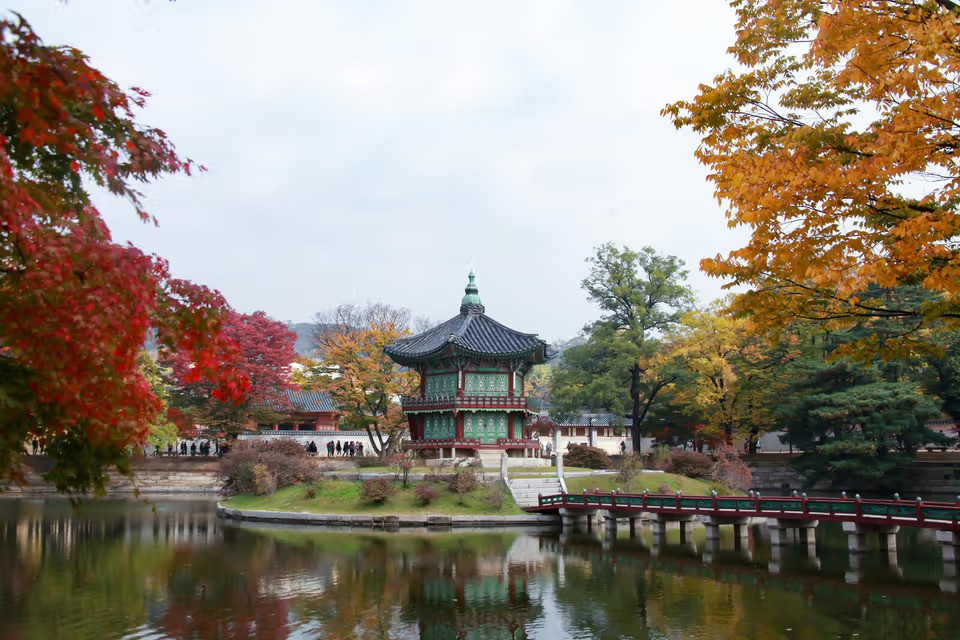
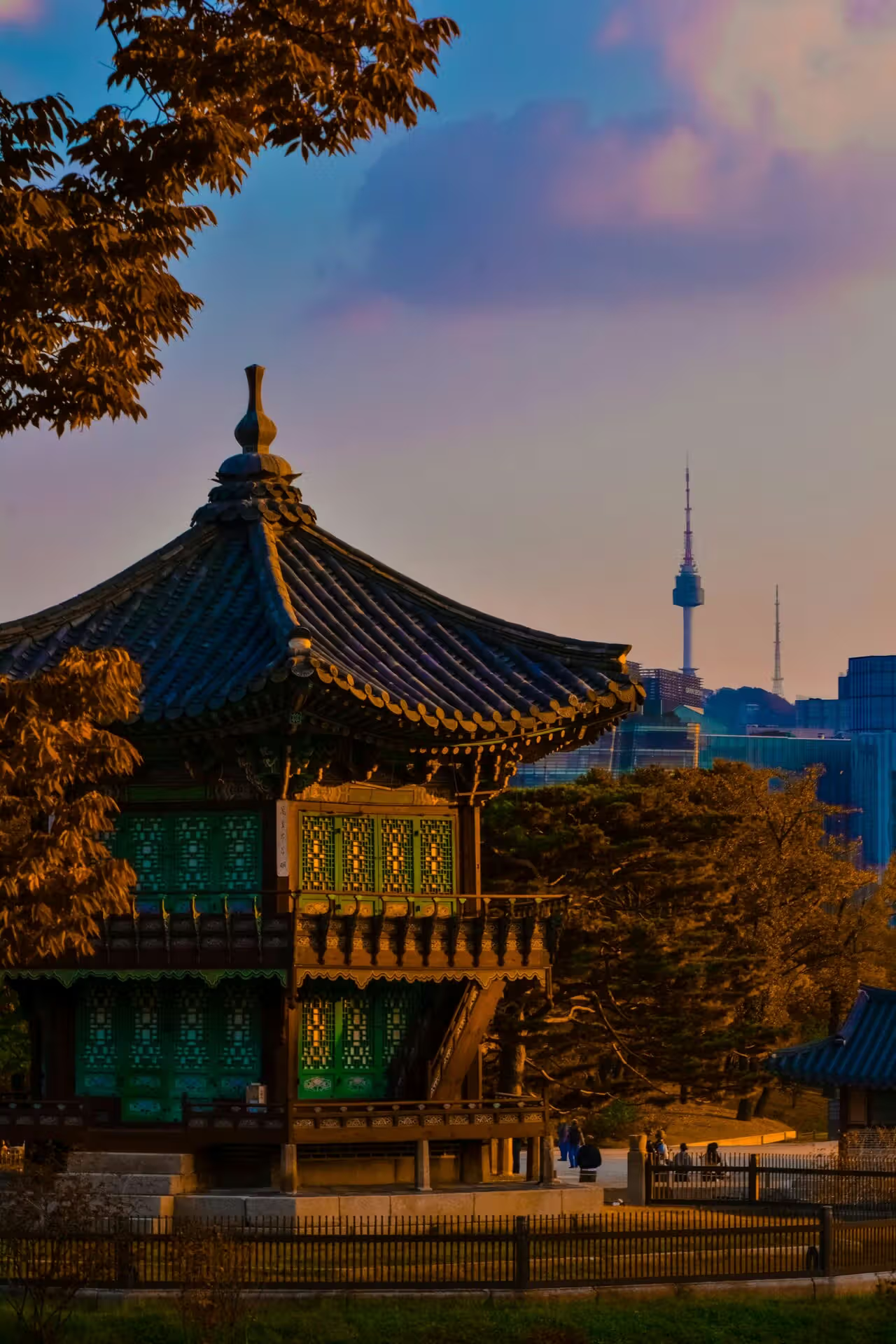
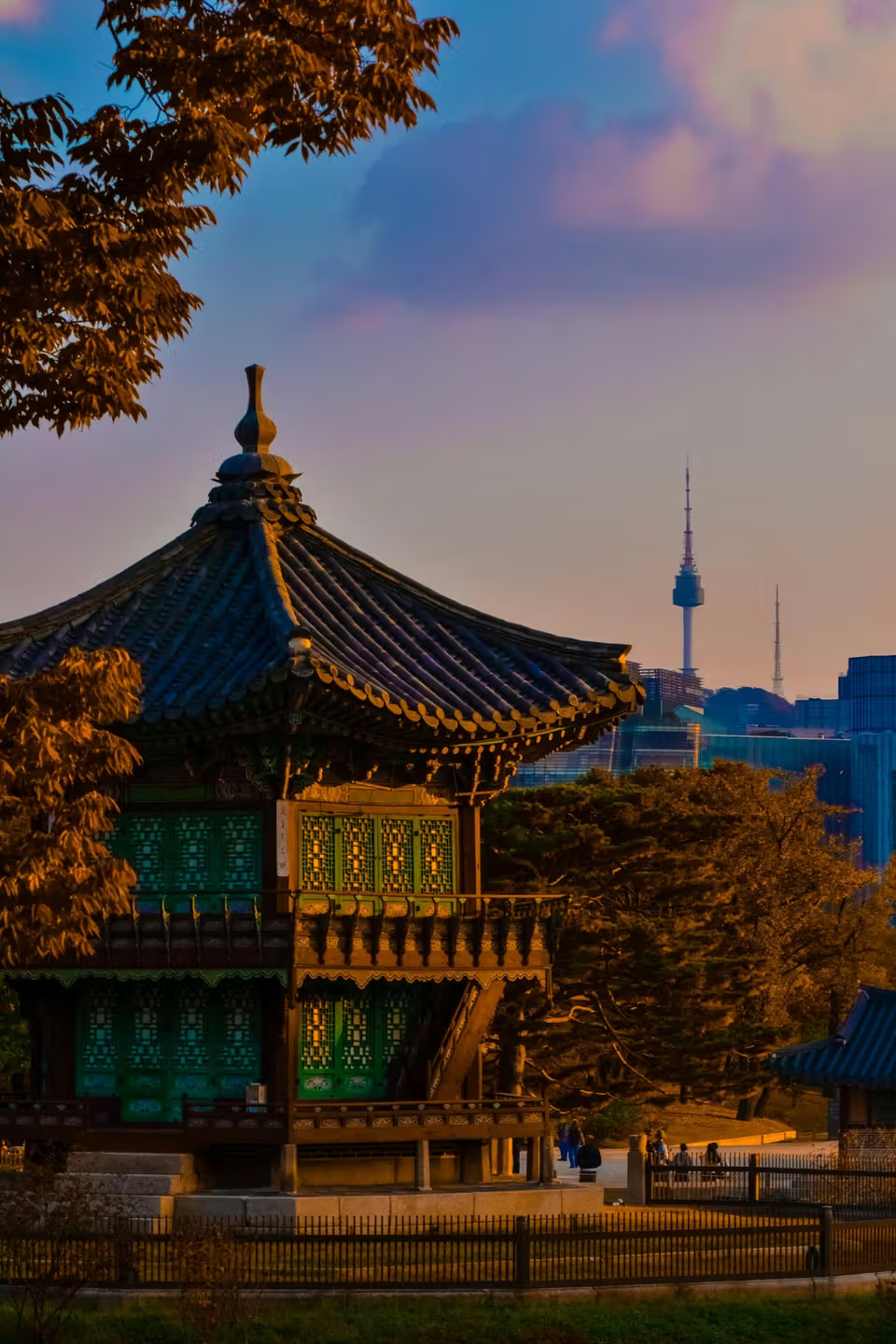
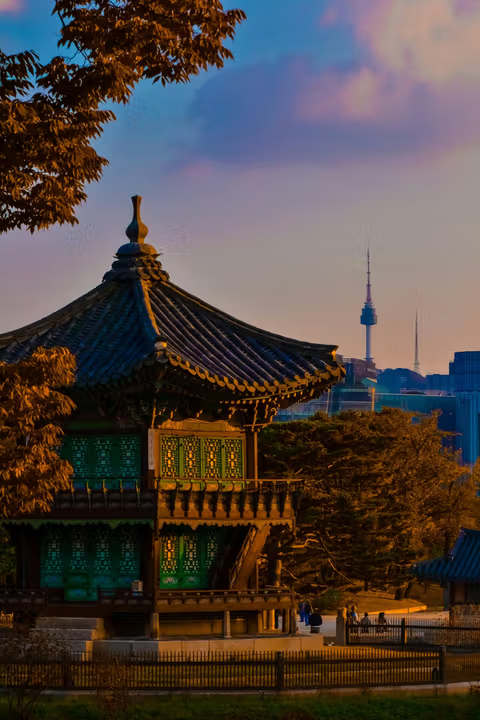
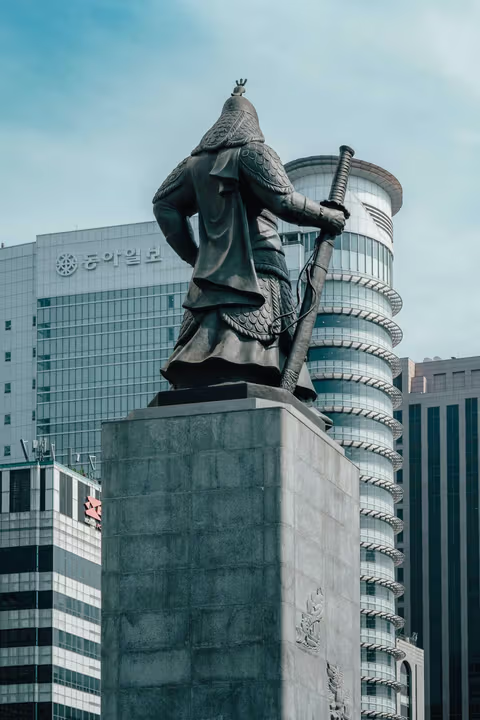
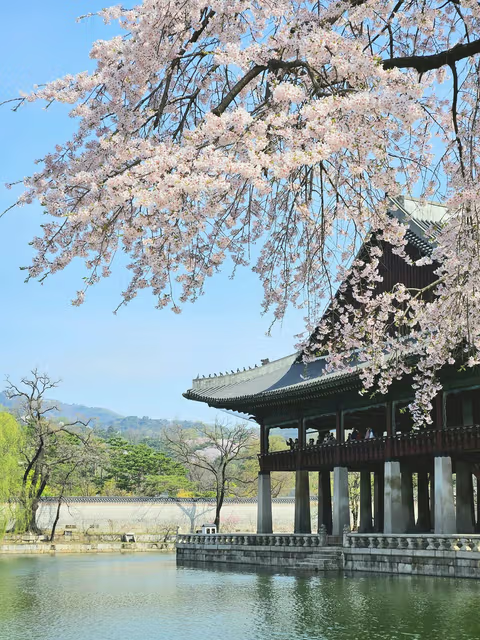
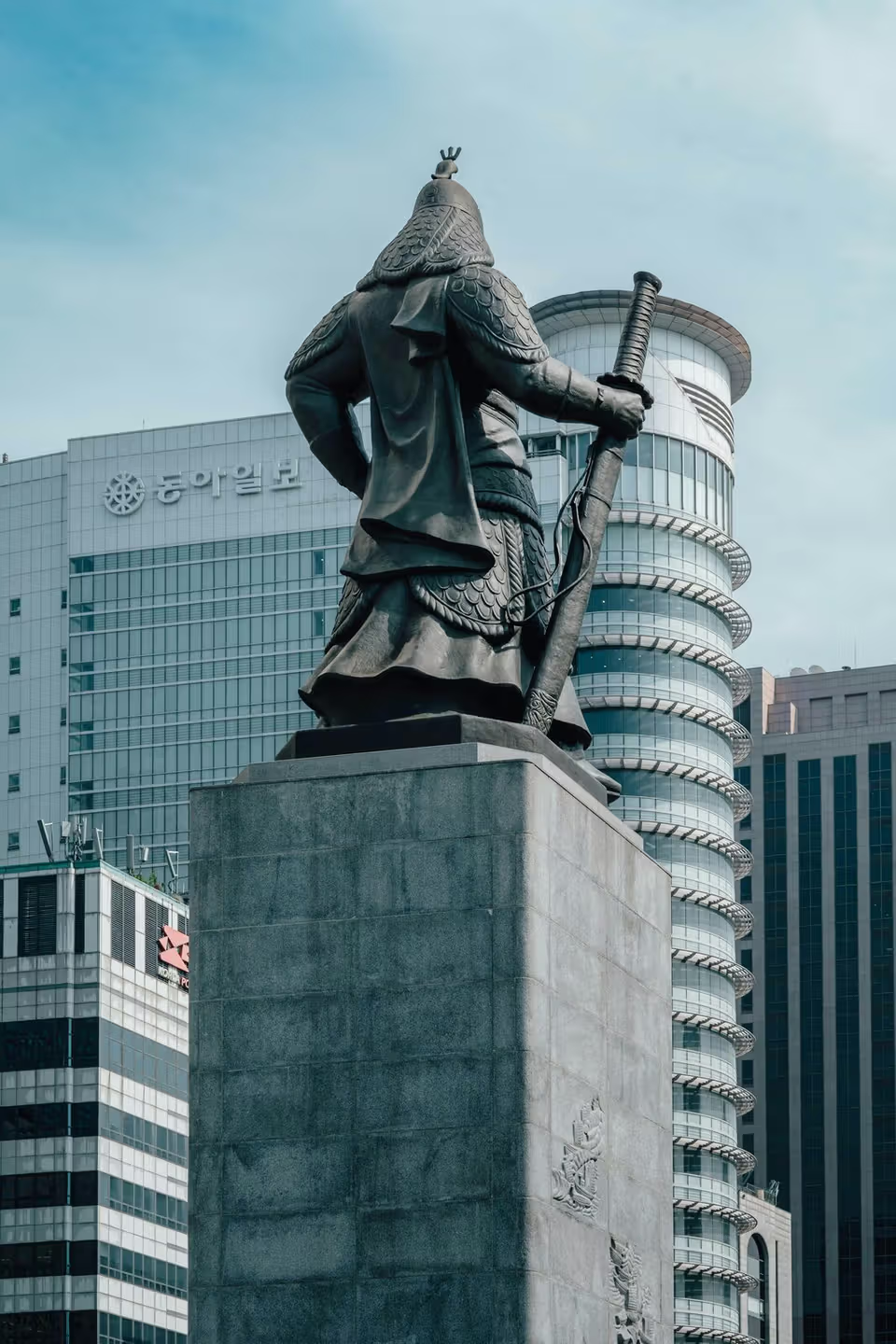
Seoul is a living organism pulsing between mountains and rivers, with a six-hundred-year-old Joseon palace three blocks from a glass office tower. Walking it means reading its layers: an immaculate metro, vibrant markets and LED screens the size of buildings.

Hotels
Four Seasons Seoul · The Shilla · Rakkojae hanok
Must-see
Joseon palaces · Bukchon · the DMZ
Best time
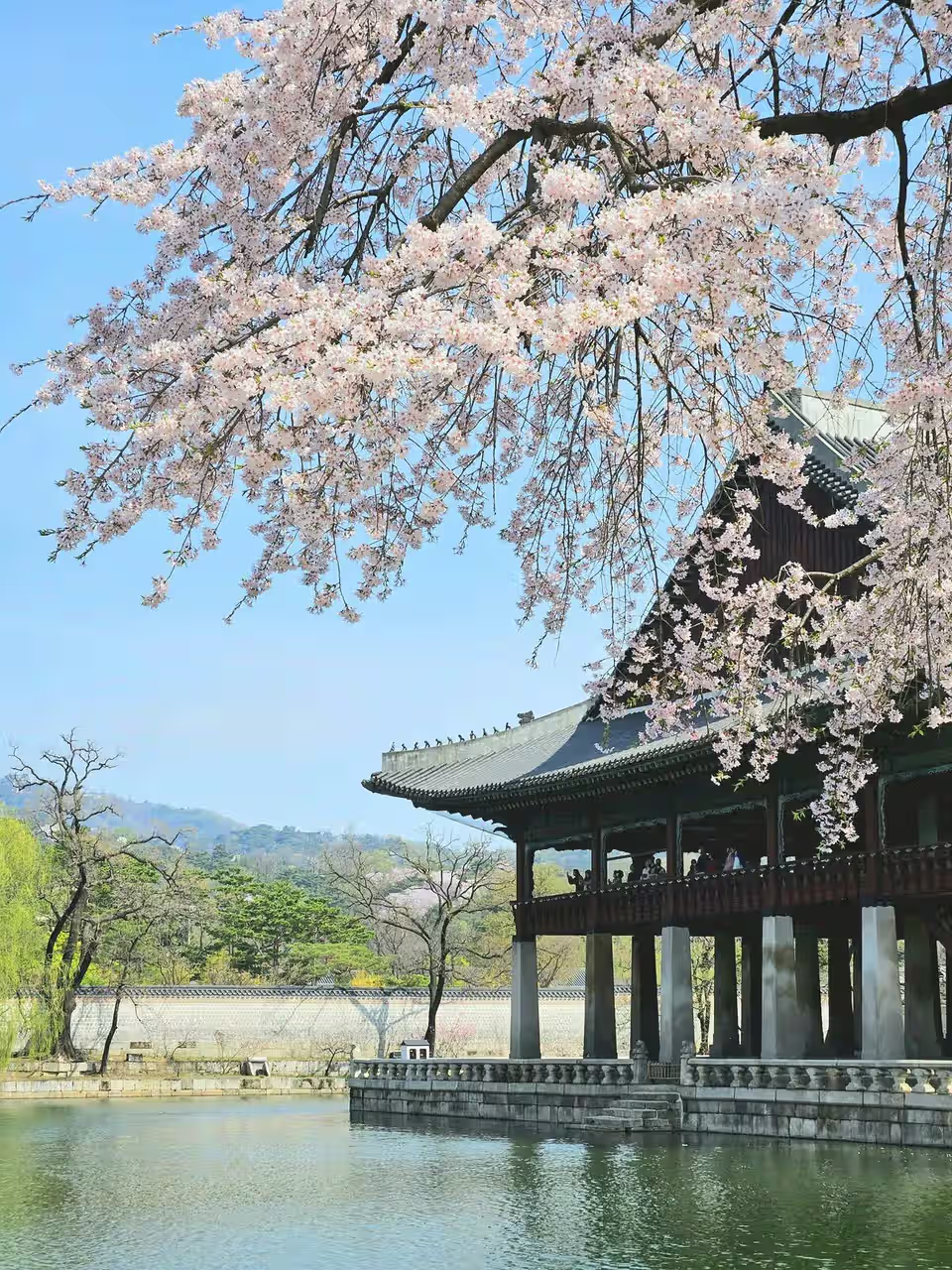
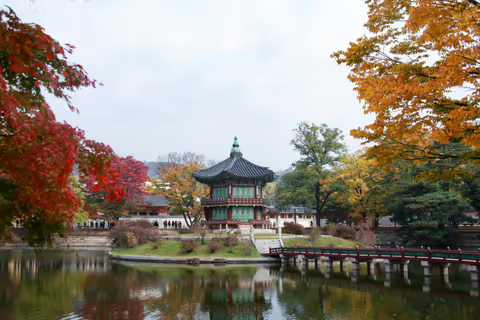
April, cherry blossoms · October, crimson foliage
Busan · South Korea 02 · Coast

2–3 nights

Busan

Korea breathing salt air

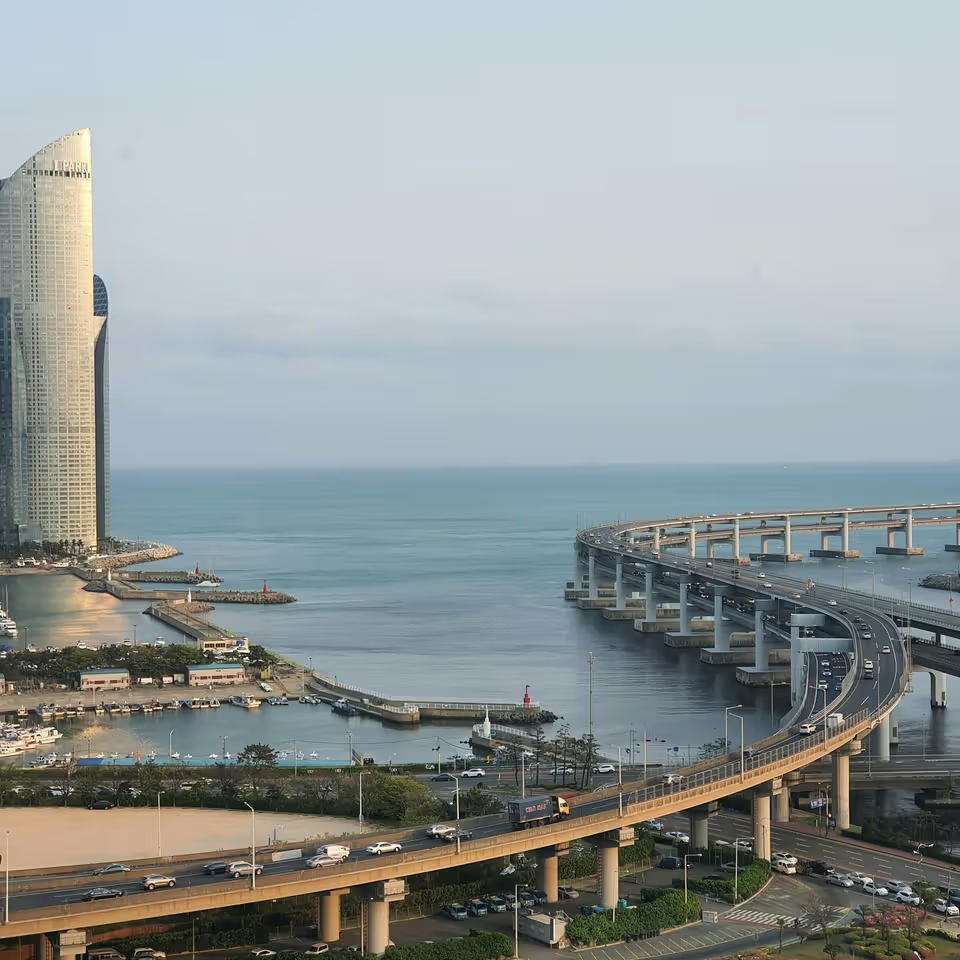
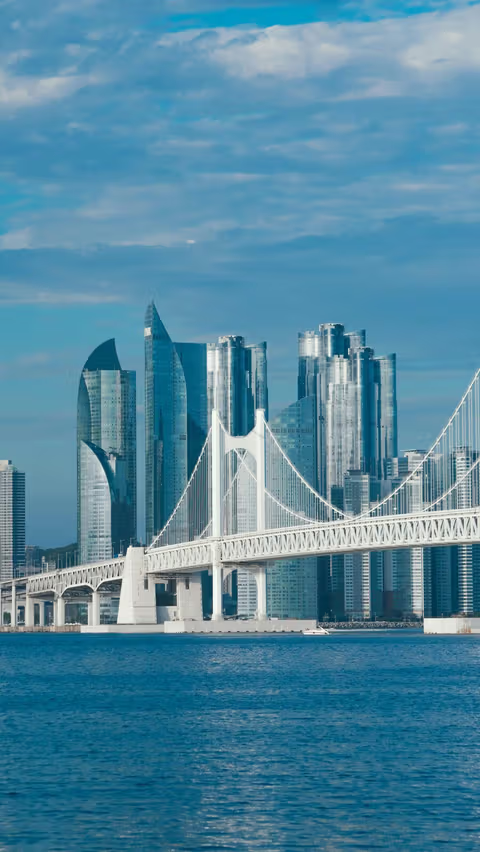
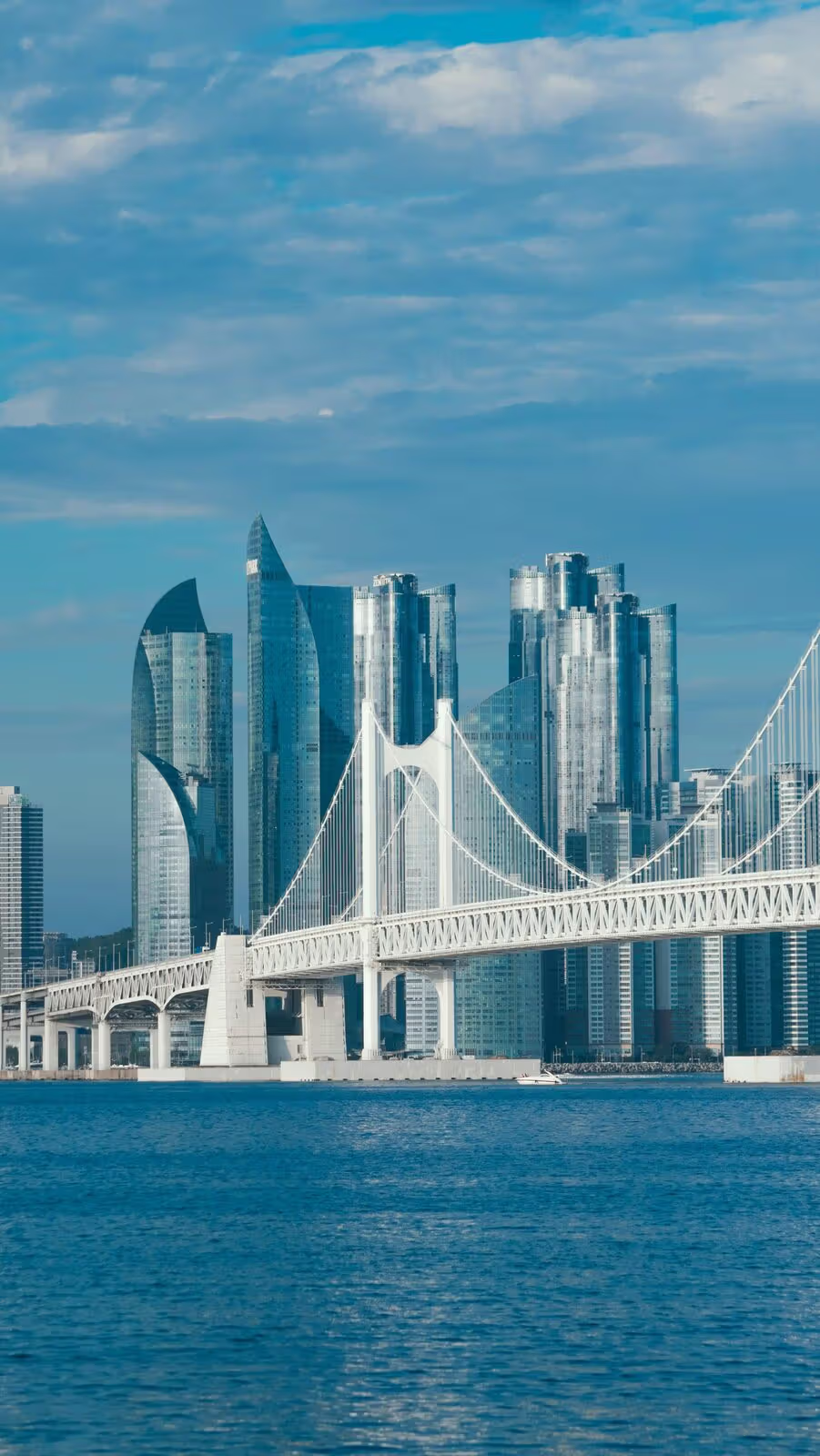
The second city and largest port in the country, the nation's cinematic capital and the coastal counterpoint to Seoul. Urban beaches, the Jagalchi fish market, the rainbow-coloured hillside village of Gamcheon and a dialect that sounds rougher and prouder.

Hotels
Park Hyatt Busan · Signiel Busan · Avani
Must-see
Gamcheon · Jagalchi market · Gwangan Bridge
Best time
May–June · September–October
Gyeongju · South Korea 03 · Ancient

1–2 nights

Gyeongju

An open-air museum

The ancient capital of the Silla kingdom, which ruled the peninsula for a thousand years. Royal burial mounds shaped like hills, the UNESCO-listed Bulguksa temple and Seokguram Grotto, and the Cheomseongdae observatory, one of the oldest in the world.

Hotels
Hilton Gyeongju · Hanok Suaedang
Must-see
Bulguksa · Tumuli Park · Anapji Pond
Best time
April and October · cherry blossoms and foliage
Jeonju and Andong · South Korea 04 · Tradition

1–2 nights

Jeonju and Andong

The traditional cities

Jeonju is the culinary capital of the country, a UNESCO City of Gastronomy, with the best-preserved hanok neighbourhood in Korea. Andong preserves living Confucianism and the village of Hahoe, a UNESCO site, with its intact earthen architecture and traditional masks.

Hotels
Hakindang · Hanok Stay Seochon · Suaedang
Must-see
Jeonju Hanok Village · Hahoe Village · original bibimbap
Best time
April and October · golden light on the hanok
Jeju · South Korea 05 · Island

2–3 nights

Jeju

The volcanic island of the south

Korea's only volcanic island and a UNESCO World Natural Heritage Site: Mount Hallasan, satellite craters, lava tubes and black basalt coastlines. This is the home of the haenyeo · women divers who harvest shellfish without oxygen tanks.

Hotels
The Shilla Jeju · Podo Hotel · We Hotel
Must-see
Seongsan Ilchulbong · Hallasan · Hyeopjae Beach
Best time
April and October–November · avoid the monsoon

Signature experiences

Moments to remember

Private access, guides born in the place and a rhythm designed around you.

Practical

The essentials before you travel

Information verified by our travel designers, updated for 2026.

Money

Currency
South Korean won (KRW, ₩). No sub-units. Banknotes from 1,000 to 50,000 won (verify the exchange rate before travel).
Cards
Visa and Mastercard are accepted almost universally, including at many market stalls and on the KTX.
Cash
Useful at traditional markets, temples and street stalls. Carry 200–300 USD for emergencies and smaller markets.
T-money
A prepaid card for the metro, bus, taxi and vending machines. Available at the airport · it saves money on every journey.
Exchange
Currency exchange booths in Myeongdong and Itaewon offer better rates than the airport and hotels.
Tipping
Not practised at restaurants or in taxis · service is included. A gratuity for private guides is a gesture, not an expectation.

Visa

Exemption
Colombians, Mexicans, Spanish, Argentines, Chileans and many other nationalities do not require a tourist visa for short stays.
K-ETA
The electronic travel authorisation is suspended for many passports until the end of 2026, simplifying entry. Verify its current status.
Passport
Minimum validity of three months from entry; some consulates recommend six.
e-Arrival Card
From 2026 this replaces the paper form. Complete it online up to 72 hours before your flight.
Documents
Have your return ticket and proof of accommodation to hand in case immigration requests them.

Health

Vaccinations
None required for entry from Latin America or Europe under normal conditions.
Insurance
Strongly recommended. Private hospitals in Seoul are excellent but can be costly without coverage.
Water
Tap water is safe to drink, although most Koreans prefer bottled or filtered water for taste.
Air quality
Seoul experiences fine-particle pollution episodes in March and April. Check the app and carry KF94 masks.
Pharmacies
Green cross sign. Basic English spoken in urban areas, with a wide range of over-the-counter products.

Transport

KTX
The bullet train reaches 305 km/h: Seoul to Busan in 2h 20m and to Gyeongju in 2h. The backbone of any internal journey.
Metro
Seoul's metro is one of the most-used in the world: clean, punctual and with full bilingual signage.
Flights to Jeju
One hour from Seoul. The Gimpo–Jeju route is the world's busiest; book in advance.
Apps
Kakao T for taxis. Naver Maps and Kakao Maps for getting around: Google Maps has limited coverage in Korea.
Car hire
Recommended only on Jeju. In cities, public transport is always the better option.

Language

Official
Korean, written in Hangul · a scientifically designed alphabet created in 1443 to be easy to learn.
English
Functional in hotels, tourist restaurants and among young urban Koreans; limited at markets and in rural areas.
Translation
Naver's Papago and Google Translate work well with the camera for reading menus.
Useful phrases
Annyeong haseyo (hello) · gamsahamnida (thank you) · juseyo (please).
Our approach
CocoVolare works with specialist cultural guides who translate context, not just language.

Etiquette

Greeting
A slight bow. Handshakes only if the other person initiates. Physical contact is generally minimal.
At the table
The eldest person begins eating first. Never stand chopsticks vertically in rice.
Soju etiquette
When someone pours, hold your glass with both hands; do the same when you pour. The youngest person serves the eldest first.
Volume
Talking loudly on the metro or in a restaurant is considered intrusive. A quiet tone is the norm.
Temples
Remove shoes and enter in silence. Do not photograph monks without permission or touch statues.

Climate

When to travel and why

Cherry blossom spring, monsoon summer and coastal season, crimson-foliage autumn and snow-covered winter temples. The chart shows all twelve months with estimated costs, temperatures and calendar highlights. Marked in gold, the windows we recommend experiencing Korea with us .

Most recommended month April · cherry blossoms in full bloom
Best value vs. experience May and June · lush green, festivals and mild weather
Once-in-a-lifetime window October and November · the crimson autumn foliage

The climate, month by month · Seoul

Reference city: Seoul Best season Temperature °C Relative rainfall
-10° 10° 20° 30° Jan: -6° – 2°C · 21 mm Jan: 21 mm Jan Feb: -4° – 5°C · 25 mm Feb: 25 mm Feb Mar: 1° – 11°C · 47 mm 11° Mar: 47 mm Mar Apr: 7° – 18°C · 65 mm 18° Apr: 65 mm Apr May: 13° – 23°C · 106 mm 23° May: 106 mm May Jun: 18° – 27°C · 133 mm 27° Jun: 133 mm Jun Jul: 22° – 29°C · 395 mm 29° Jul: 395 mm Jul Aug: 22° – 30°C · 364 mm 30° Aug: 364 mm Aug Sep: 17° – 26°C · 169 mm 26° Sep: 169 mm Sep Oct: 10° – 20°C · 52 mm 20° Oct: 52 mm Oct Nov: 3° – 12°C · 53 mm 12° Nov: 53 mm Nov Dec: -3° – 4°C · 22 mm Dec: 22 mm Dec

Highlights of the year: Apr · Cherry blossomsMay · Lotus lanternsJul · MonsoonOct · Fall foliage

April brings the cherry blossoms and October–November the red foliage of the palaces: Korea's two signature postcards. Avoid the jangma monsoon of July and August, when rain falls in buckets and the humidity wears you down.

When to go · season & budget

Seasons & estimated cost CocoVolare recommends High Mid Low
Jan: Low season · ≈$440 per person/day Jan Feb: Low season · ≈$470 per person/day Feb Mar: Mid season · ≈$550 per person/day Mar Apr: High season · ≈$690 per person/day $690Apr May: High season · ≈$660 per person/day $660May Jun: Mid season · ≈$550 per person/day Jun Jul: Mid season · ≈$580 per person/day Jul Aug: Mid season · ≈$580 per person/day Aug Sep: Mid season · ≈$605 per person/day $605Sep Oct: High season · ≈$715 per person/day $715Oct Nov: High season · ≈$660 per person/day $660Nov Dec: Low season · ≈$470 per person/day Dec

In our recommended dates, the estimated cost ranges from $605 to $715 per person/day (Premium level, international flights not included).

Investment

What it costs, no fine print

South Korea is precision luxury: immaculate hotels, trains that leave to the second and a Michelin-starred dining scene priced below Tokyo or Singapore. The best investment is private experiences that translate the cultural codes.

Experience levels · guide budget

South Korean won (KRW) · 1 USD ≈ 1,350 KRW USD · per person/day
Boutique essential Boutique essential: $300 USD · per person/day $300 Design-led 4-star hotels in Myeongdong or Hongdae, KTX in standard class and the street-food universe of Gwangjang. Premium Premium: $550 USD · per person/day $550 Signiel or Four Seasons Seoul, a private guide for the palaces and the DMZ, and hard-to-book contemporary hansik tables. Signature Signature: $950 USD · per person/day $950 Suites overlooking the Han, a night in a luxury hanok, a private temple-to-table chef and a driver for Seoul, Busan and Gyeongju.
Premium Korean barbecue for two USD 60–120KTX Seoul–Busan (first class) USD 62Hanbok rental + Gyeongbokgung admission USD 25–40Private DMZ tour USD 150–250Incheon–hotel transfer USD 60–80

Indicative 2026 values per person, excluding international flights. Every CocoVolare quote is tailored to season, hotels and travel pace.

Signature itineraries

Six Koreas · choose yours

Zero templates: every itinerary is rewritten 100% to your measure. Prices per person in double occupancy, boutique category, international flights not included.

5 days · 4 nights · Core

Korea Essence

Seoul → Jeonju

The Joseon dynasty and the culinary capital

  • The Joseon dynasty palaces and the Bukchon hanok neighbourhood
  • The DMZ, the border with North Korea, with a specialist historian
  • A night in a Jeonju hanok stay, with ondol radiant heating and a courtyard

FromUSD 2,400

7 days · 6 nights · Capital, coast and island

Balanced Korea

Seoul → Gyeongju → Busan → Jeju

From the Joseon dynasty to the volcanic island

  • Seoul: the Joseon palaces, the markets and the DMZ with a historian
  • Gyeongju: Bulguksa temple and the illuminated Anapji Pond at dusk
  • Busan: the colourful Gamcheon village and the Jagalchi market

FromUSD 3,600

10 days · 9 nights · Five regions

Deep Korea

Seoul → Andong → Gyeongju → Busan → Jeju

Five Koreas, with time for the invisible

  • Three days of deep Seoul, including a temple stay with a sunim monk
  • Andong: the Hahoe village and the mask dance, a UNESCO Intangible Heritage
  • Gyeongju and Busan, with the morning ceremony at Bulguksa temple

FromUSD 5,800

14 days · 13 nights · Culture and nature

Extended Korea

Seoul → Andong → Gyeongju → Busan → Jeju → Seoraksan

The whole country, from the Joseon dynasty to the mountains

  • The deep itinerary: Seoul, Andong, Gyeongju, Busan and Jeju
  • Temple stay with a monk and the morning ceremony at Bulguksa
  • Seoraksan National Park with its foliage and the Sinheungsa monastery

FromUSD 8,900

10 days · 9 nights · Romance

Korean Honeymoon

Seoul → Gyeongju → Busan → Jeju

Beginning the rest of your life among hanok and cherry blossoms

  • Suite upgrade at the Signiel or Four Seasons Seoul with a view
  • Private hanbok session with a professional photographer at Bukchon at sunrise
  • Private dinner in a traditional pavilion with live gugak music

FromUSD 7,500

7 days · 6 nights · Gastronomy

Hansik Flavour Route

Seoul → Jeonju → Busan

One of the world's most complex cuisines, dish by dish

  • Gwangjang Market with a local food expert: bindaetteok and mayak gimbap
  • Buddhist temple cooking class · no garlic, no onion · with a monk
  • Jeonju, a UNESCO City of Gastronomy, and bibimbap in its original form

FromUSD 4,200

None of them fits? We design your own. WhatsApp →

Gastronomy

The flavors of South Korea

From the bindaetteok at the market stall to a twelve-course Michelin-starred menu. Korean gastronomy is among the world's most complex · built on fermentation, rice as the quiet centre and the banchan system of small shared side dishes.

Jungsik

Gangnam · Seoul

Three Michelin stars. Chef Yim Jungsik's new Korean cuisine reinvented contemporary high-level hansik for the world.

Mingles

Cheongdam · Seoul

Chef Mingoo Kang's Franco-Korean fusion · French technique and a fermented Korean soul. Michelin-starred.

Onjium

Jongno · Seoul

One Michelin star. Gastronomic research into the Joseon period translated onto the plate: court cuisine for today.

La Yeon

The Shilla · Seoul

Three Michelin stars. Royal Korean cuisine · refined hanjeongsik served as a dynastic banquet.

Gwangjang Market

Jongno · Seoul

Seoul's oldest market, dating from 1905 · the epicentre of street food: bindaetteok, mayak gimbap and yukhoe.

Hankookjib

Hanok Village · Jeonju

The original bibimbap since 1952. The version the world came to know was born in Jeonju, the country's culinary capital.

Calendar

Dates worth traveling for

A well-chosen date turns a trip into a memory. We design your itinerary around the moment that matters most to you.

Seollal · Jan–Feb

The Korean Lunar New Year, three days of family celebration. Cities empty and tradition is lived behind closed doors.

Jeju Fire Festival · March

Controlled burning of the fields at Saebyeol Oreum, with fireworks above the crater. One of the country's most dramatic visual spectacles.

Cherry Blossom Festival · April

The peak bloom, with Jinhae, Yeouido and Gyeongju as its stages. The great photographic window of the Korean spring.

Lotus Lantern Festival · May

The Yeon Deung Hoe, a nocturnal lantern procession marking Buddha's birthday. A UNESCO Intangible Heritage, with Insadong lit up in a sea of paper lanterns.

Chuseok · Sep–Oct

The autumn harvest festival, one of the country's great family celebrations, with ritual food and visits to ancestral graves.

Busan International Film Festival · October

The BIFF · Asia's most important film festival · fills the city with screenings and stars.

Hangul Day · 9 Oct

The celebration of the Korean alphabet, designed by King Sejong in 1443 and one of the world's most efficient writing systems.

Ski Season · Dec–Mar

Snow at Pyeongchang, Yongpyong and High1 in Gangwon Province, the host of the 2018 Winter Olympics.

CocoVolare recommends

What we would tell a friend

Advice from our travel designers: what we book first, what we avoid, and the details that turn a good trip into an unforgettable one.

01

Sort your K-ETA before you buy the airport coffee

Colombians need no visa, but they do need the K-ETA electronic authorization: applied for online, about 10,000 won, usually approved within 72 hours and valid for three years. Without an approved K-ETA you won't be allowed to board; we verify it with you when issuing your flights.

02

Forget Google Maps: Naver and Kakao rule here

By regulation, Google Maps cannot calculate walking or driving routes in Korea. Download Naver Map and KakaoMap in English before landing, and add Papago to translate menus and signs. They transform the trip entirely.

03

The cherry blossoms won't wait: book April in January

Seoul's bloom lasts barely 10 days, usually in early April, and the good hotels sell out three months ahead. The autumn foliage in Bukchon and the palaces, in late October, deserves the same foresight.

04

In a hanbok, the palaces open for free

Rent a hanbok in Bukchon (15–25 USD) and admission to Gyeongbokgung and the other royal palaces is free, plus the photo everyone wants. Note: Gyeongbokgung closes on Tuesdays and Changdeokgung on Mondays.

05

Two hands say more than a thousand words

Give and receive cards, glasses and gifts with both hands: it's the essential Korean courtesy. Remove your shoes entering homes, temples and some restaurants, and keep your voice down on the metro; silence there is sacred.

06

T-money in your pocket from the airport

The T-money card is sold at any convenience store and pays for metro, bus, taxi and even cafés. Seoul's metro is among the world's best and often beats a taxi at rush hour; top it up with cash, as foreign cards don't always go through.

In motion

South Korea, live

Testimonials

What our travelers say

★ ★ ★ ★ ★

“We spent a night in a temple with a monk who taught us to meditate and to eat in silence. After three intense days in Seoul, that pause changed everything. CocoVolare understood that Korea is something you cross slowly.”

Mariana Restrepo

Bogotá · Honeymoon · 10 nights

★ ★ ★ ★ ★

“Our guide was a historian through and through. At the DMZ he explained what no plaque ever says, and in Gyeongju he had Bulguksa temple open for us before anyone else arrived. That difference is what separates seeing Korea from understanding it.”

Javier Mendoza

Mexico City · Cultural journey · 10 nights

★ ★ ★ ★ ★

“We slept in a Jeonju hanok with a warm floor and a quiet courtyard. At dawn, the bibimbap vendors were opening their stalls. I thought I knew Asia. Korea showed me an entirely different way of inhabiting time.”

Andrés Lozano

Medellín · Couple's journey · 12 nights

FAQ

Frequently asked questions

Do I need a visa to enter South Korea?

Travellers from Colombia, Mexico, Spain, Argentina, Chile and many other nationalities do not require a tourist visa for short stays. The K-ETA electronic authorisation is suspended for many passports until the end of 2026, which simplifies entry. It is worth confirming its current status and completing the e-Arrival Card online before your flight.

What is the best time to visit South Korea?

Spring, from late March to mid-May, when the cherry blossoms are in bloom. Autumn, from late September to mid-November, with the red and golden foliage. Avoid the Korean monsoon from late June to mid-July and the peak of winter, unless you are visiting for skiing or snowy temple landscapes.

How many days do I need to see South Korea?

Five days cover Seoul and a second city such as Jeonju. Seven to ten days add Gyeongju, Busan and Jeju Island. Fourteen days allow for Seoraksan National Park or the southern coast. The KTX train crosses the country from Seoul to Busan in just over two hours and is the backbone of any inland journey.

What currency is used in South Korea?

The South Korean won (KRW). Visa and Mastercard are accepted almost universally, including at many market stalls and on the KTX train. Cash is used at traditional markets and street stalls. The prepaid T-money card covers the metro, bus and taxis, and is available at the airport.

Is it safe to travel to South Korea?

South Korea is one of the safest countries in the world for travellers. Walking at night in the central areas of Seoul is reasonably safe and women travel solo without issue. Violent crime against foreigners is very low. Leave a phone on a café table and the chances are it will still be there twenty minutes later.

How much does a trip to South Korea cost?

A boutique ten-day trip, excluding international flights, starts from around USD 2,800 per person in boutique hotels and mid-range hanok with signature experiences. CocoVolare signature itineraries start from USD 2,400 per person for five days. South Korea is not a budget destination, but it does not reach Japan's price levels in the premium tier.

Do you tip in South Korea?

No. South Korea is one of the few Asian countries where tipping is not practised · service is included at hotels, restaurants and in taxis. Insisting on leaving a tip can cause discomfort. The exception is certain five-star hotels and private guides, where a tip is welcome but not expected.

Is it worth staying in a traditional hanok?

Yes, and it is one of the most memorable experiences in the country. The hanok · a traditional timber and earthen house with ondol radiant heating, floor-level sleeping, an inner courtyard and hanji paper lattice screens · is deep Korea. Jeonju and Andong preserve the best-maintained hanok neighbourhoods. CocoVolare manages restored boutique hanok stays.

What is a temple stay and who is it for?

It is the official programme that opens more than 130 Buddhist monasteries to travellers: dawn meditation, a tea ceremony and monastic meals eaten in silence. It demands real discipline · waking at 4:30am and strict guidelines · and is Buddhist practice, not a wellness retreat. CocoVolare recommends it to those with genuine interest: it shifts the whole perspective of the journey.

Is the DMZ worth visiting?

Yes. The demilitarised zone with North Korea is the world's most heavily fortified border, and its emotional weight is difficult to convey in words. It can only be visited on an authorised tour with a passport and advance reservation. The Joint Security Area may close due to geopolitical tensions: CocoVolare verifies conditions when planning and works with specialist historians.

Is South Korea a good destination for foodies?

Yes, and it remains underrated. Korean gastronomy is built on fermentation, rice and the banchan system. Palace cooking, Buddhist temple cuisine and vibrant street-market food all coexist. Seoul has three-Michelin-star restaurants and Jeonju, a UNESCO City of Gastronomy, is the birthplace of bibimbap.

What does a CocoVolare trip to South Korea include?

Itinerary design from scratch, KTX train and domestic flights where applicable, boutique hotels and hanok with breakfast, specialist cultural guides, signature experiences such as a temple stay or the Bulguksa ceremony, Michelin restaurant reservations, private transfers and 24/7 concierge. Every journey is designed to your pace, profile, dates and budget.

South Korea

No molds, made to measure

Tell us what excites you and we will design a tailor-made proposal in under 24 hours, with a dedicated travel designer.