
China · CocoVolare

Asia · Boutique

China

Asia's continent-country

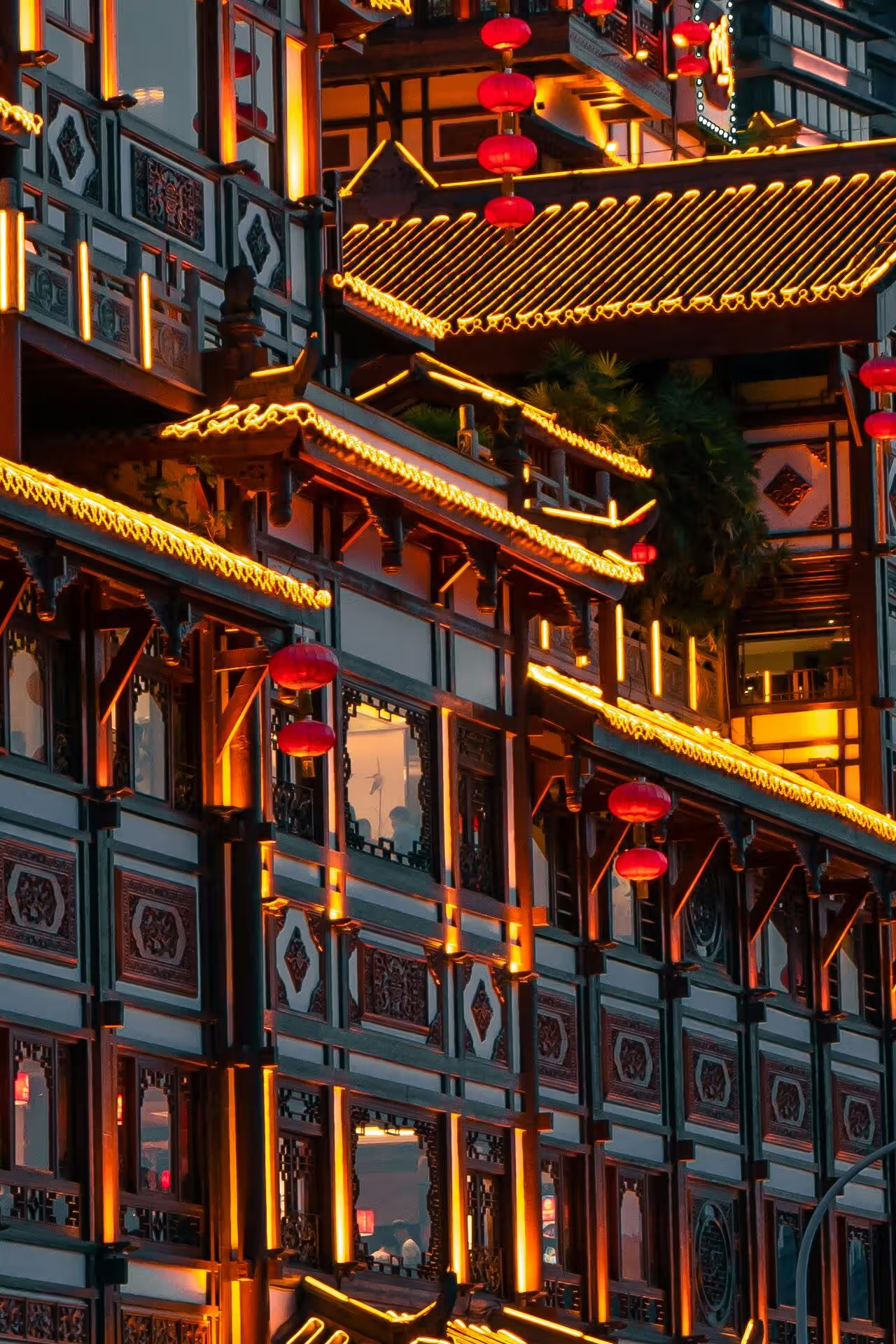
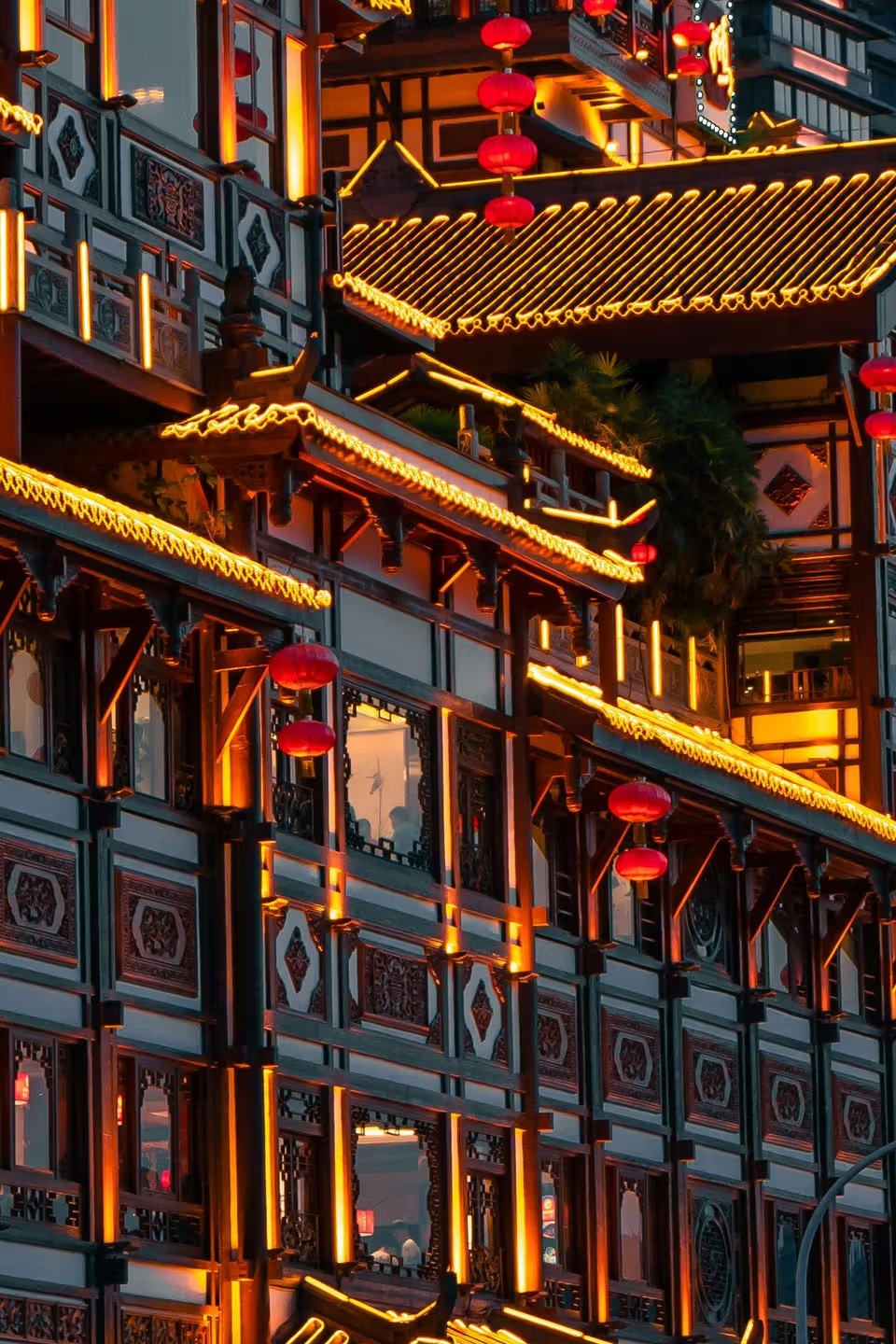
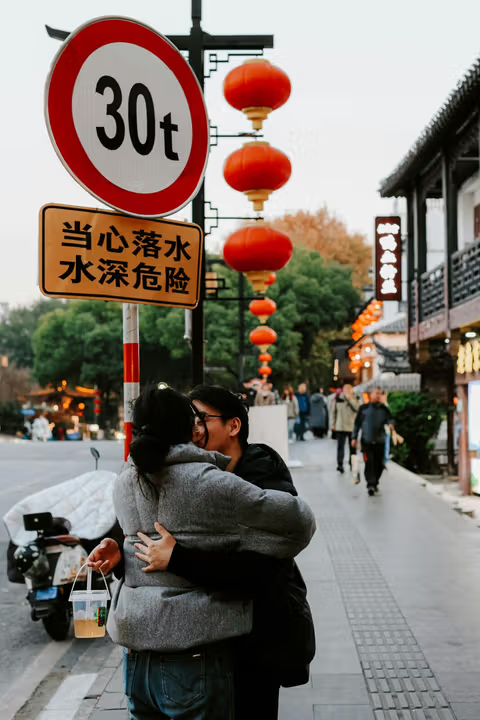
C hina entered the curious traveller's world through the Great Wall and the Forbidden City, and stayed for everything else. In the north, Beijing pulses between Ming-dynasty hutong alleyways and towers by foreign architects.

The essence

A country read across four thousand years

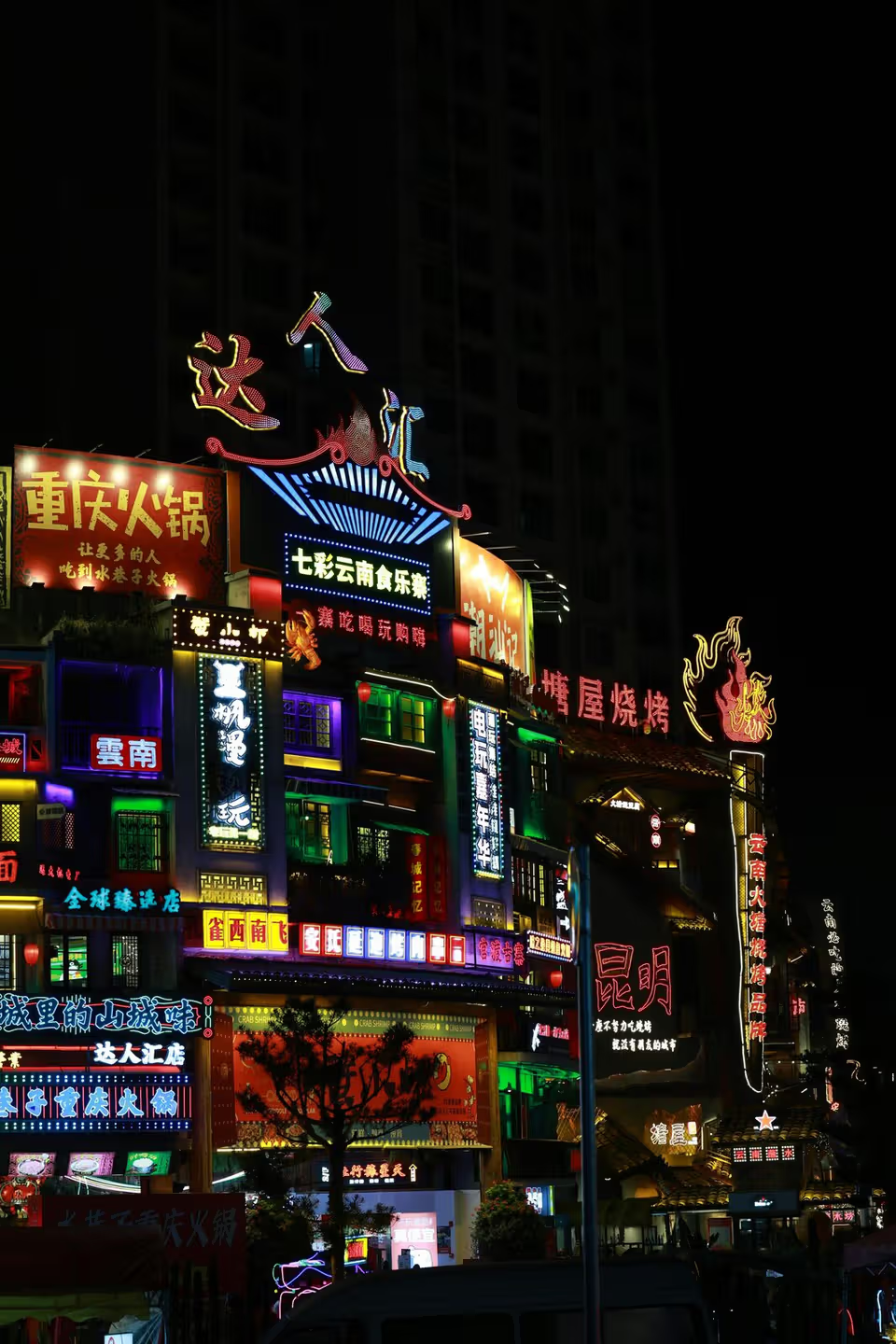
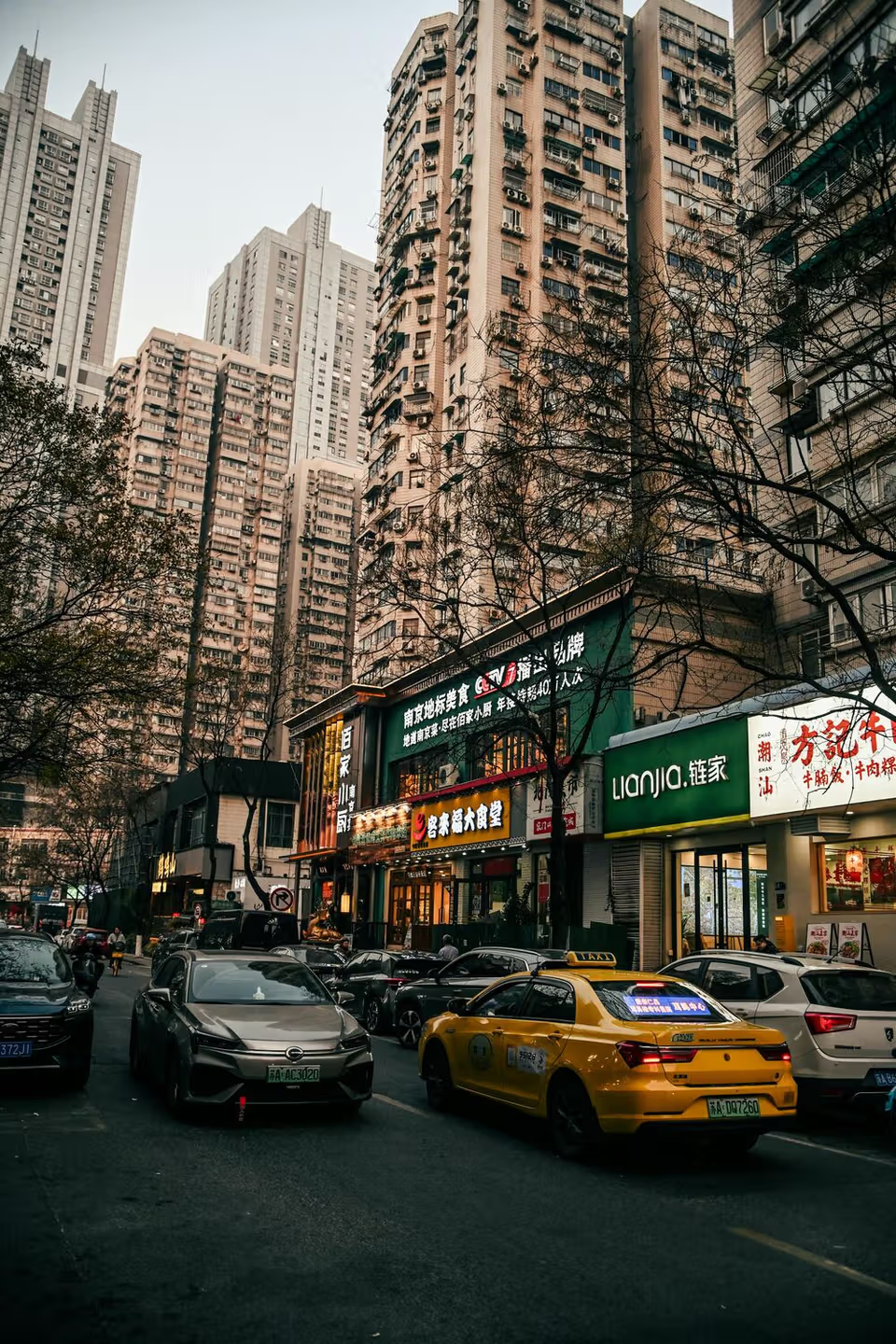
C hina entered the curious traveller's world through the Great Wall and the Forbidden City, and stayed for everything else. In the north, Beijing pulses between Ming-dynasty hutong alleyways and towers by foreign architects. In Xi'an, unified China begins · eight thousand terracotta warriors guard the first emperor's tomb. In Shanghai, the Bund narrates the twentieth century without opening a book. And between cities runs a bullet-train network that makes a three-capital itinerary in one week entirely possible. This is a destination that demands curation, far from autopilot and the sealed package. It works when someone applies discernment · the right climate window, trains reserved ahead, the right hotels and a cultural interpreter who understands four thousand years of codes. Done that way, China delivers the most memorable journey in any Asian itinerary.

21,000 km of Great Wall counting all branches and dynasties
8,000 terracotta warriors from 210 BC in Xi'an
45,000 km of bullet-train track · more than the rest of the world combined
8 recognised major regional culinary traditions

Regions

The 5 faces of China

Beijing · China 01 · Capital

4–5 nights

Beijing

The city of layers

Beijing doesn't reveal itself quickly: a capital where the Ming imperial grid, Maoist squares and contemporary architecture shift centuries with every corner turned. The Forbidden City, the Temple of Heaven, the Great Wall and hutong alleys barely three metres wide.

Hotels
Aman Summer Palace · Rosewood · The Orchid
Must-see
Forbidden City · Great Wall at Mutianyu · hutongs
Best time
Sep to Nov and Apr to May · clear skies
Shanghai · China 02 · Megacity

3–4 nights

Shanghai

China's great wager

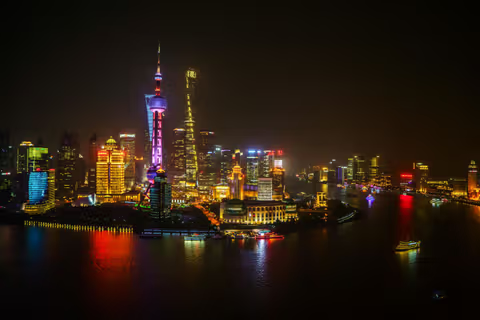
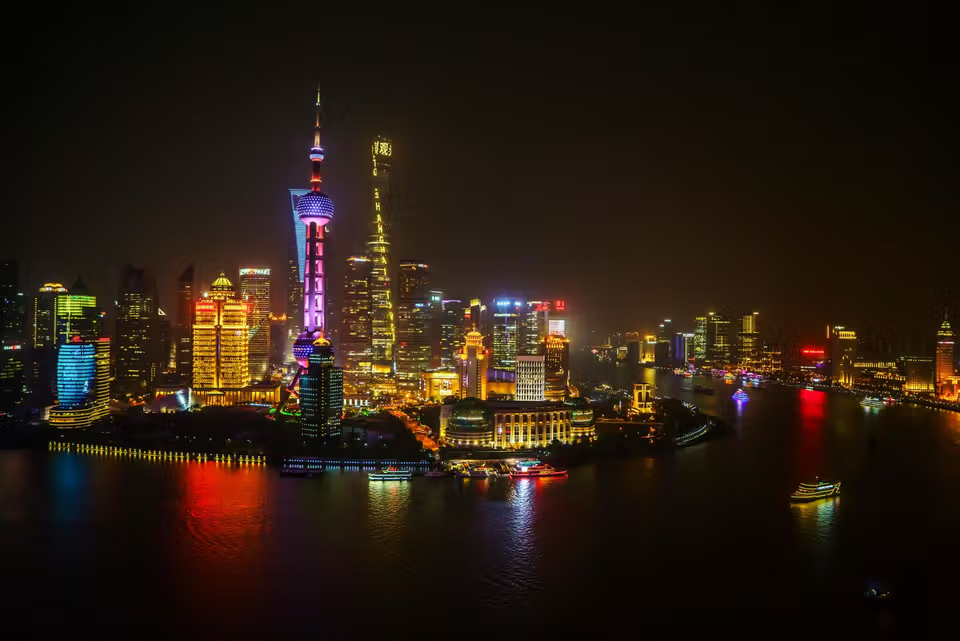
If Beijing is memory, Shanghai is ambition. The art deco Bund along the Huangpu River, Pudong's skyscrapers risen in thirty years from what was once paddy field, the French Concession shaded by century-old plane trees and the finest fine dining in mainland Asia.

Hotels
Peninsula · Capella Jian Ye Li · Bulgari
Must-see
The Bund · French Concession · Yu Garden
Best time
Oct to Nov · clear skies above the Huangpu
Xi'an · China 03 · Ancient capital

2–3 nights

Xi'an

The Chinese city

Xi'an is the Chinese city par excellence. Unified China began here in 221 BC, and the Silk Road ended here too. It preserves the country's only intact medieval city wall, the Terracotta Army and a 1,300-year-old Hui Muslim Quarter.

Hotels
Sofitel Legend People's Grand · Shangri-La · W
Must-see
Terracotta Army · Ming city wall · Muslim Quarter
Best time
Apr to Jun and Sep to Oct · temperate climate
Suzhou and Hangzhou · China 04 · Gardens

2–3 nights

Suzhou and Hangzhou

The Yangtze Delta

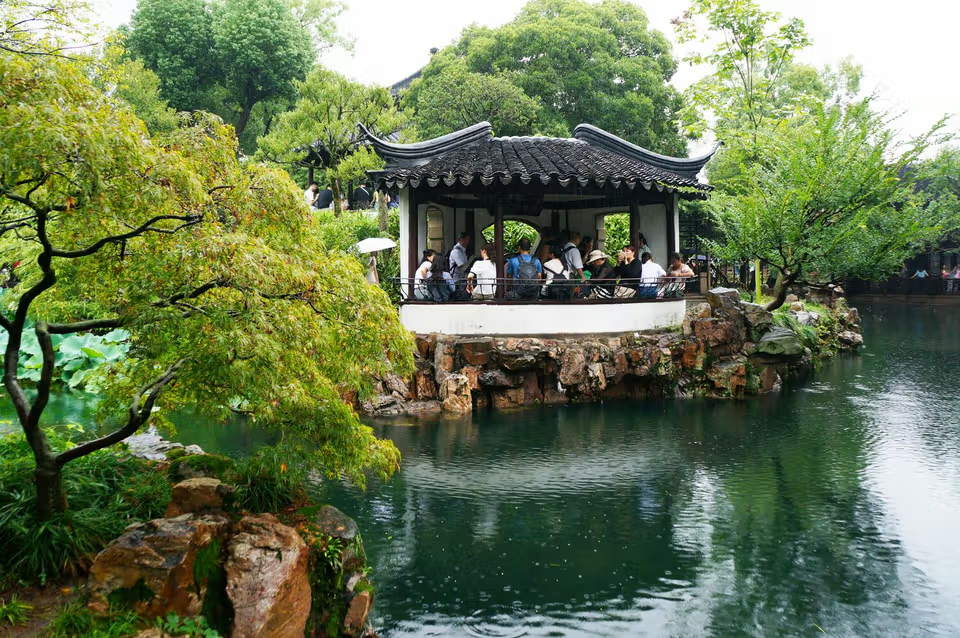
The Jiangnan · the Yangtze Delta · is classical China of brushstroke and poetry. Suzhou holds UNESCO-listed gardens and a living silk tradition; Hangzhou, West Lake, longjing tea and Buddhist temples. Canal towns with arched bridges lie between the two.

Hotels
Amanfayun · Aman Summer Palace · courtyard houses
Must-see
Suzhou gardens · West Lake · Zhujiajiao
Best time
Mar to May · cherry blossom and new-season tea
Guilin and Yangshuo · China 05 · Karst south

2–3 nights

Guilin and Yangshuo

Mountains in ink

Southern China is karst landscape: four-hundred-million-year-old limestone pillars that look like sumi-e paintings. The Li River navigable between Guilin and Yangshuo, Zhuang villages, cycling through rice paddies and the terraced fields of Longji.

Hotels
Banyan Tree Yangshuo · boutique countryside houses
Must-see
Li River cruise · Longji rice terraces · Yangshuo
Best time
Apr to Oct · clear river and lush green

Signature experiences

Moments to remember

Private access, guides born in the place and a rhythm designed around you.

Practical

The essentials before you travel

Information verified by our travel designers, updated for 2026.

Money

Currency
Chinese yuan renminbi (CNY or RMB). Reference exchange rate for 2026 approximately 7.2 CNY per USD (verify before travel).
Digital payment
China is a cashless economy: WeChat Pay and Alipay via QR code dominate. Since 2023 they accept international Visa and Mastercard cards.
Cash USD
Bring USD 200–400 converted to yuan for small taxis, rural markets and as backup. Clean, unmarked notes.
Cards
Visa and Mastercard work at chain hotels, fine-dining restaurants and shopping centres. Not in taxis, markets or everyday shops.
ATMs
Dense network in cities. Bank of China and ICBC generally accept all international cards. Typical fee 15–30 yuan.
Tipping
Mainland China has no tipping culture. Private guides and dedicated drivers do appreciate a tip at the end of the trip.

Visa

Latin America
Colombians, Mexicans and Argentinians need a tourist L visa, processed at the consulate or visa centre before travel.
Exemptions
China has expanded unilateral exemption programmes since 2024 for several European countries. Verify status by nationality.
Transit visa-free
Programme of up to 240 hours at selected airports, with an onward ticket to a third country.
Passport
Valid for at least six months, with one blank page for the entry stamp. All ten fingerprints are taken on arrival.
Documents
Detailed itinerary, hotel reservations and return flights. CocoVolare advises but does not process visas on behalf of clients.

Health

Vaccinations
None mandatory from Latin America or Europe, except yellow fever if arriving from an endemic country. Recommended: hepatitis A and B, typhoid, tetanus.
Insurance
Essential, with international medical coverage, hospitalisation, evacuation and repatriation. China has excellent private hospitals in Beijing and Shanghai.
Water
Not safe to drink anywhere in China. Bottled or boiled only, including for brushing teeth in more modest hotels.
Air quality
Has improved markedly since 2015. There are still occasional high-index days in Beijing in winter. Useful apps: IQAir, AQICN.
Street food
Safe at busy stalls with high turnover. Ease into Sichuan spice. Carry probiotics just in case.

Transport

Bullet train
The most extensive network in the world: Beijing–Shanghai in 4h 18m, Beijing–Xi'an in 4h 30m. Book three to four weeks in advance.
Domestic flights
Air China, China Eastern, China Southern and Hainan compete with the train for distances over 1,500 km.
Private driver
The CocoVolare standard for city days. Costs USD 80–130 per day and saves two to three hours of daily logistics.
Apps
Didi is the Chinese equivalent of Uber and operates in English. Metro systems in major cities are signposted in pinyin and English.
Car hire
Not recommended: international driving licences are not valid in mainland China. CocoVolare always prefers a private driver.

Language

Official language
Mandarin Chinese (pǔtōnghuà), with simplified characters on the mainland. Over 50,000 characters exist; 3,500 suffice to read a newspaper.
Regional languages
Cantonese in Guangzhou and Hong Kong, Shanghainese in the Yangtze Delta, plus Tibetan, Uyghur and Mongolian in autonomous regions.
English
Confined to international hotels, airports and top attractions. Beyond those, virtually non-existent. Spanish is very rare.
Useful phrases
Nǐ hǎo (hello) · xièxiè (thank you) · bù yào (no thank you) · duōshao qián (how much?). These change the way people respond.
Our approach
CocoVolare operates with Spanish-speaking cultural interpreters in Beijing, Shanghai, Xi'an, Chengdu and Guilin · the difference between flowing and frustration.

Etiquette

Chopsticks
Never stick them upright in rice: it evokes funeral incense. Do not point with them or pass food from one pair of chopsticks to another.
Mianzi
Social face organises many interactions. Causing someone to lose face in public is one of the gravest possible offences.
Gifts
Offered with both hands. Avoid clocks, umbrellas and the number four: they sound like death or separation in Chinese.
Sensitive topics
Taiwan, Tibet, Xinjiang, Tiananmen 1989 and Hong Kong 2019 are not discussed in public. A matter of respect and cultural discretion.
Photography
Never photograph military installations or police. Ask permission before photographing monks or elderly people.

Climate

When to travel and why

China spans five climate zones: there is no single Chinese climate, there are Chinese climates. The chart shows all twelve months with estimated cost, temperature and iconic festivals. Marked in gold, the windows we recommend experiencing China with us .

Most recommended month October · after Golden Week, clear skies
Best value vs. experience November · manageable climate and few crowds
Once-in-a-lifetime window March and April · cherry blossom and new-season tea

The climate, month by month · Beijing

Reference city: Beijing Best season Temperature °C Relative rainfall
-10° 10° 20° 30° Jan: -8° – 2°C · 3 mm Jan: 3 mm Jan Feb: -5° – 5°C · 6 mm Feb: 6 mm Feb Mar: 1° – 12°C · 9 mm 12° Mar: 9 mm Mar Apr: 8° – 20°C · 26 mm 20° Apr: 26 mm Apr May: 14° – 26°C · 29 mm 26° May: 29 mm May Jun: 19° – 30°C · 71 mm 30° Jun: 71 mm Jun Jul: 22° – 31°C · 176 mm 31° Jul: 176 mm Jul Aug: 21° – 30°C · 182 mm 30° Aug: 182 mm Aug Sep: 15° – 26°C · 49 mm 26° Sep: 49 mm Sep Oct: 8° – 19°C · 26 mm 19° Oct: 26 mm Oct Nov: 0° – 10°C · 5 mm 10° Nov: 5 mm Nov Dec: -6° – 4°C · 3 mm Dec: 3 mm Dec

Highlights of the year: Feb · Chinese New YearSep · Moon FestivalOct · Golden Week

Spring (April–May) and autumn (September–October) are the golden seasons: clean skies and gentle temperatures. Avoid July and August, hot and rainy, and Golden Week from October 1–7, when half the country travels.

When to go · season & budget

Seasons & estimated cost CocoVolare recommends High Mid Low
Jan: Mid season · ≈$525 per person/day Jan Feb: High season · ≈$690 per person/day Feb Mar: Mid season · ≈$580 per person/day Mar Apr: High season · ≈$635 per person/day $635Apr May: High season · ≈$635 per person/day $635May Jun: Mid season · ≈$550 per person/day Jun Jul: Mid season · ≈$580 per person/day Jul Aug: Mid season · ≈$580 per person/day Aug Sep: High season · ≈$660 per person/day $660Sep Oct: High season · ≈$715 per person/day $715Oct Nov: Mid season · ≈$525 per person/day Nov Dec: Low season · ≈$470 per person/day Dec

In our recommended dates, the estimated cost ranges from $635 to $715 per person/day (Premium level, international flights not included).

Investment

What it costs, no fine print

China delivers surprisingly competitive luxury: world-class hotels cost less than their European equivalents and the bullet train makes many domestic flights unnecessary. Where it does pay to invest is in private guides who open the right doors.

Experience levels · guide budget

Chinese yuan (CNY) · 1 USD ≈ 7.2 CNY USD · per person/day
Boutique essential Boutique essential: $300 USD · per person/day $300 Design-led 4-star hotels in Beijing and Shanghai, second-class bullet trains and cult local tables without pretension. Premium Premium: $550 USD · per person/day $550 Five-star icons like The PuLi or Rosewood, a private guide at the must-sees and first class on the bullet train. Signature Signature: $1,000 USD · per person/day $1,000 Aman Summer Palace or Bulgari Shanghai, the Great Wall without crowds via private access, a driver and haute Cantonese tables.
Peking duck for two in Beijing USD 60–110Beijing–Shanghai bullet train (1st class) USD 130Private guide, full day USD 150–250Forbidden City admission USD 9Airport–hotel transfer USD 30–50

Indicative 2026 values per person, excluding international flights. Every CocoVolare quote is tailored to season, hotels and travel pace.

Signature itineraries

Six Chinas · choose yours

Zero templates: every itinerary is rewritten 100% to your measure. Prices per person in double occupancy, boutique category, international flights not included.

5 days · 4 nights · North and east

China Essence

Beijing → Great Wall → Shanghai

China distilled but coherent, without losing the rhythm

  • Beijing's hutongs in low light and a calligraphy session with a master
  • Forbidden City and Temple of Heaven with a private cultural interpreter
  • The Great Wall at Mutianyu, away from the crowds of Badaling

FromUSD 2,800

7 days · 6 nights · Dynastic route

Balanced China

Beijing → Xi'an → Shanghai

Three cities, three dynasties, three ways to read the country

  • Beijing with the Forbidden City, Temple of Heaven and the Great Wall at Jinshanling
  • The Terracotta Army with an archaeologist, before the tour-group rush
  • Xi'an's medieval city wall by bicycle and the Hui Muslim Quarter

FromUSD 3,900

10 days · 9 nights · Five regions

Deep China

Beijing → Xi'an → Guilin → Chengdu → Shanghai

Five Chinas in one journey · with room to breathe

  • Three days in Beijing: hutongs, Forbidden City and the Great Wall on a restricted section
  • Xi'an's Terracotta Army with early access and an archaeologist
  • Boutique cruise along the Li River between Guilin and Yangshuo

FromUSD 6,200

14 days · 13 nights · Empire and Yunnan

Extended China

Beijing → Xi'an → Guilin → Chengdu → Yunnan

Empire, karst, alpine nature and ethnic villages

  • The deep itinerary: Beijing, Xi'an, Guilin, Chengdu and Shanghai
  • The Naxi old town of Lijiang and its canal network
  • Guided trekking in Tiger Leaping Gorge

FromUSD 9,800

10 days · 9 nights · Romance

Imperial Honeymoon

Shanghai → Guilin → Beijing

Beginning the rest of your life between neon and ink

  • Suite upgrade with a view in every city, from the Bund to an imperial garden
  • Private rooftop dinner on the Bund with a violinist
  • Private Li River cruise on a classic junk at dawn

FromUSD 8,500

7 days · 6 nights · Gastronomy

Chinese Flavours Route

Beijing → Chengdu → Shanghai

Eight regional cuisines · table by table

  • Peking duck at Siji Minfu and an imperial banquet in a restored pavilion
  • Sichuan cooking class with a local chef and hot pot in Chengdu
  • Chengdu spice market tour with a foodie guide

FromUSD 4,600

None of them fits? We design your own. WhatsApp →

Gastronomy

The flavors of China

Chinese gastronomy is eight cuisines in one. From Peking duck to a twelve-course menu synchronised with light and aroma, eating in China means entering a new culinary code every four hours of train travel. A pantry of four thousand years turned into memory.

Siji Minfu

Dongcheng · Beijing

Perfect Peking duck, carved at the table, with crisp skin and house-made pancakes. Modern atmosphere without tourist theatrics, steps from the Forbidden City.

Ultraviolet by Paul Pairet

Secret address · Shanghai

Three Michelin stars. Ten diners per night, twenty courses synchronised with light, sound and aroma. One of the most singular gastronomic experiences in the world.

King's Joy

Wudaoying · Beijing

High-end Chinese vegetarian cuisine beside the Yonghe Lama Temple, with Michelin recognition. Shiitake mushrooms in jujube consommé.

Family Li Imperial Cuisine

Yangfang Hutong · Beijing

A family restaurant recreating recipes from the last emperor's court, in a hutong house. Book two weeks ahead.

Jesse Restaurant

Tianping Lu · Shanghai

Home-style Shanghainese food in an intimate room. Its hong shao rou · braised pork belly in a deep red sauce · is emblematic of the Yangtze Delta.

Lao Sun Jia

Muslim Quarter · Xi'an

Since 1898. Yang rou pao mo · lamb soup with hand-crumbled flatbread · is the defining dish of the northwest capital.

Calendar

Dates worth traveling for

A well-chosen date turns a trip into a memory. We design your itinerary around the moment that matters most to you.

Chinese New Year · Jan · Feb

The country's most important celebration and the largest annual migration on the planet. Red lanterns, temple fairs and the symbolism of the new lunar year.

Harbin Ice Festival · Jan–Feb

Monumental illuminated ice sculptures in Heilongjiang province, at 25 degrees below zero. An unrepeatable winter experience.

Cherry blossom · Mar · Apr

Cherry trees blanket the gardens of Wuhan, Beijing, Hangzhou and Suzhou. Three weeks of peak bloom in the Chinese spring.

Peony Festival · Apr · May

China's national flower in the historic gardens of Luoyang, during the ideal season of clear skies and perfect photography.

Dragon Boat Festival · May · Jun

Traditional dragon boat races on Chinese rivers and zongzi · sticky rice wrapped in bamboo leaves · in the fifth lunar month.

Mid-Autumn Festival · Sep · Oct

Full moon, moon cakes and family reunion. One of the most cherished celebrations in the Chinese calendar.

National Day · 1 October

The founding of the People's Republic opens Golden Week, with mass domestic tourism. Beautiful to witness, best avoided for transfers.

Autumn foliage · Oct · Nov

The reds and golds of Wutai Shan, Anhui and Sichuan, and the rice terrace harvest of Yuanyang in Yunnan.

CocoVolare recommends

What we would tell a friend

Advice from our travel designers: what we book first, what we avoid, and the details that turn a good trip into an unforgettable one.

01

The Chinese visa takes two months

China requires a tourist visa for Colombians: an in-person appointment at the Bogotá Visa Centre, itinerary and confirmed bookings. Start the process 6 to 8 weeks before your flight; we prepare the full dossier so the appointment is a formality, not a headache.

02

Set up Alipay before take-off

China runs on mobile payment: cash and physical cards are accepted less and less. Download Alipay or WeChat Pay and link your international card from Colombia; you'll spare yourself the scene of being unable to pay for a cup of tea.

03

Internet with a plan B: your roaming is the key

Google, WhatsApp and Instagram are blocked on local networks, but international roaming and travel eSIMs slip past effortlessly. Activate an eSIM before departure and don't depend on hotel Wi-Fi.

04

The Wall is called Mutianyu, not Badaling

Badaling is closer, which is why it gets the crowds. Mutianyu, 90 minutes away with a driver, offers restored towers, a cable car and near-empty stretches if you arrive by 8:00. It's the photo you came for.

05

The Forbidden City sells no tickets at the gate

Entry is booked online days in advance, passport in hand, with slots that vanish fast. It closes on Mondays. The same applies to Mao's Mausoleum and the Wall itself on holidays: in China, improvising has a price.

06

Flee the Golden Weeks

From October 1–7 and over Chinese New Year (January–February), hundreds of millions travel at once: prices double and sites overflow. If your dates land there, we redesign together; the same trip, two weeks later, is a different country.

In motion

China, live

Testimonials

What our travelers say

★ ★ ★ ★ ★

“We arrived at the Terracotta Army half an hour before opening, with an archaeologist from the museum itself. We stood alone in front of Pit One, looking at each face one by one. By the time the tour groups filed in, we had already truly experienced it. CocoVolare had timed it to the minute.”

Mariana Restrepo

Bogotá · Couple's journey · 12 nights

★ ★ ★ ★ ★

“I was worried about China because of the language. The team had me set up with Alipay and an eSIM before I left, and in every city there was a cultural interpreter waiting for us. I never had to open a map or negotiate a price the entire trip. That invisible network changes everything.”

Javier Mendoza

Mexico City · Couple's journey · 10 nights

★ ★ ★ ★ ★

“Our Beijing interpreter didn't give us a postcard tour · he opened up the Qing dynasty codes inside the Forbidden City, took us to a real siheyuan house and sat us down to do calligraphy with a master. Four thousand years stopped being a statistic.”

Andrés Lozano

Medellín · Cultural journey · 14 nights

FAQ

Frequently asked questions

Do I need a visa to enter China?

Travellers from Colombia, Mexico and Argentina need a tourist L visa, processed at the authorised consulate or visa centre before travel, with a passport valid for at least six months and one blank page. Since 2024, China has expanded unilateral visa-exemption programmes for several European countries and offers transit visa-free stays of up to 240 hours in selected cities. Immigration rules change: verify before travel. CocoVolare advises on the process but does not process visas on behalf of clients.

Can I use WhatsApp, Google and Instagram in China?

Not directly: Google, Gmail, WhatsApp, Instagram and Facebook are blocked in mainland China. There are two solutions. An international eSIM, such as Airalo or Holafly, routes traffic outside China's digital firewall and gives you access without a VPN; or a professional VPN downloaded and tested before departure. WeChat is the universal app inside China for communication and payments.

What is the best time to visit China?

The best windows are April to May and September to October: stable skies and mild temperatures. March and November are solid second choices, with better prices and fewer tourists. Avoid Golden Week (1–7 October), Chinese New Year (January or February), and July and August in central and eastern China for extreme heat and humidity. Yunnan works almost year-round.

How many days do I need to see China?

Eight days cover Beijing, Xi'an and Shanghai linked by bullet train in a compact but coherent itinerary. Ten to fourteen days add Guilin or Chengdu with breathing room between transfers. Twenty-one days allow Yunnan, Tibet or Hong Kong. Fewer than seven days reduces China to a postcard. CocoVolare designs itineraries from five to twenty-eight days depending on pace and season.

Do Visa and Mastercard work in China?

Visa and Mastercard work at international hotels, fine-dining restaurants and large shopping centres. They do not work in taxis, markets or most everyday shops, where QR-code digital payment dominates. Since 2023 WeChat Pay and Alipay accept international cards, which resolved the main friction point for foreign visitors. CocoVolare helps you set them up before departure.

Is it safe to travel to China?

China is one of the safest countries in the world for tourists in terms of violent crime: criminal incidents against foreigners are virtually non-existent in tourist areas, and walking at night in Beijing, Shanghai or Xi'an is safe. The only things to watch out for are pickpockets in very crowded spots and mild tourist scams. CocoVolare designs itineraries exclusively within areas with full tourist infrastructure.

Do I need a guide or interpreter to travel through China?

We strongly recommend one. English is confined to international hotels, airports and top attractions; beyond those, it is virtually non-existent, and Spanish is very rare. A private bilingual cultural interpreter with a background in history or museology is the difference between seeing walls and understanding a four-thousand-year civilisation. CocoVolare operates with Spanish-speaking interpreters in Beijing, Shanghai, Xi'an, Chengdu and Guilin.

How much does a trip to China cost?

A boutique ten-day trip, excluding international flights, falls in the comfort band between USD 4,500 and 7,700 per person in double occupancy. CocoVolare signature itineraries start from USD 2,800 per person for five days. Every quote is adjusted to your actual travel window, since Chinese hotel rates vary by city, public holiday and season.

How do bullet trains work in China?

China's bullet-train network is the most extensive in the world, with over 45,000 km and frequencies every 15 to 30 minutes: Beijing–Shanghai in 4h 18m, Beijing–Xi'an in 4h 30m. For distances under 1,000 km it is faster door-to-door than a flight. A physical passport is required to board. CocoVolare handles reservations ahead of time, station transfers and platform-change assistance.

Is it better to visit the Great Wall at Badaling or Mutianyu?

For a boutique experience, Mutianyu or Jinshanling are far superior to Badaling. Badaling is the closest section to Beijing, the most commercialised and the most saturated with domestic tourism. Mutianyu has a better-preserved wall, forested mountain scenery, a cable car and toboggan, and far fewer visitors. Jinshanling is for those who want serious hiking; Jiankou is the wild version, accessible only with a certified guide.

Is China a good destination for foodies?

Yes, and one of the most complete in the world. Chinese gastronomy is eight great regional traditions with entirely distinct vocabularies: Cantonese, Sichuan, Shandong, Jiangsu and more. Beijing and Shanghai compete with Tokyo and Paris in fine-dining density, with three-Michelin-star restaurants. From Peking duck to Chengdu hot pot, eating in China alone justifies a journey.

Can I travel to China with children?

Yes, with the right design. Beijing, Xi'an and Chengdu with the pandas work very well, avoiding an excess of temple upon temple. Bullet trains are comfortable · request a quiet carriage. For teenagers, the combination of modernity in Shanghai, history in Xi'an, adventure in Yangshuo and spicy food in Chengdu generates genuine engagement. CocoVolare designs with interpreters who specialise in family travel.

What does a CocoVolare trip to China include?

Itinerary design from scratch, bullet trains and domestic flights booked well in advance, boutique hotels with breakfast, private transfers with a driver, bilingual cultural interpreters, signature experiences, pre-booked entry to the Forbidden City and Terracotta Army, and 24/7 concierge backed by teams in Colombian time and Beijing time. Every journey is designed from zero based on your profile.

China

No molds, made to measure

Tell us what excites you and we will design a tailor-made proposal in under 24 hours, with a dedicated travel designer.