
We are a Colombian travel agency, so you might expect a sales pitch. You will get the opposite: an honest, region-by-region answer, because informed travelers become our happiest clients. Here is what safety in Colombia actually looks like in 2026.
The short answer
Colombia’s main tourist regions, Cartagena, Bogotá, Medellín, the Coffee Region and Tayrona, receive millions of international visitors every year, and well-planned trips through these areas run smoothly day after day. At the same time, the country has specific zones that tourism should avoid, and the difference between the two is geographic and knowable. Travelers who stick to established regions, use trusted transport and apply big-city common sense consistently report feeling at ease. That is the honest picture, and everything below gives you the detail behind it.
What the US travel advisory actually says
As of 2026, the US State Department advisory for Colombia stands at Level 3: Reconsider Travel, citing crime, terrorism and kidnapping as country-level concerns. Reading past the headline matters, because the advisory itself distinguishes sharply between regions:
- The “do not travel” zones are specific: Arauca, Cauca (except Popayán), Valle del Cauca (except Cali), Norte de Santander, and the area within 10 km of the Venezuela border.
- None of Colombia’s main tourist destinations appear on that list. Cartagena, Bogotá, Medellín, the Coffee Region, Santa Marta, Tayrona and San Andrés all sit outside the restricted zones.
For perspective: Level 3 is the same tier the US has applied at various times to countries that receive heavy tourism. The advisory is a real signal worth respecting, and it rewards travelers who read the regional detail rather than the label alone.
City by city: what to expect
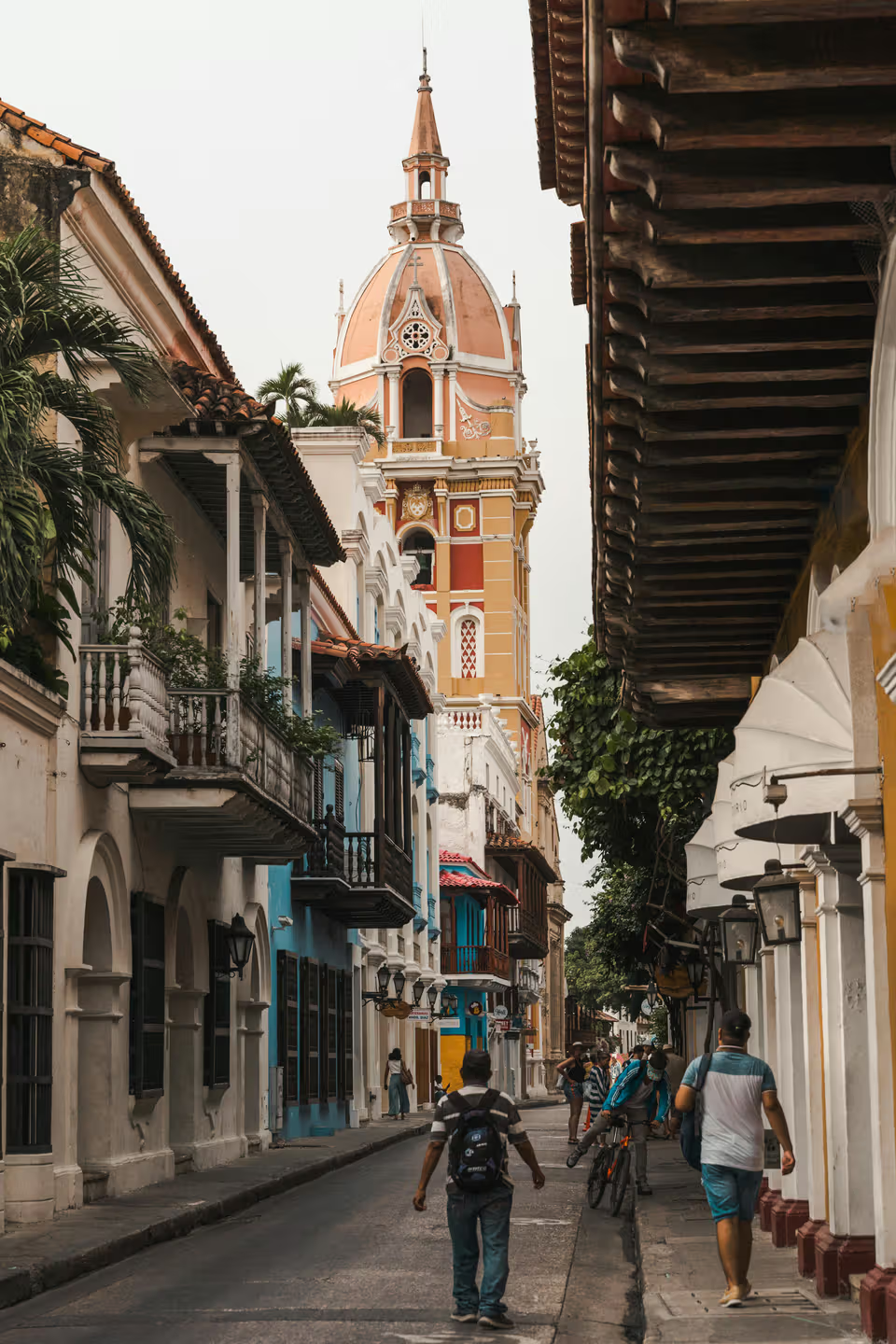
Cartagena is Colombia’s tourism flagship, and its walled city and Getsemaní move with visitors, police presence and hotel infrastructure late into the night. Apply the same care you would in any busy tourist center: watch your phone in crowds, agree taxi fares or use apps, and choose registered guides.
Bogotá rewards the traveler who moves like a local: neighborhoods such as Chapinero, Usaquén and La Candelaria by day offer museums, restaurants and markets at altitude. After dark, move by app-based transport between venues, exactly as residents do.
Medellín transformed itself into Latin America’s innovation showcase, and El Poblado and Laureles are comfortable bases with a deep café and restaurant scene. The city rewards the usual urban rules, keeping valuables low-key and nights planned.
The Coffee Region (Eje Cafetero) and small towns like Salento, Filandia, Barichara and Villa de Leyva are among the most relaxed places you can travel in South America: rural, welcoming and built around haciendas and slow mornings.
Tayrona and Santa Marta’s coast run on established tourism circuits; book excursions with registered operators and the Caribbean does the rest.
Seven habits that keep trips smooth
- Fly between cities or use private transfers arranged in advance; distances are long and internal flights are inexpensive.
- Use app-based rides or hotel-arranged cars at night.
- Keep your phone off busy sidewalks; the local phrase is “no dar papaya”, meaning keep temptation out of sight.
- Carry a digital copy of your passport and leave the original in the hotel safe.
- Drink with the same judgment you would at home, and only accept drinks you saw poured.
- Book experiences with registered operators (in Colombia, look for the RNT registry number).
- Save your hotel’s address in Spanish and your concierge contact before heading out.
When to go
Colombia sits on the equator, so the best time to visit depends on rain rather than temperature: December to March and July to August bring the driest weather across most regions. Cartagena stays warm year-round; Bogotá stays spring-cool at 2,600 meters. Our Colombia guide includes month-by-month climate charts for planning.
How traveling with local backing changes the picture
Distance from the destination is what turns small hiccups into stress. Traveling with a Colombian agency means every driver, guide and hotel in your itinerary was chosen by people who live here, and a 24/7 WhatsApp line connects you to someone in your time zone who knows tonight’s plan. That local layer is the difference between reading about a country and being hosted by it. Our tailor-made Colombia vacation packages are built exactly that way.
Frequently asked questions
Is Cartagena safe at night? The walled city and Getsemaní stay lively and well-patrolled into the night. Keep to the animated streets, use taxis or apps for longer hops, and evening plans flow easily.
Is Colombia safe for solo female travelers? Thousands of women travel Colombia solo every year, concentrated on the established circuits. The habits above, plus accommodation in well-reviewed neighborhoods, are the core of a smooth solo trip; a designed itinerary with vetted transfers adds another layer of ease.
Do US citizens need a visa for Colombia? US, Canadian, UK and EU passport holders enter visa-free as tourists for up to 90 days. Verify your specific case on the IATA Travel Centre, the database airlines use.
Is Medellín safe for tourists in 2026? El Poblado, Laureles and the guided Comuna 13 circuit form the visitor’s Medellín, and they operate as fully as any Latin American tourist economy. Urban judgment applies, especially at night and in nightlife settings.
Requirements and conditions evolve; this guide reflects August 2026 and we update it as things change. For an itinerary designed around current, on-the-ground knowledge, write to us: the first conversation is free.